Best WDT Tool Espresso Buyers Should Choose
A WDT tool earns its place on the bar when it fixes a real problem: clumps, uneven density, and those frustrating shots that channel even though your grind and dose look right. If you are searching for the best wdt tool espresso users actually keep reaching for, the answer is usually less about hype and more about fit, balance, and how it works with your daily workflow.
For most home baristas, WDT is not a gimmick. It is one of the simplest ways to improve puck prep without changing your grinder or machine. A few seconds of proper distribution can make extractions more even, help reduce channeling, and give you more consistent results shot after shot. That said, not every tool does it equally well, and not every design fits every routine.
What makes the best WDT tool for espresso?
The best WDT tool for espresso should feel precise in the hand, move cleanly through the coffee bed, and avoid doing more harm than good. That sounds obvious, but a surprising number of tools miss on one of those points.
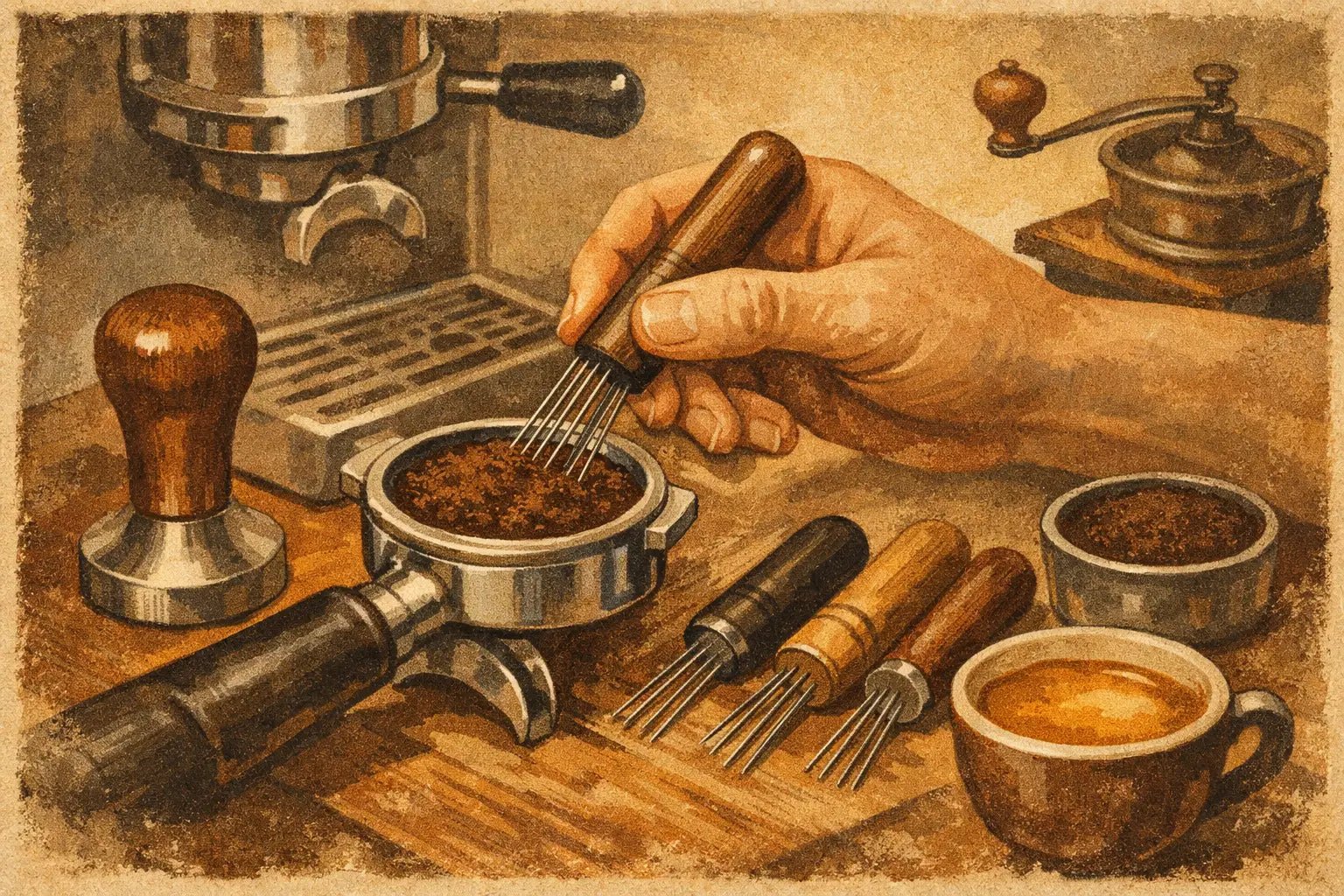
Needle thickness matters first. Thin needles generally work better because they break up clumps without pushing large sections of coffee around. If the needles are too thick, they can act more like little plows than fine distribution pins. Instead of loosening the grounds, they create trenches and move coffee unevenly from one side of the basket to the other.
Needle count matters too, but only up to a point. A very sparse tool can feel too slow, especially if you are working with fluffy grounds from a high-end grinder and only need light redistribution. On the other hand, an overly dense needle arrangement can feel crowded and less controlled in smaller baskets. Most experienced home users land somewhere in the middle: enough needles to cover the basket efficiently, but not so many that the tool drags.
Handle shape is often underrated. A well-made wooden handle with some weight gives the tool a more natural, steady feel. Cheap plastic bodies can work, but they often feel disposable, and the balance is usually worse. If this is a tool you use every morning, tactile quality matters more than people admit. Espresso workflow is physical. You notice the feel of a good handle every day.
Then there is durability. Bent needles, loose mounting, and wobbly heads are common issues with low-cost options. A WDT tool does not need to be complicated, but it should be built with enough care that the needles stay aligned and replaceable if needed.
Best WDT tool espresso shoppers should avoid
The easiest mistake is buying the cheapest thing that looks close enough. A lot of generic WDT tools are made to hit a price point, not to improve puck prep in a meaningful way.
Very thick needles are the first red flag. They look sturdy, but they are usually less effective. Another issue is poor spacing. If the needles are clustered awkwardly, the tool can leave untouched areas in the basket unless you spend extra time stirring from multiple angles. That defeats the point of having a smooth workflow.
Some spin-style or aggressively marketed designs also promise perfect distribution with minimal effort. A few of them are useful, but many trade control for speed. If you like a very repeatable routine and your grinder already produces fairly even grounds, an automated-feeling distribution approach may suit you. If you regularly change coffees, doses, or baskets, manual WDT often gives you better feedback and better control.
Matching the tool to your basket and routine
The best WDT tool espresso setup depends on what happens before and after it. Basket size, dosing funnel height, roast level, grinder style, and tamping routine all affect what will feel best.
If you use deeper baskets for larger doses, you may prefer slightly longer needles that can reach the lower part of the puck without forcing your hand into an awkward angle. If you mostly pull traditional doubles in a standard basket, a more compact tool can feel quicker and easier to control.
Your dosing funnel matters as well. A taller funnel gives you more room to work the top layer without making a mess, which can make a fuller needle spread more practical. With a low-profile funnel or no funnel at all, a tighter, more controlled tool may feel cleaner.
Grinder style changes things too. Some grinders produce grounds that fall fluffy and relatively even, where WDT is mostly about light declumping and surface-level density correction. Others produce more visible clumps, especially with certain beans or humidity shifts. In that case, the tool needs to separate and distribute more actively, so needle flexibility and spacing become more important.
Materials and craftsmanship are not just about looks
Espresso people care about aesthetics, and there is nothing wrong with that. A handcrafted WDT tool with a wood handle can look right at home next to walnut portafilter handles, steam knobs, and other warm upgrades on a premium machine. But the material choice should do more than match your setup.
Wood handles can provide better grip, better balance, and a more finished feel than mass-market plastic. When shaped properly, they sit comfortably between the fingers and encourage lighter, more precise movement through the basket. That is useful because good WDT is not about aggressive stirring. It is about gentle, even breakup and redistribution.
Good craftsmanship also shows in the small details: secure needle mounting, clean fit and finish, and replaceable components. Those are practical features, not luxury extras. If you are buying for long-term use, you want a tool that stays true instead of loosening over time.
Do expensive WDT tools actually work better?
Sometimes yes, sometimes no. Price alone does not guarantee better extraction. A basic tool with the right needles can outperform an expensive one with poor geometry. But once you move past the cheapest options, you usually start paying for better balance, better materials, more consistent construction, and a tool that feels easier to use every day.
That daily ease matters. If a tool feels awkward, flimsy, or messy, you will rush the step or skip it. A better-made tool tends to invite consistent use, and consistency is what improves espresso.
For many prosumer setups, the sweet spot is a well-crafted manual WDT tool with thin needles, a stable handle, and replaceable parts. You do not need a gadget with ten modes. You need something that works cleanly with your grinder, basket, and prep style.
How to tell if your WDT technique is helping
A good tool only gets you halfway there. Technique matters, but it does not need to be complicated.
You want the needles to move through the grounds lightly, reaching different depths without compacting the bed. Many home baristas start near the bottom to break up denser clumps, then work upward in small circles or gentle sweeps to even out the whole basket. The final surface should look level and loose rather than heavily disturbed.
If your shots become more repeatable, if spurting is reduced, and if your extractions tolerate small grind changes a bit better, your WDT is probably helping. If your puck prep starts feeling messy and inconsistent, the issue may be overworking the coffee or using a tool with needles that are too thick.
One more trade-off is speed. Some people want the fastest possible workflow. Others care more about absolute control. There is no universal right answer. For a busy morning routine, a simpler, balanced tool is often better than a fussy one that asks for perfect technique every time.
What to look for before you buy
If you are choosing carefully, focus on four things: thin needles, comfortable handle shape, solid construction, and a needle layout that matches your basket size and prep style. That will tell you more than most product descriptions.
It also helps to buy from a maker who understands espresso accessories rather than a general marketplace seller moving generic inventory. With specialty tools, details matter. Fit, finish, replacement support, and actual familiarity with home espresso setups make a difference, especially if your station is built around specific machines, baskets, or wood-accent upgrades. That is one reason many enthusiasts prefer a maker-led shop like NepoCoffee, where the product is part of a wider workflow rather than a random add-on.
The best WDT tool is not necessarily the flashiest one on your counter. It is the one that makes puck prep feel controlled, repeatable, and satisfying enough that you keep using it every day. When a tool gets those basics right, your espresso usually follows.