Choosing the Right Espresso Bean Hopper Lid
A loose, cracked, or poorly fitted espresso bean hopper lid is one of those small problems that gets annoying fast. Beans pick up dust, hopper noise gets sharper, and your grinder starts feeling less finished than it should. For home baristas who care about workflow and setup details, the lid is not just a cover. It is part of how the grinder looks, how it feels to use, and how well the hopper does its job.
Why an espresso bean hopper lid matters more than it seems
Most people only think about the hopper lid when it goes missing or breaks. That makes sense. It is a simple part, and on many grinders it is treated like an afterthought. But in daily use, it affects a few things that serious espresso owners notice right away.
The first is basic protection. A lid helps keep dust, kitchen debris, and stray moisture away from your beans. It also helps reduce direct air exposure from the top of the hopper. No lid will turn a hopper into long-term bean storage, and fresh coffee is still best kept in a proper airtight container. Still, a well-fitted lid adds a practical layer of protection during normal use.
The second is grinder feel. A lid that rattles, slides around, or sits unevenly makes the whole setup feel cheaper than it is. On a premium grinder, that mismatch stands out. If you have invested in a machine and grinder that already deliver strong performance, replacing a worn plastic top with a better espresso bean hopper lid can bring the whole station back into balance.
The third is appearance. Espresso setups are visual by nature. People upgrade portafilter handles, steam knobs, tampers, and trays because they use these tools every day and want them to look as good as they perform. The hopper lid belongs in that same conversation, especially when the grinder sits front and center.
Fit comes first
If you are shopping for an espresso bean hopper lid, compatibility matters more than material or finish. This is not a generic accessory in the way a dosing cup or microfiber cloth might be. Hopper openings vary by grinder brand, model, and even production revision.
A lid that is only slightly off can create problems. It may wobble, leave gaps, or sit too tightly and become annoying to remove during refills. In some cases, a poor fit can also interfere with the hopper collar or bean flow area, depending on the grinder design.
That is why model-specific fitment is the safest route. Owners of grinders from Breville, ECM, Lelit, Rocket, Gaggia, Bezzera, Profitec, and other premium brands usually already know that accessories are rarely one-size-fits-all. A replacement or upgrade part should match the geometry of the original piece, not just approximate it.
If you are not sure whether a lid is compatible, measurements matter. The outer diameter, inner lip, thickness, and seating style all affect performance. Pictures help, but dimensions tell the real story. For custom or harder-to-find grinders, direct maker communication is often the difference between getting a lid that works and buying one that merely looks close.
Material choices and the trade-offs
Not every espresso bean hopper lid is trying to solve the same problem. Some are meant to replace a cracked stock part. Others are meant to add warmth and style to a grinder that came with clear plastic. The right material depends on what you care about most.
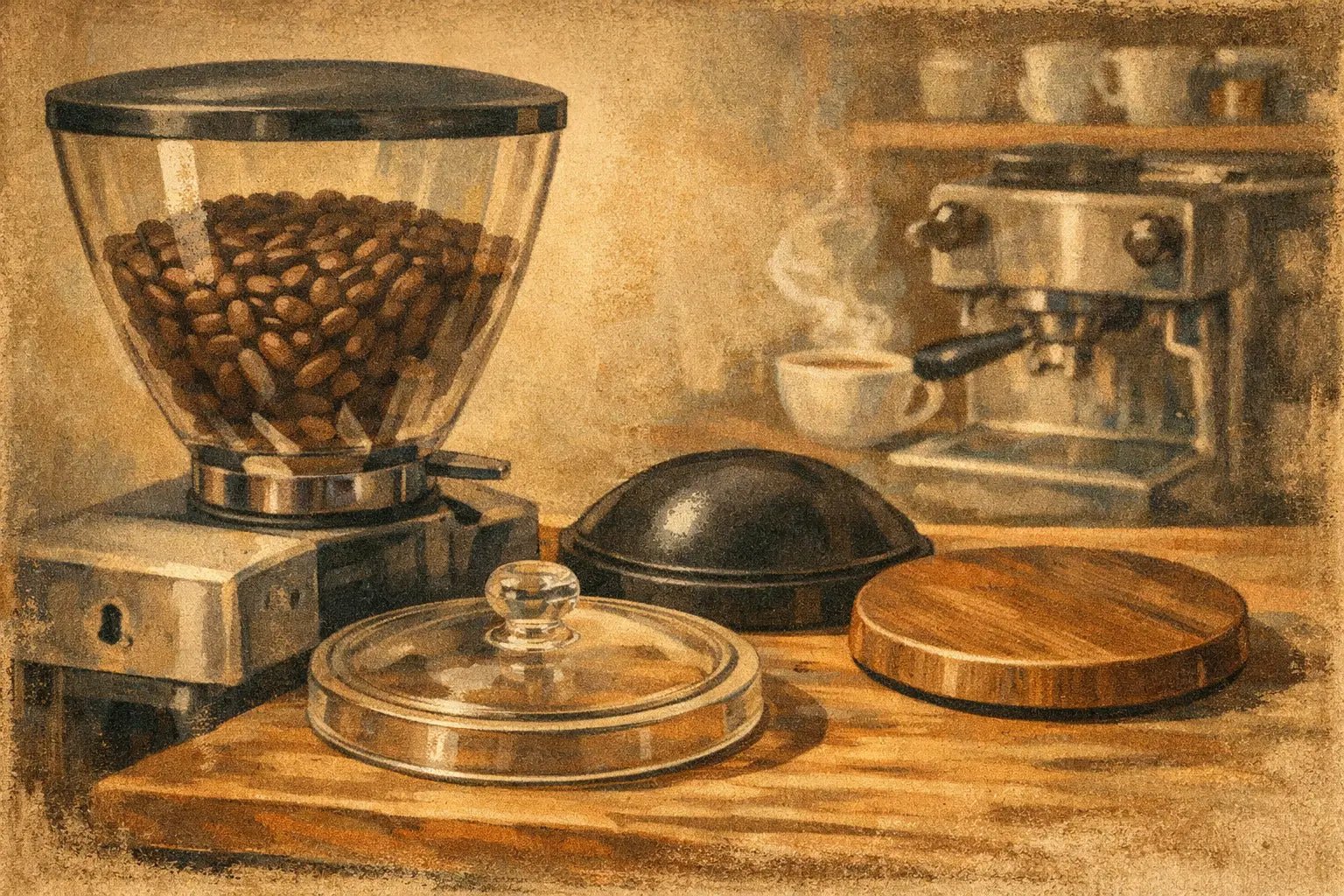
Plastic is common because it is lightweight, inexpensive, and easy for manufacturers to produce at scale. It also makes sense in environments where visibility matters and cost control is a priority. The downside is familiar. Plastic can scratch, haze, crack, or simply feel underwhelming next to a high-end espresso setup.
Wood offers a different experience. A handcrafted wooden lid adds warmth, texture, and a more finished look to the grinder. It can also tie together other upgrades, especially if you already have wood accents on your portafilter, knobs, tamper, or station tools. For many home espresso owners, that visual consistency is a big part of the appeal.
There are trade-offs, of course. Wood is not transparent, so you lose a quick top-down view of your bean level. Depending on the design, it may also weigh more than a thin stock lid. That extra weight is not necessarily a problem. In fact, some users prefer the more substantial feel. But it is worth knowing if you are used to something ultra-light.
Finish also matters. A well-made wooden lid should be smooth, stable, and sealed appropriately for normal kitchen use. It should feel intentional, not decorative for the sake of decoration. When crafted correctly, it adds both function and character without becoming fussy.
Freshness expectations should stay realistic
A hopper lid helps, but it is not a vacuum canister. That distinction matters.
Beans age from oxygen, heat, light, and time. If you store several days' worth of coffee in the hopper, the lid can reduce exposure from the top opening, but it cannot fully preserve the beans the way a proper storage container can. Home baristas who chase maximum flavor clarity usually single-dose or keep only a small amount in the hopper for short-term use.
That does not make the lid unimportant. It still helps maintain a cleaner, more protected environment for the beans currently in use. It also prevents accidental contamination and keeps the top of the grinder looking complete. The best way to think about it is as part of a good workflow, not as a substitute for good storage habits.
Aesthetic upgrades are still real upgrades
There is a tendency in coffee gear conversations to separate performance upgrades from visual ones, as if only one category counts. That is too narrow.
If a part improves how your setup feels every morning, that has value. If it matches the wood tone of your portafilter handle and grinder tray, that has value too. Espresso equipment lives out in the open. You see it, touch it, clean it, and build routines around it every day. An espresso bean hopper lid that makes the grinder feel more cohesive is doing more than decorating the top.
This is especially true for prosumer owners who have already dialed in the core performance of their setup. Once shot quality is in a good place, the next upgrades often focus on usability, replacement of aging stock parts, and refining the look of the station. That is a normal progression, not vanity.
What to look for before you buy
Start with fitment. Confirm the exact grinder model and, if possible, compare the lid dimensions to your existing part. If your grinder is less common or has been modified, ask questions before ordering.
Next, consider how you use your grinder. If you refill often and want a fast, lightweight lid you can pop on and off all day, keep that in mind. If you care more about premium feel and matching wood accents across your setup, a handcrafted lid will probably be more satisfying over time.
Think about finish and shop quality as well. A good lid should sit flat, feel clean at the edges, and look proportionate to the hopper. On custom pieces, consistency of grain and finish can make a big difference in how polished the final setup looks.
Finally, remember that service matters with parts like this. A maker who understands espresso equipment can help with fit questions, wood options, and custom requests in a way mass-market sellers usually cannot. That matters more when you are buying a model-specific accessory rather than a generic add-on.
When replacement makes more sense than making do
A lot of espresso owners put up with a damaged hopper lid longer than they should. The crack is small, the fit is a little loose, or the original part has yellowed enough that it just looks tired. Because the grinder still works, the lid gets ignored.
But small broken parts tend to drag down the whole experience. The grinder feels unfinished, cleaning gets more annoying, and the setup loses some of the satisfaction that made you invest in quality equipment in the first place. Replacing the lid is a modest upgrade, but often a high-visibility one.
For owners who want something beyond a stock replacement, a custom piece can also solve that in-between problem where the original worked fine functionally but never matched the rest of the station. That is where a shop like NepoCoffee fits naturally, especially for espresso enthusiasts who want handcrafted parts with model-aware compatibility and a more personal maker approach.
The best lid is the one you stop thinking about
That may sound simple, but it is a useful standard. A good espresso bean hopper lid should fit cleanly, feel right in the hand, suit the grinder visually, and do its job without calling attention to itself for the wrong reasons.
If your current lid rattles, looks worn, or feels out of place next to the rest of your setup, it is probably not a minor issue anymore. It is just the next part worth getting right.