Coffee Tampers That Fit Your Espresso Setup
A tamper is one of the few espresso tools you feel in your hand for every shot. Coffee tampers may look simple, but the wrong diameter, an awkward handle, or a base that does not match your basket can turn a careful puck prep routine into a frustrating variable. The right one should fit your equipment precisely, feel natural at your counter, and support a repeatable workflow.
For home baristas who have already dialed in a grinder, added a WDT tool, or upgraded a portafilter handle, a good tamper is not about adding another accessory. It is about removing unnecessary inconsistency. Your espresso machine can be premium, your beans can be fresh, and your distribution can be clean, but an uneven or poorly fitted tamp can still leave room for channeling.
Why Coffee Tampers Matter in Puck Prep
Tamping compresses the coffee bed after dosing and distribution. Its job is not to force water through the puck by brute strength. Rather, it creates a level, compact surface with enough resistance for brew water to move through the coffee evenly. Once the grounds are fully compressed, adding significantly more pressure does not keep making the puck better. Consistency matters far more than heroic force.
That distinction helps explain why experienced espresso owners care about their tampers. A tamper with a stable base, comfortable handle, and accurate fit makes it easier to repeat the same motion every morning. If the tool rocks, pinches your hand, or leaves a noticeable untamped ring around the basket edge, you are working around the accessory instead of working with it.
Tamping is only one step in extraction, of course. Grind size, dose, basket geometry, distribution, coffee freshness, water temperature, and machine pressure all play a part. A new tamper will not correct stale beans or a grinder that produces too many fines and boulders. It can, however, make one essential part of the process more dependable.
Choose the Tamper Diameter Before the Handle
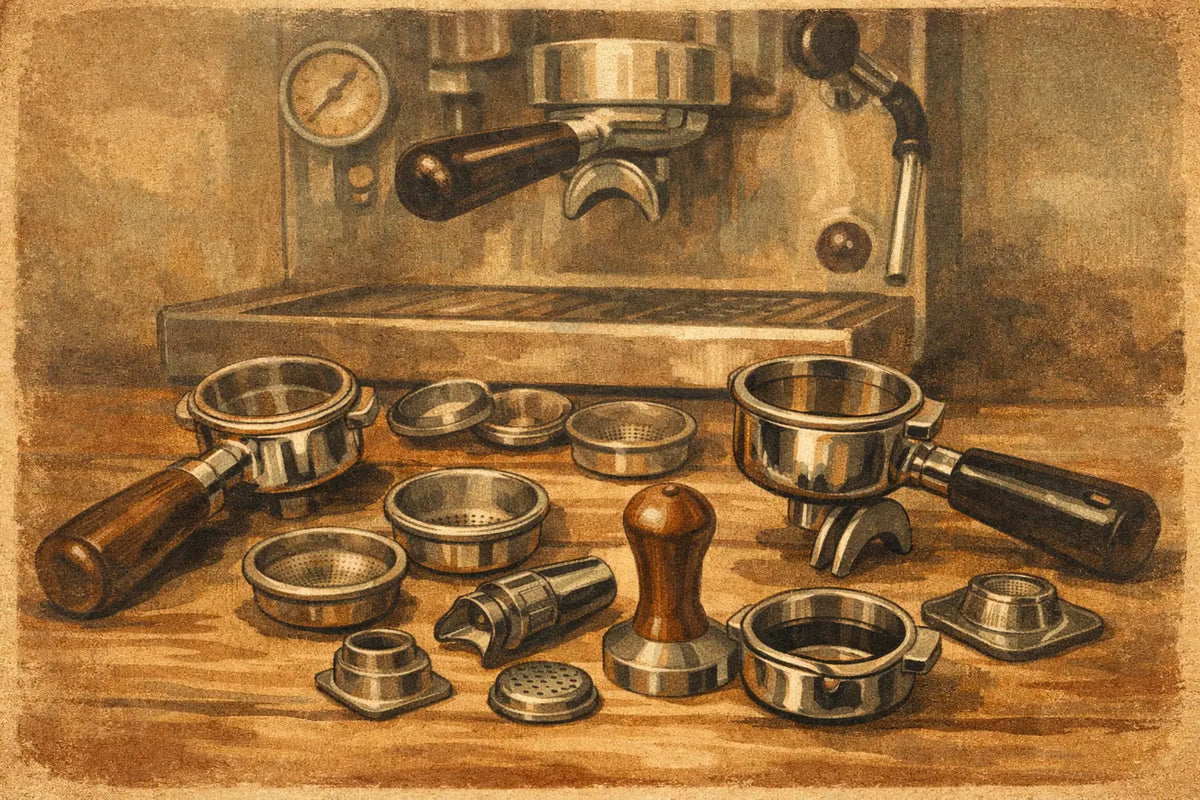
The first specification is diameter. It needs to match the inside of your actual filter basket, not simply the advertised size of your portafilter. Many commercial-style machines use 58 mm portafilters, but the most effective tamper size may be 58.4 mm or 58.5 mm depending on basket tolerances. A slightly oversized precision tamper can reduce the loose coffee ring left near the basket wall.
Other machines use less common sizes. Breville and Sage 54 mm baskets are a familiar example, while certain De'Longhi, Gaggia, La Pavoni, and compact machine baskets may require completely different diameters. Even within a brand, stock single baskets, double baskets, bottomless portafilter baskets, and aftermarket precision baskets can vary.
Before ordering, measure the basket's internal diameter with calipers if possible, or confirm the exact basket model. Do not assume that a 58 mm portafilter automatically calls for a 58.0 mm tamper. That small difference can affect fit more than most people expect.
A tamper should move into the basket smoothly with very little side-to-side play. If it binds, it is too large. If it leaves a wide, uneven band of loose grounds at the edges, it is probably too small. A narrow ring is normal with many baskets, especially those that taper inward, but a precision fit generally offers more complete coverage.
Flat, Convex, and Rippled Bases
A flat base is the straightforward choice for most home espresso setups. It creates a level coffee bed and is easy to use with standard baskets. For baristas focused on repeatability, it remains the practical default.
Convex bases are slightly rounded and were once common in cafés because they can reduce contact around the basket edge. Some users like the puck shape they create, while others prefer the clarity of a flat tamp. Neither shape is a shortcut around good distribution.
Rippled or patterned bases add surface texture to the tamped puck. They have enthusiastic fans, but their real-world advantage depends on the coffee, basket, and preparation routine. If you are troubleshooting uneven shots, solve dose, grind, WDT, and tamp level before expecting a patterned base to change extraction on its own.
Weight and Balance Change the Daily Experience
Tamper weight is personal. A heavier stainless steel tamper has momentum and can feel planted on the puck. That confidence is appealing when you make several milk drinks in a row or want a deliberate, stable downward press. The trade-off is fatigue for some users, especially with a tall, top-heavy handle.
A lighter tamper is quicker to maneuver and often kinder to the wrist. It can be an excellent option for smaller hands, lower counters, or anyone who prefers a more controlled touch. What matters is balance. The center of weight should feel close to your hand and directly above the base, not like it is pulling to one side.
Handle shape matters just as much. Rounded handles suit a palm-over-top grip, while narrower profiles can work well for users who guide the tamper with fingertips. There is no universally correct grip. The useful test is whether you can keep your wrist straight and press level without consciously fighting the tool.
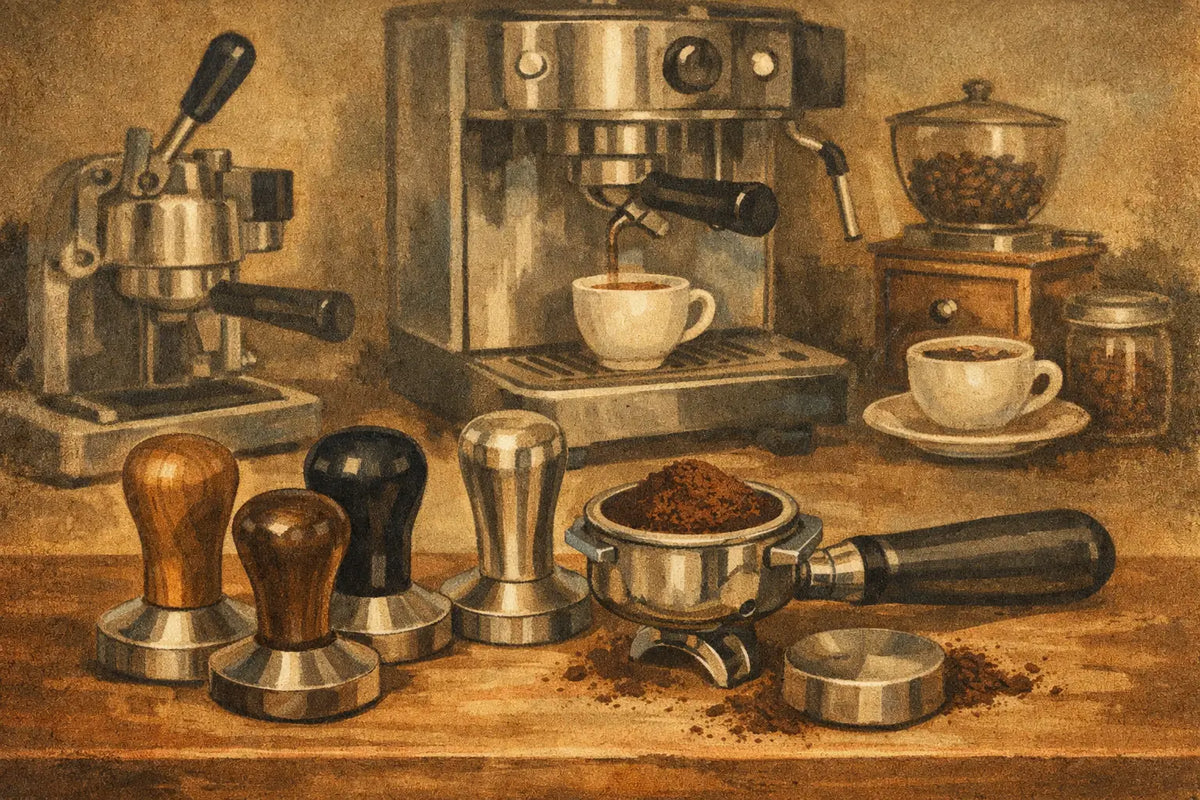
Wood handles bring another consideration: feel. A carefully finished wood handle is warmer than bare metal, naturally distinct in the hand, and an easy way to connect a tamper to the rest of your coffee bar. Match it with a wood portafilter handle, grinder knob, bean hopper lid, or steam knob and the setup feels considered rather than assembled from unrelated parts.
Level Tamping Beats Hard Tamping
A level puck is the goal. If your tamper enters the basket at an angle, one side of the coffee bed is thinner and less resistant. Water naturally favors that easier route, increasing the chance of channeling. This can show up as fast, pale streams from a bottomless portafilter, sourness, reduced sweetness, or shots that vary despite similar grind settings.
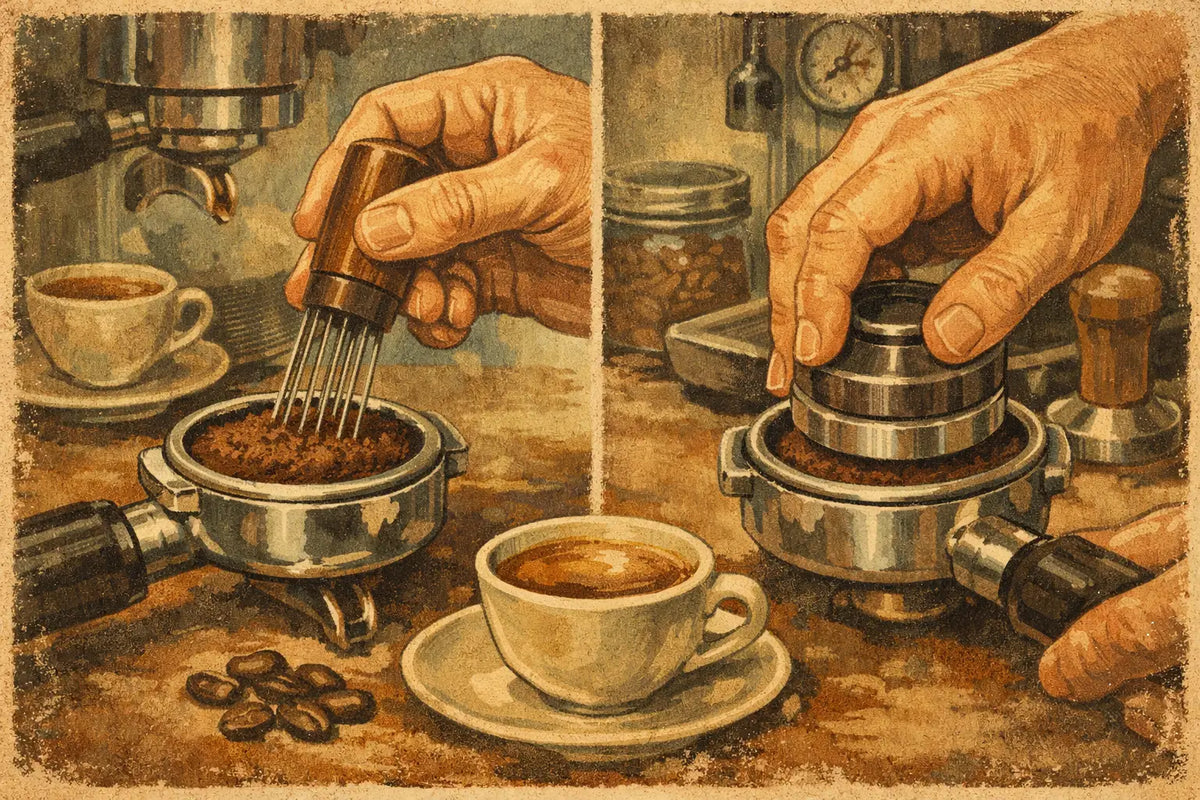
Start by distributing the grounds evenly. A dosing funnel helps keep the counter clean, and a WDT tool can break up clumps and move coffee into the basket corners. Set the portafilter on a stable tamping mat or tamping station, lower the tamper until the base contacts the grounds, and apply steady pressure with a straight wrist. A small polish twist at the end is optional. It does not improve compression, but some baristas use it to clear loose grounds from the rim.
Avoid tamping on an unsupported portafilter spout or directly against a machine drip tray. Repeated off-angle pressure can be uncomfortable and can mark surfaces over time. A proper station protects both your equipment and your posture.
For a reliable home routine, keep these checks in mind:
- Use the same dose and basket before judging changes in tamping.
- Distribute first, then tamp once with controlled, level pressure.
- Wipe loose grounds from the basket rim before locking in the portafilter.
- Watch the extraction, then adjust grind size before blaming tamp pressure.
Spring-Loaded and Calibrated Tampers
Spring-loaded tampers are designed to help users apply a similar pressure from shot to shot. Some also include leveling collars that rest on the basket rim. These can be useful for a household where several people make espresso, or for anyone learning to recognize a level tamp.
They are not mandatory for excellent espresso. A standard fixed tamper in practiced hands can be every bit as consistent. Calibrated designs also need the correct basket fit, and leveling collars may not suit every basket, dose, or portafilter arrangement. If your dose leaves the coffee bed unusually high, a collar can reach the rim before the base has tamped as intended.
Choose a spring-loaded option when it makes your process easier, not because it promises to eliminate technique. The best tool is the one you will use consistently without making your workflow more complicated.
Build a Tamper Around Your Machine
An espresso setup earns its character through the details you touch daily. The portafilter handle, steam knob, dosing funnel, grinder tray, and tamper all share the same small workspace. Choosing materials and shapes that work together can make the routine more enjoyable without compromising function.
This is especially worthwhile for owners of machines from Breville, ECM, Lelit, Rocket, La Marzocco, Profitec, Bezzera, and Gaggia, where fitment and finish deserve equal attention. At NepoCoffee, custom work begins with the practical questions: which machine, which basket, what diameter, and what style feels right in your hand. The finished piece should look at home beside the machine while doing its job accurately.
A well-chosen tamper should disappear from your thoughts once the shot begins. It fits the basket, lands level, feels right in your hand, and lets you focus on the parts of espresso that are meant to be noticed: aroma, flow, and the first taste from the cup.