Walnut Versus Maple Handles for Espresso
A portafilter handle is one of the few parts of an espresso machine you touch every single shot. That makes walnut versus maple handles more than a color decision. The wood changes the visual balance of your machine, the way the handle feels in your hand, and how your coffee station develops character over time.
For a polished prosumer setup, both are excellent choices. Neither wood makes better espresso. The right option depends on your machine’s finish, the warmth or contrast you want in the space, and whether you prefer a darker, more dramatic appearance or a lighter, cleaner one.
Walnut versus maple handles: the visual difference
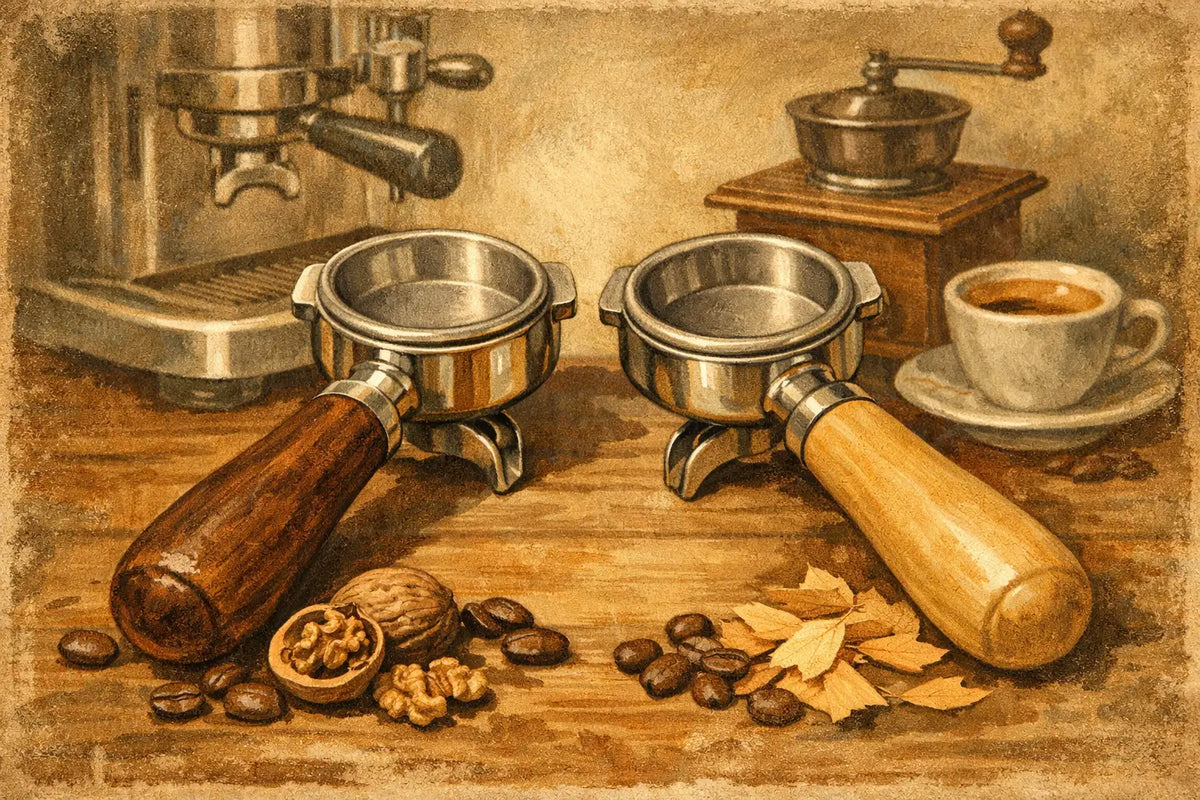
Walnut is the richer, moodier choice. Its natural color ranges from medium brown to deep chocolate, often with flowing grain and darker streaks. On a stainless steel machine from ECM, Rocket, Profitec, Lelit, or Bezzera, walnut creates immediate contrast. It gives bright metal surfaces some weight and makes a portafilter, steam knob, or flow control knob feel like a considered part of the setup rather than a stock component.
Maple is lighter and more understated. It typically runs from creamy off-white to pale honey, with a fine, even grain that reads clean from a distance. A maple handle can make an espresso station feel more open, especially on a light counter, near white cabinetry, or beside other blond wood pieces. It is also a strong match for owners who want custom accessories without turning their machine into a dark focal point.
The two woods photograph differently, too. Walnut tends to look especially striking under warmer kitchen lighting. Maple reflects more light and can appear almost golden in direct sun. Because wood is a natural material, grain and tone always vary. That variation is part of the appeal of a handcrafted handle, not a defect to standardize away.
Pairing each wood with your equipment
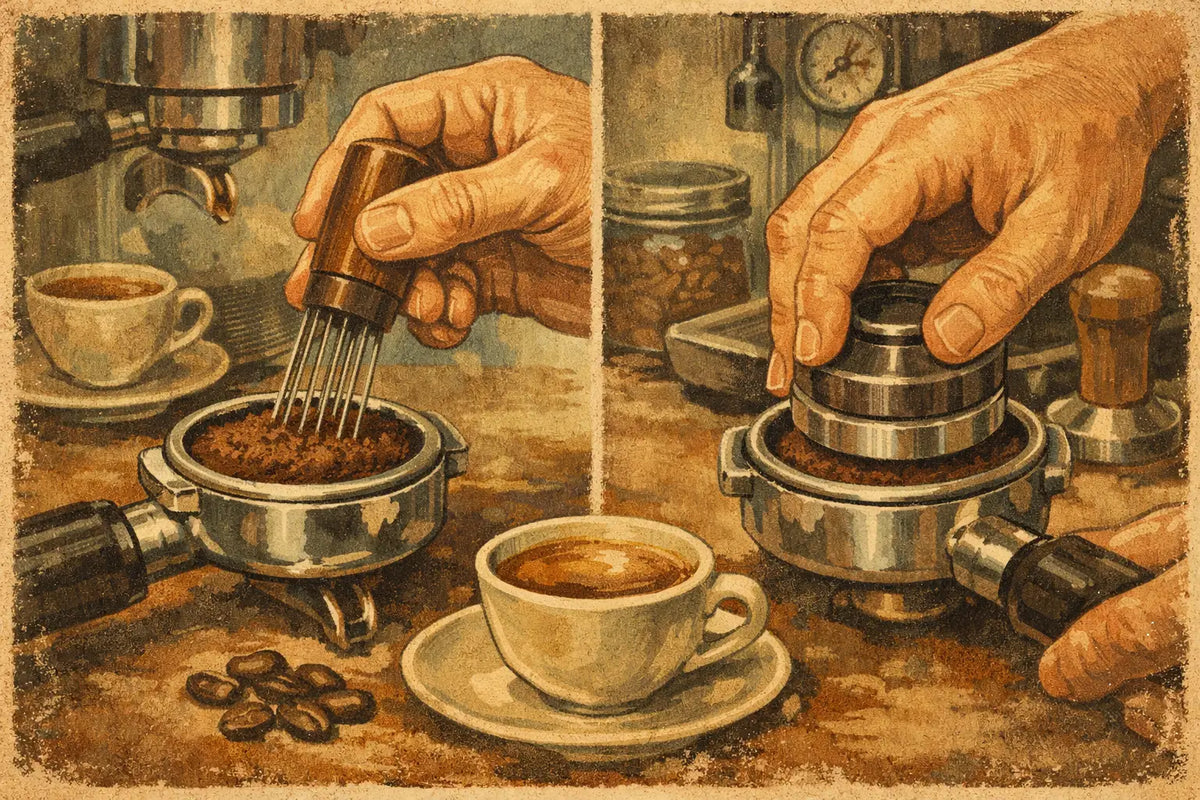
Walnut is an easy fit for stainless machines, black grinders, dark cabinets, and espresso bars with leather, brass, or black accents. It also works well when several accessories need to feel visually connected, such as a portafilter handle paired with a tamper, WDT tool, dosing funnel stand, or grinder tray.
Maple suits minimalist counters and brighter spaces. It pairs naturally with white, cream, silver, and light-gray finishes, as well as grinders with lighter accents. On a Breville or Gaggia machine, maple can soften the industrial look without competing with the machine’s controls and displays.
There is no rule that says every wood accessory has to match exactly. Still, repeating one primary wood across the parts you see and touch most often usually looks more intentional than mixing several unrelated tones.
Feel and everyday workflow
Both walnut and maple make comfortable, durable espresso handles when properly shaped and finished. The difference in use is subtle, but enthusiasts who pull several shots a day tend to notice the details.
Walnut has a slightly more textured visual grain and a naturally warm, substantial feel. It is often chosen by people who want their equipment to have a classic, workshop-made character. A well-contoured walnut portafilter handle feels secure during locking and removal, particularly on machines with a firmer group gasket.
Maple has a smooth, fine-grained feel that many people describe as crisp and clean. Its pale color puts the handle’s form front and center: the curves, profile, and transition from wood to metal are easy to see. If you like a precise, modern look, maple has an advantage.
The handle’s shape matters more than small differences in wood density. A good fit should provide enough length and diameter for a confident grip, while keeping the machine’s balance in mind. This is especially true for bottomless portafilters, heavier baskets, and extended handles used on commercial-style E61 groups.
Durability: what actually matters
Maple is generally harder than walnut, so it has a slight advantage on paper for resisting minor dents and surface marks. But a portafilter handle is not a cutting board or a hardwood floor. In normal espresso use, the finish quality, construction, and care routine have a much greater effect on longevity than the modest hardness difference between these woods.
Walnut is more than durable enough for daily home use. It has been used for furniture, tool handles, and fine woodwork for generations because it machines beautifully and holds up well. Maple is also highly durable and is known for its strength and close grain. Either can serve your coffee bar for years when it is protected from the things wood dislikes most: standing water, heat, and harsh cleaning products.
A wooden accessory should not be left soaking in a sink or placed in a dishwasher. Wipe off water or coffee residue after use, and avoid storing it where steam constantly condenses on the wood. A steam knob, for example, needs a finish that can handle occasional moisture, but it still benefits from being dried after cleaning the machine.
Natural aging is part of the choice
Walnut usually deepens into a warmer brown as it ages. Depending on light exposure, some darker pieces can also mellow slightly over time. The result is typically a softer, more lived-in look rather than a dramatic change.
Maple tends to warm and amber with age, especially in bright kitchens. A freshly made maple handle may look pale and nearly uniform, then slowly develop more honey-colored depth. If you prefer wood that tells the story of daily use, both species do that beautifully in different ways.
For people who want their accessories to look as close to new as possible, keep the machine away from sustained direct sunlight and use a gentle wood-safe maintenance product only when the finish begins to look dry. Over-oiling is not helpful. It can attract dust and leave a tacky surface.
Which wood works best for custom espresso parts?
For model-specific upgrades, compatibility comes first. A beautiful handle is only useful if the thread, fitting depth, diameter, and overall clearance are correct for your portafilter or machine control. This matters across brands and even within a single brand, where different generations or portafilter styles may use different specifications.
Once fitment is confirmed, walnut is often the choice for a statement upgrade. It gives a familiar machine a more premium, traditional personality and is forgiving in a busy coffee space because its darker tone hides small marks well. Choose it when you want warmth, contrast, and visible grain.
Maple is often the choice for a lighter, more tailored upgrade. It looks especially sharp when you want the metalwork and geometry of the machine to remain the main event. Choose it when you want a clean palette, subtle grain, and a bright, Scandinavian-inspired feel.
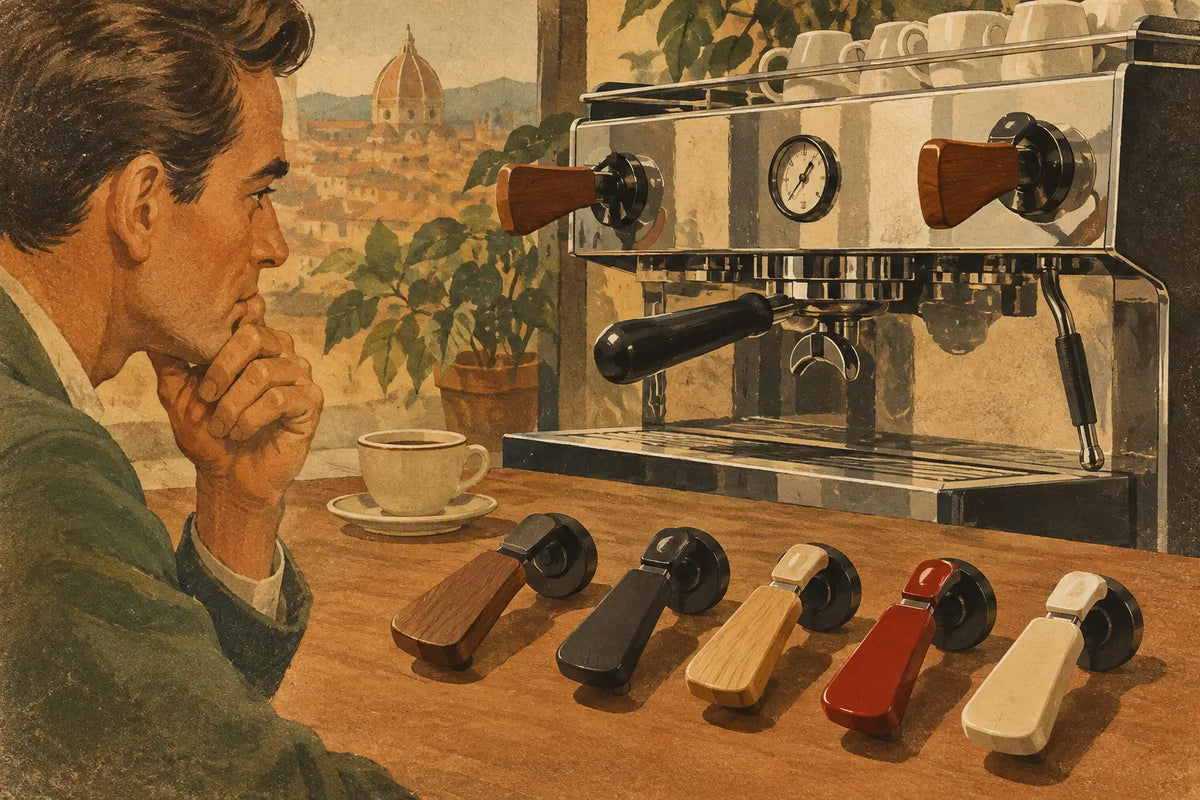
If you are replacing more than one part, think about the complete touchpoint set. Your portafilter handle, steam knob, hot water knob, grinder tray, and tamper do not need to be identical, but they should feel related. Matching walnut across key pieces creates a composed, darker coffee bar. Matching maple keeps the station airy and precise. A carefully selected mix can work as well, but it is best when there is a clear reason, such as maple on the machine and walnut on a nearby grinder or drawer front.
Care for walnut and maple espresso handles
Daily care is simple. Use a soft, lightly damp cloth for coffee splashes, then dry the wood promptly. For a deeper clean, avoid abrasive pads, alcohol-heavy sprays, and cleaners meant for stainless steel. Those products can dull or damage a protective finish.
Heat deserves some attention. A portafilter handle is separated from the basket and group by metal components, but it still lives close to hot equipment. That is normal. What you want to avoid is prolonged exposure to a blazing-hot tray, an open flame, or repeated contact with pooled hot water.
Small changes in appearance are normal for real wood. A faint darkening near the end of a frequently used handle, a slight shift in tone, or a softened sheen usually reflects use rather than failure. If a handle develops a deep crack, loose fitting, or finish damage that exposes raw wood, stop using it until it can be assessed or refinished.
Make the choice based on your setup
Choose walnut when your espresso station needs depth, contrast, and a more classic handcrafted presence. Choose maple when you want a lighter, cleaner finish that keeps the look calm and modern. If you are unsure, start with the materials already around your machine: your countertop, grinder, cabinets, and the accessories you use most.
The best custom handle is the one that fits your equipment correctly and makes you want to reach for the portafilter again tomorrow morning. That small moment of contact is exactly where a well-made wood upgrade earns its place.