How to Choose Portafilter Handles That Fit
A portafilter is one of the few espresso tools you pick up for every shot. That makes portafilter handles more than a cosmetic detail. The right handle can give a familiar machine a better balance in the hand, a more personal look on the counter, and a satisfying finish that makes the daily workflow feel complete.
For a replacement or custom upgrade, appearance matters, but fit comes first. Espresso machines use different portafilter bodies, thread sizes, handle angles, and lengths. A beautiful wood handle that does not match your portafilter is still the wrong part. Start with compatibility, then choose the material and shape that suit the way you make coffee.
Start With Portafilter Handle Compatibility
Most portafilter handles attach to the metal portafilter body with a threaded stud. The thread is hidden inside the handle, so two handles can look nearly identical while fitting entirely different machines. Thread diameter, pitch, and insertion depth all matter. Do not assume a handle made for one 58 mm machine will fit another 58 mm machine.
Basket diameter is useful for choosing baskets, tampers, and dosing funnels. It is not a reliable way to identify a portafilter handle. A 58 mm Lelit, ECM, Rocket, Profitec, La Marzocco, or Bezzera portafilter may use a different handle connection. Breville and Sage machines also have their own fitment details across product lines, while Gaggia portafilters can vary by generation and style.
The best starting point is the exact machine brand and model, followed by the type of portafilter you own. Is it original equipment, a bottomless portafilter, a single-spout model, or a third-party replacement? If you are replacing an existing handle, measure the exposed threaded stud with calipers when possible. Clear photos of the portafilter body and thread area are also helpful for confirming a custom order.
Why Thread Depth Matters
A handle can begin threading correctly but still bottom out too early, sit loose, or leave an unattractive gap where wood meets metal. This usually comes down to thread depth or the shape of the portafilter neck. A properly made handle should seat firmly without forcing it and should align naturally when tightened by hand.
Over-tightening is not the answer. The wood does not need to be cranked onto the portafilter body. If the fit is correct, hand-tight is enough for normal espresso use. Forcing a mismatched thread can damage both the portafilter and the handle insert.
Choose a Shape for Your Espresso Workflow
Handle shape changes the feel of locking in a portafilter, moving it between grinder and group head, and knocking out a puck. There is no universal best profile. The better choice depends on your hand size, machine clearance, and whether you prefer a traditional or more modern look.
A straight cylindrical handle is clean and familiar. It suits many classic espresso machines and works well for users who like a simple, balanced grip. A tapered shape, wider at the end and narrower near the portafilter, can feel especially secure when turning the portafilter into the group head. Contoured or bulb-style handles create a stronger visual statement and give the fingers more shape to hold onto.
Length deserves the same attention. A longer handle may offer more leverage and can look proportionate on a large E61-style machine. But on a compact setup, it can crowd the grinder tray or knock box area. A shorter handle keeps the footprint tidy, although it may feel less substantial if you have larger hands.
Weight is another trade-off. Dense wood and a thicker profile can make the portafilter feel planted and premium. A lighter handle may be more comfortable during repeated use. Neither approach changes the espresso in the cup by itself, but comfort affects consistency when you are preparing several drinks and want your movement to stay relaxed.
Wood Selection Is About Character and Care
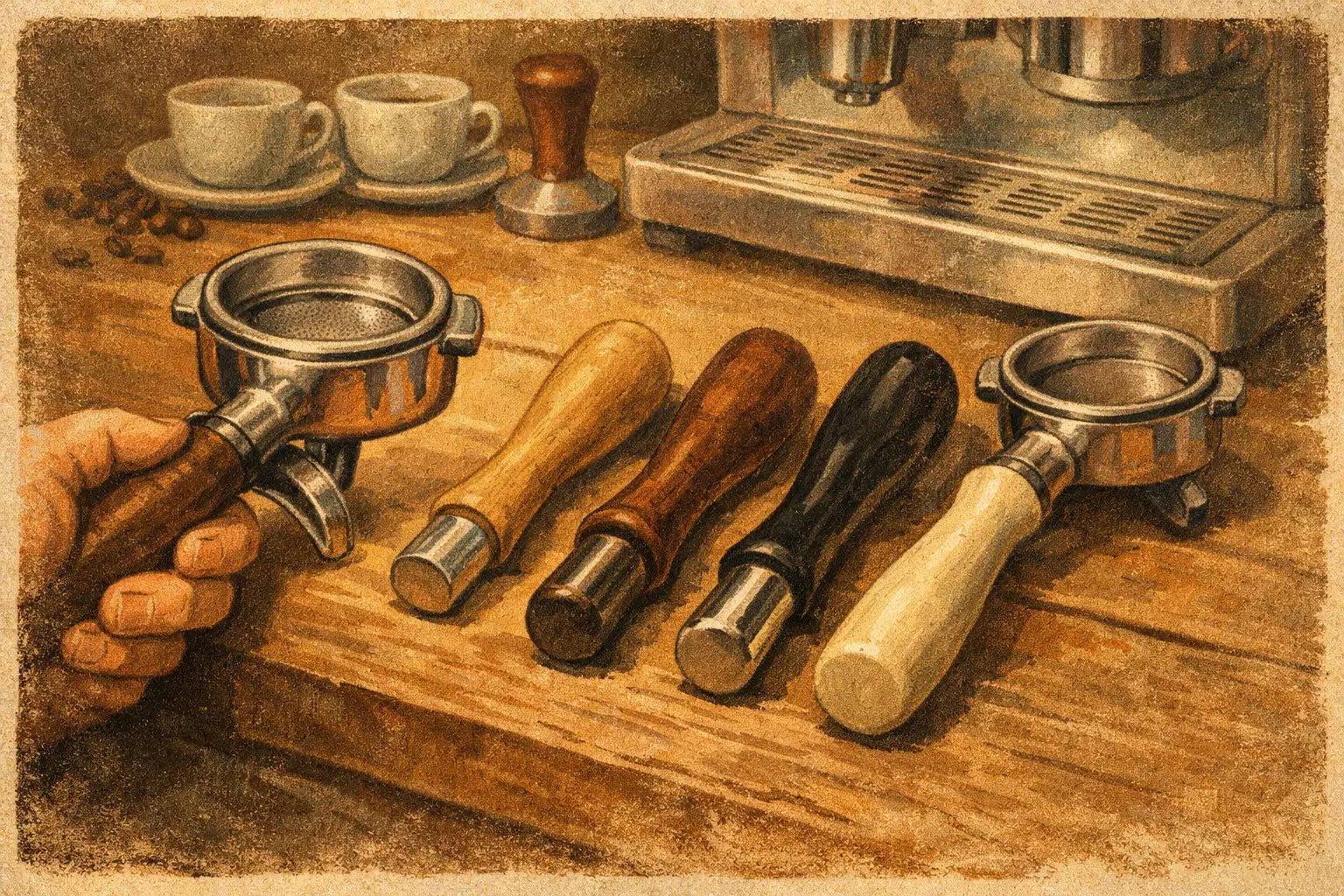
Handcrafted wood gives a portafilter warmth that black plastic and plain metal cannot replicate. Every grain pattern is different, so a wood handle becomes an individual part of the coffee bar rather than a generic replacement.
Walnut is a longtime favorite for its rich brown tones and understated grain. It pairs naturally with stainless-steel machines, black grinders, and darker cabinetry. Maple has a brighter, cleaner appearance that works well in light, modern spaces. Olive wood brings dramatic grain and color variation, making it a strong option for espresso enthusiasts who want a handle that stands out. Other hardwoods may offer deeper color, finer texture, or more visual movement depending on the piece of wood selected.
Natural variation is part of the appeal. A handcrafted handle will not look like a printed wood pattern, and it should not. Grain lines, small color shifts, and figure make the piece yours. If you are trying to match a bean hopper lid, steam knob, grinder tray, or tamper handle, sharing a photo of the existing wood helps a maker select a complementary direction. Exact matching is difficult with a natural material, but a coordinated set can make a setup look intentional.
Wood Near Steam and Water
A portafilter handle lives close to heat, humidity, and occasional splashes. Quality hardwood holds up well when it is properly finished and treated with reasonable care, but it is still wood. Do not soak it, run it through a dishwasher, or leave it sitting in standing water.
Wipe coffee residue and moisture away with a soft damp cloth, then dry the handle. If the finish begins to look dry after extended use, a small amount of food-safe wood conditioner can refresh it. Follow the care guidance for the particular finish rather than applying random oils from the kitchen. Too much oil can leave a sticky surface and attract coffee dust.
Replacement Handle or Full Portafilter Upgrade?
Replacing only the handle makes sense when the portafilter body is in good shape and you simply want a better grip or a different look. It is also a practical repair when an original plastic handle has cracked, become loose, or no longer suits the rest of your setup.
A full portafilter upgrade may be the better route when you need a different basket size, want to move to bottomless extraction, or have a damaged body, worn spouts, or a bent ear. In that case, confirm both the group-head compatibility and the handle thread before ordering accessories. A bottomless portafilter often gives you more visibility into channeling and puck prep, while a spouted portafilter is still the quieter, cleaner choice for many daily routines.
If you use multiple portafilters, matching handles can make the station easier to organize. For example, one can be reserved for regular double shots, another for a bottomless diagnostic setup, and a third for decaf. A consistent wood profile makes the collection look cohesive without making each tool hard to identify. Subtle differences in length, wood tone, or end shape can help distinguish them.
Small Details That Make a Custom Handle Better
A custom handle should respect the machine it is made for. The transition from metal to wood needs to look clean, the handle must sit at the intended angle, and the profile should not interfere with nearby equipment. These details are easy to overlook in product photos but obvious once the handle is installed.
Think about the whole coffee bar before selecting a color and profile. A darker handle can ground a polished stainless machine. A lighter wood can brighten an all-black grinder and espresso machine combination. If you already have wood accents on your WDT tool, dosing funnel stand, tamper, or steam knob, choosing a related species can pull the station together.
For uncommon machines, older portafilters, or a special request, direct communication is worth more than guessing from a general compatibility chart. NepoCoffee approaches these parts as working espresso components, not decorative objects. A few measurements and photos can prevent the most frustrating outcome: waiting for a custom piece that almost fits.
Your portafilter handle will not make a poorly dialed-in coffee taste better. What it can do is make every shot feel more deliberate, comfortable, and connected to the machine you chose. Pick the fit carefully, choose wood you will enjoy seeing every morning, and give it the simple care that a handcrafted tool deserves.