Espresso Replacement Parts Guide for Better Fit
A loose steam knob, a cracked hopper lid, or a portafilter handle that no longer feels right can make a favorite espresso setup feel worn out long before the machine itself is finished. This espresso replacement parts guide is built for owners who want the right fit the first time, whether the job is a practical repair, a workflow upgrade, or a more personal look for the coffee bar.
The key is not simply finding a part that looks close. Espresso machines and grinders are full of model-specific threads, diameters, attachment methods, and clearance requirements. A beautiful replacement that does not seat correctly is still the wrong part. Start with fitment, then choose the material, finish, and upgrade level that suits how you make coffee.
Start With the Part That Actually Needs Replacing
Before ordering, identify whether you are dealing with a functional failure, normal wear, or an opportunity to improve daily use. These situations call for different parts and different levels of care.
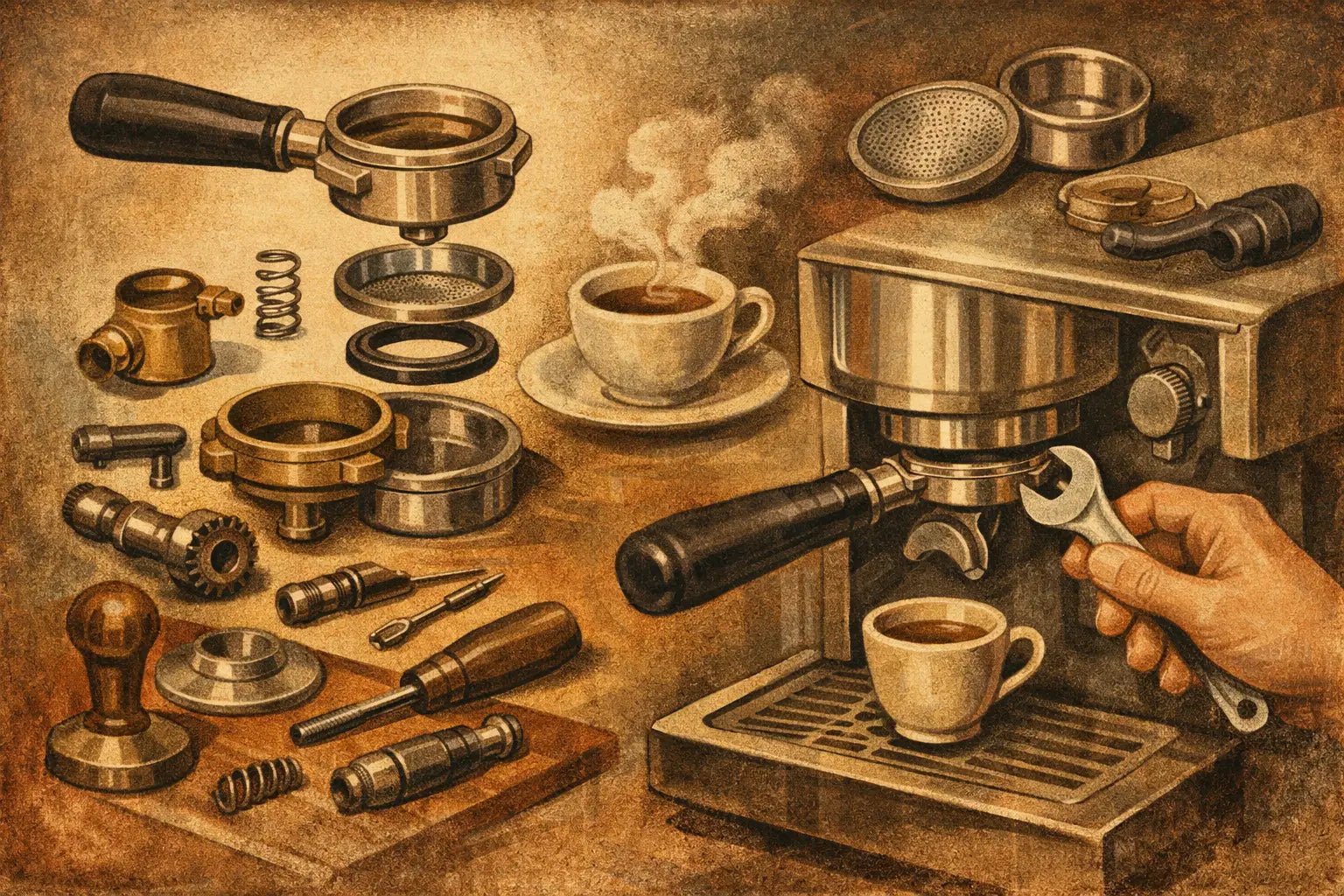
Functional components include items such as seals, gaskets, shower screens, valves, baskets, and electrical switches. They directly affect safety, pressure, temperature, water flow, or extraction. Cosmetic and handling components include portafilter handles, steam knobs, lever grips, bean hopper lids, grinder trays, and machine feet. Workflow accessories include dosing funnels, WDT tools, tamping stations, and knock box upgrades.
A leaking group head, weak steam, or a grinder that will not run may require diagnosis beyond an exterior replacement part. On the other hand, a slippery plastic knob, chipped handle, or broken hopper lid is often a straightforward replacement that can make the setup feel substantially better every day.
Do not assume every problem is caused by the most visible piece. A portafilter that drips after brewing may need a group gasket rather than a new basket. A grinder that sprays grounds may benefit from cleaning retained coffee from the chute before you replace the declumper or add a dosing funnel. Inspect, clean, and confirm the source of the issue before buying.
Espresso Replacement Parts Guide: Confirming Fitment
Fitment is where most replacement-part mistakes happen. A machine brand is useful, but it is rarely enough information by itself. Many brands have several generations of the same model, and a small design change can alter the threads, mounting hole pattern, or dimensions of a component.
Find the exact model and production version
Look for the model name and serial label on the machine or grinder. Depending on the manufacturer, it may be located beneath the drip tray, on the back panel, inside the hopper area, or underneath the base. Record the model exactly as written, including variant names such as Pro, Plus, PID, Evo, or V3.
This matters especially with popular lines from Breville, ECM, Lelit, Rocket, La Marzocco, Gaggia, Bezzera, and Profitec. Two machines from the same maker can use different portafilter lug geometry, steam-knob stems, hopper necks, or control interfaces. A part described for a brand without a model reference deserves a closer look.
Measure the connection, not just the outside
When possible, measure the part you are replacing with calipers or a tape measure. Note the outside diameter, inside diameter, thread diameter, shaft shape, mounting screw spacing, and total height. For wooden handles and knobs, also consider clearance. A larger knob may be comfortable in the hand but interfere with a nearby lever, cup rail, or machine panel.
Take clear photos from the front, side, and attachment point. A photo beside a ruler is particularly helpful for custom work. If you are not certain about compatibility, it is better to ask before placing an order than to force a nearly-correct part into place.
Check the attachment method
Most exterior upgrades attach in one of four ways: threaded connections, set screws, push-on fittings, or through-bolts. A threaded portafilter handle may have a standard-looking connection but still use a different pitch or depth. Steam knobs can mount with a set screw, a D-shaped shaft, splines, or a proprietary insert. Hopper lids must match the opening diameter and may also need clearance for a safety switch or dosing mechanism.
Never force threads. If a part does not engage smoothly by hand, stop and verify the specification. Cross-threading a portafilter body, valve stem, or grinder component turns a simple upgrade into a costly repair.
Choose Materials for How You Use the Machine
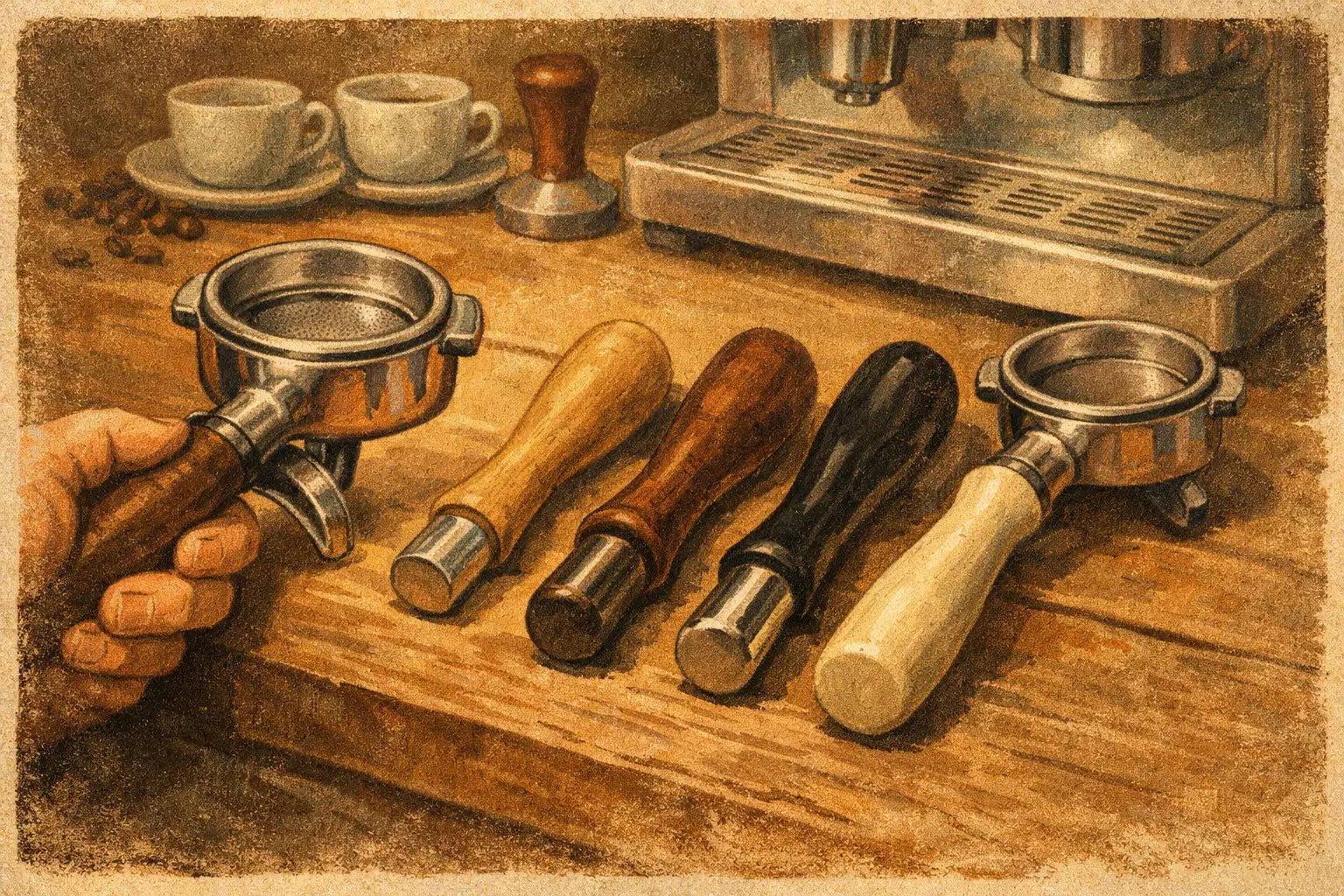
Material affects feel, maintenance, heat resistance, and appearance. Wood is a natural choice for espresso enthusiasts who want warmth and character on a stainless machine. Each grain pattern is different, and a handcrafted handle or knob adds a made-for-your-bar feeling that molded plastic cannot match.
Wood does need sensible care. Wipe it with a soft, damp cloth, then dry it promptly. Avoid soaking it, dishwashers, harsh cleaners, and leaving it in standing water. On a hot machine, make sure the design and placement are intended for that location. A portafilter handle experiences different heat and moisture than a bean hopper lid or grinder tray.
Metal parts can be highly durable and easy to wipe down, but their finish matters. Bare aluminum, coated steel, stainless steel, and brass all age differently. Plastic remains practical for certain lids, internal parts, and heat-sensitive applications. There is no single premium material for every job. The best choice is the one that fits the application, works safely, and matches the way you maintain your equipment.
Replace Wear Parts Before They Affect the Shot
Some components announce their age gradually. A group gasket becomes stiff, a shower screen collects baked-on coffee oils, a basket loses its clean edge, or a steam-tip seal begins to leak. Replacing these parts on a reasonable maintenance schedule protects both coffee quality and the machine.
Watch for signs such as water leaking around the portafilter during brewing, uneven shower flow, persistent off-flavors after cleaning, difficulty locking in the portafilter, or steam escaping around a knob or wand connection. These are useful prompts to inspect the relevant wear components.
For internal repairs involving boiler pressure, mains power, heating elements, pumps, or wiring, use the machine documentation and consider a qualified technician. A premium espresso machine is serviceable, but it is not a place to guess. Always unplug the machine, allow it to cool fully, and release pressure before working on any component connected to hot water or steam.
Upgrade the Contact Points You Use Every Day
Not every replacement needs to wait for a failure. The most satisfying upgrades often improve the parts your hands touch dozens of times each week.
A handcrafted portafilter handle can improve grip and balance while changing the visual center of the machine. A matching steam knob gives more confident control during milk texturing. A wooden bean hopper lid can tie the grinder into the rest of the coffee bar, while a fitted grinder tray makes stray grounds easier to manage.
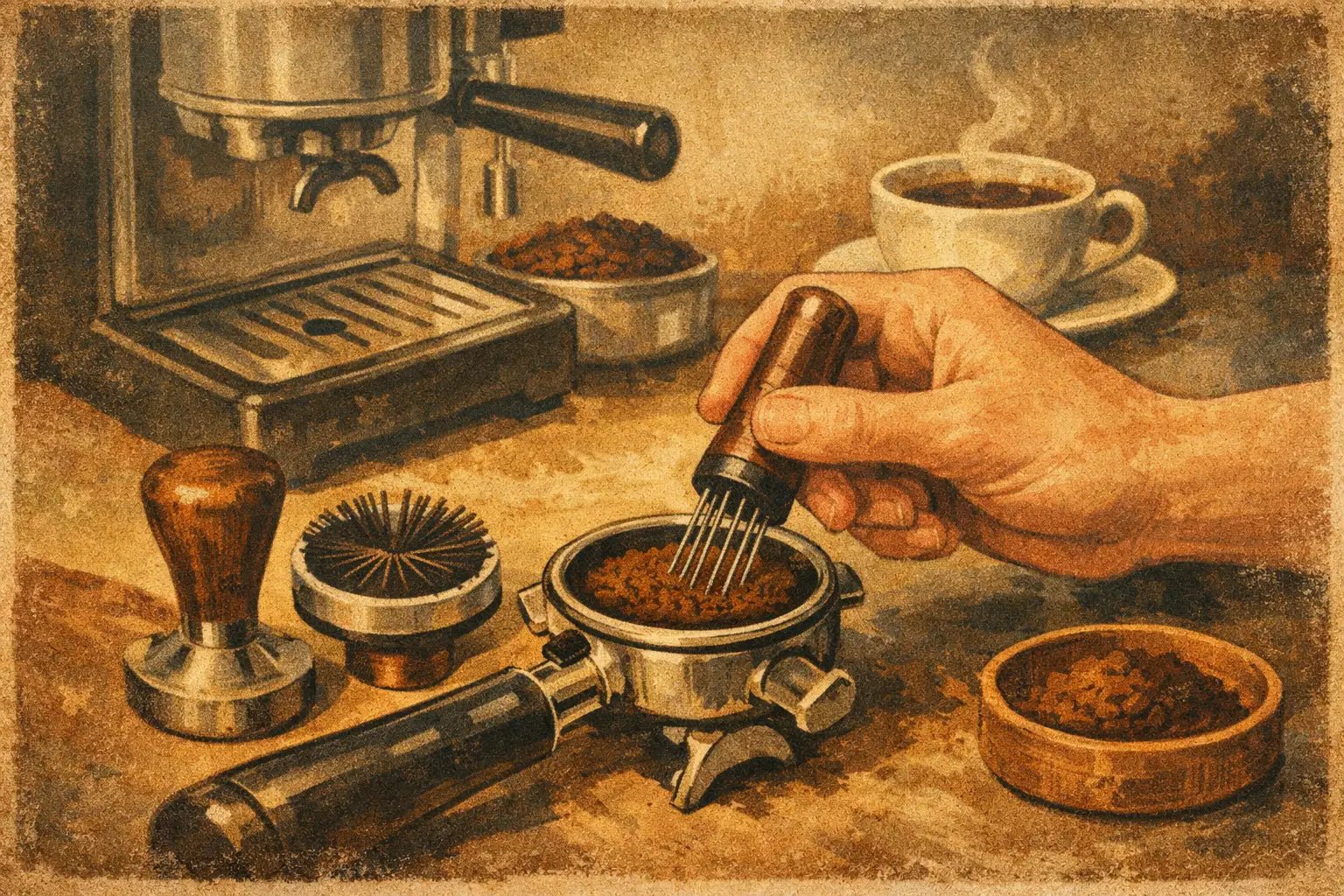
Workflow tools deserve the same fitment attention as machine parts. A dosing funnel should match the basket diameter and sit securely without blocking the portafilter ears. A tamper should match the real inside diameter of the basket, not merely the nominal size. A WDT tool should have fine enough needles to break clumps without aggressively stirring grounds out of the basket.
Matching a handle, knob, hopper lid, and tamper station can create a cohesive setup, but function should lead. If you frequently switch portafilters, prioritize handle geometry and comfort. If your grinder creates a messy dose, prioritize the tray and funnel. If milk drinks are your daily ritual, a steam-control upgrade may offer the most immediate value.
A Better Ordering Checklist
Before you commit to a replacement, confirm four practical details: your exact machine or grinder model, the existing part's attachment method, the measurements that affect fit, and the finish or wood tone you want. For custom requests, include photos and note any modifications already made to the machine.
Also consider shipping time if the part is made to order. Handcrafted work is worth planning around, particularly when you are coordinating several matching pieces. NepoCoffee can help detail-focused owners sort through model references and custom-fit questions before a piece enters the workshop.
A well-chosen replacement part does more than restore what was there before. It should make your machine easier to use, more enjoyable to maintain, and more recognizably yours each time you pull a shot.