Lelit Elizabeth Steam Knob Fit and Upgrade Guide
A Lelit Elizabeth steam knob does more than complete the look of the machine. It is the part your hand reaches for when milk is about to turn, the pitcher is cold, and you need precise steam control without fumbling. If the original knob is worn, loose, uncomfortable, or simply out of place beside a carefully built espresso station, replacing it can make a small but meaningful difference every day.
For Elizabeth owners, the right upgrade starts with fitment. The machine is compact, capable, and visually clean, so a steam knob should feel intentional rather than generic. A well-made replacement should operate smoothly, sit correctly on the steam valve, and give you a secure, comfortable grip when opening and closing steam.
Why the Lelit Elizabeth Steam Knob Matters
The Lelit Elizabeth is a dual-boiler machine built for home baristas who want espresso and steam on demand. Its steam control is part of the daily workflow, particularly for anyone making cappuccinos, flat whites, or several milk drinks in a row. The knob may look like a minor component, but it is one of the machine's most frequently touched parts.
A good knob gives your fingers enough purchase to make fine adjustments. That matters because steam power is not just on or off. Many baristas open the valve gradually to avoid blasting large bubbles into the milk, then increase flow as the pitcher warms. A slippery or undersized knob can make that control feel less confident, especially when hands are damp.
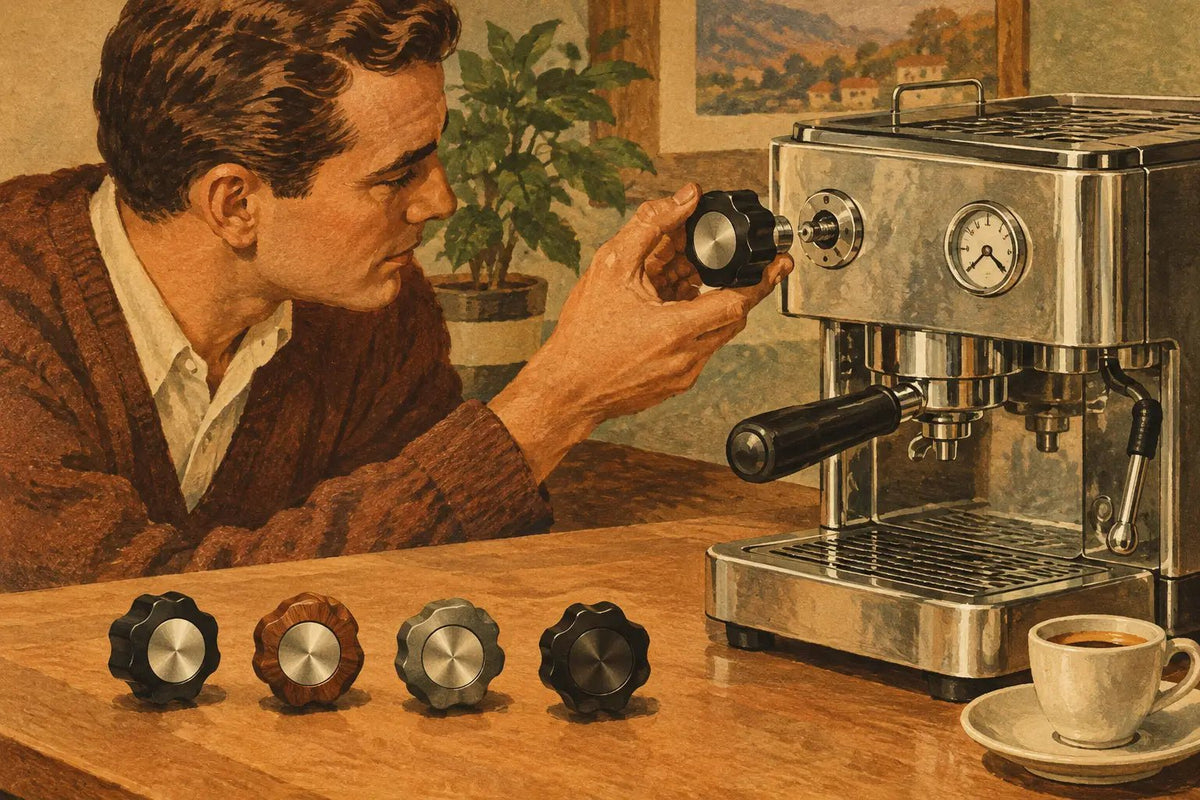
There is also the visual side. The Elizabeth has a polished, purposeful prosumer look. Adding a handcrafted wood steam knob can warm up the machine and bring it into line with a matching portafilter handle, flow control accent, grinder lid, or tamper station. For a setup built around both coffee quality and personal style, those details add up.
Fit Comes Before Finish
Before choosing a Lelit Elizabeth steam knob, confirm that the replacement is designed specifically for the Elizabeth valve assembly or has verified compatibility with it. Steam knobs are not universal just because they look similar from the front. The internal mounting design, shaft shape, fastener position, depth, and overall clearance all determine whether the knob installs securely.
A knob that is too shallow may not engage the shaft correctly. One with the wrong bore or screw arrangement may wobble, sit crooked, or fail to tighten. A knob with excessive diameter can also interfere with nearby controls or make the machine feel crowded. These are avoidable issues when a part is made around the correct model dimensions.
For custom or handcrafted parts, provide the exact machine model and, when requested, clear photos of the existing knob and valve area. Lelit has produced variations across product generations, and visual confirmation is useful when ordering a model-specific part. It is always better to check first than to force a nearly compatible piece onto a steam valve.
What to inspect on your existing knob
Start with the practical condition of the original part. If it turns normally but feels cosmetically tired, an aesthetic upgrade may be all you need. If it has cracked, spins independently of the valve, feels loose, or does not fully close steam, inspect the valve and mounting hardware as well.
A new knob cannot correct an internal steam-valve problem. If steam continues to leak from the wand after the valve is closed, or if the control has become unusually stiff, the underlying valve may need service. Replacing the external knob is still worthwhile when it is damaged, but it should not be treated as a repair for a mechanical fault inside the machine.
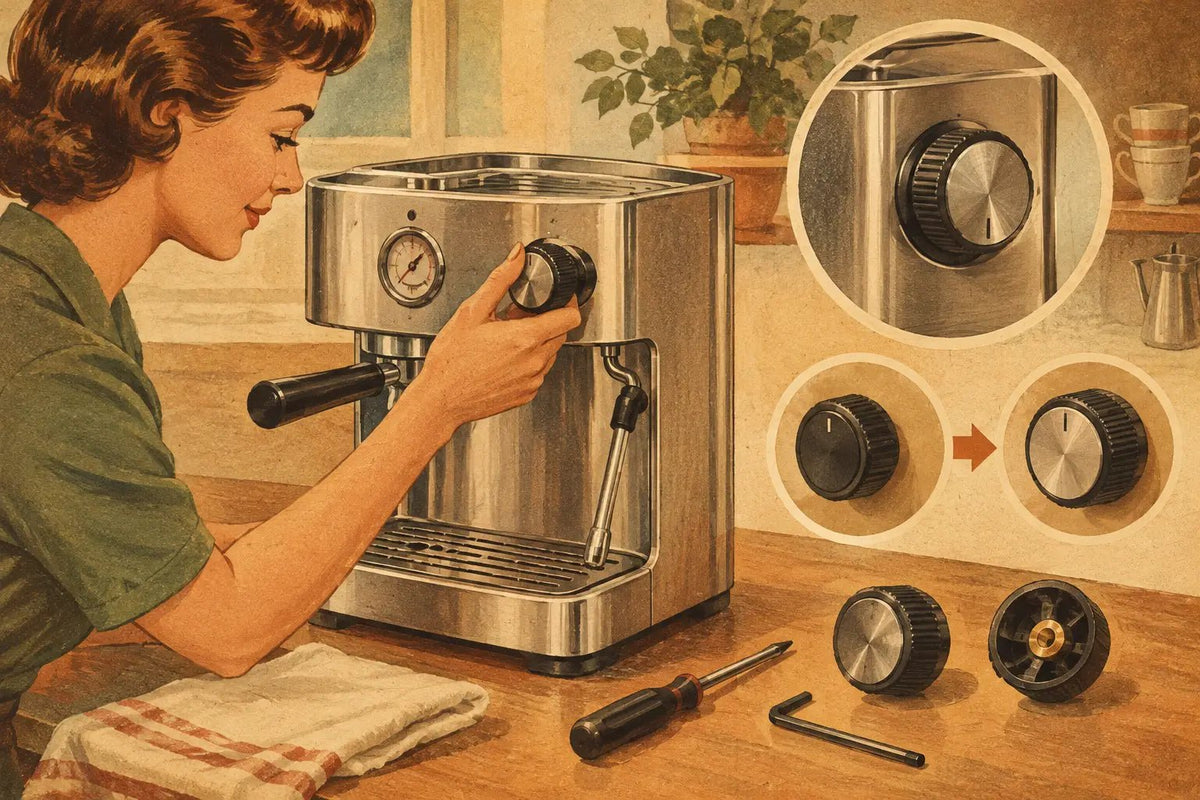
Also look for the original fastener and retain it unless the replacement includes compatible hardware. Small screws and inserts are easy to misplace during an upgrade, so work over a towel or tray rather than directly above the drip tray or countertop.
Wood, Metal, and Everyday Steam Use
Material choice changes both feel and appearance. A wooden steam knob brings tactile warmth that metal and plastic cannot duplicate. It can make an Elizabeth feel less like an appliance and more like a personal coffee tool, especially when paired with other handcrafted accessories.
Wood is not a compromise when it is properly selected, shaped, and finished for espresso equipment. The key is respecting its natural character. Grain direction, color variation, and small differences between pieces are part of the appeal of a handmade component. A dark walnut knob may have dramatic contrast; maple can look clean and bright; olive wood often carries more movement and figure. No two are exactly alike.
That said, the steam side of an espresso machine is a working environment. Keep the knob dry when possible and wipe away milk residue or condensation with a soft cloth. Avoid soaking it, using harsh cleaners, or leaving it wet after cleaning the steam wand. A quality finish provides protection, but sensible care keeps the surface looking its best over time.
Metal knobs have their own strengths. They can match stainless machines closely and may suit a more industrial setup. However, they can feel colder to the touch and may not provide the same comfortable texture as a shaped wood knob. The better choice depends on whether you want the machine to disappear into a polished steel aesthetic or become a warmer centerpiece on the bar.
Choosing the Right Shape and Size
The best steam knob is not automatically the largest one. Oversized knobs can offer leverage, but they may look out of proportion on the Elizabeth and can make delicate valve adjustments feel less natural. A thoughtfully sized knob should fill the hand without forcing an awkward grip.
Rounded profiles are familiar and easy to hold from several angles. A more sculpted shape can provide a clear resting place for fingertips, which some users prefer during milk steaming. Texture is equally personal. A smooth, finely finished wood surface feels refined, while subtle shaping or edge definition can add security without becoming uncomfortable.
Think about how you steam. If you use a small pitcher and keep one hand close to the machine, a compact knob with a precise feel may be ideal. If you routinely steam larger pitchers or prefer more leverage, a slightly fuller profile can be a better fit. The point is not to add bulk. It is to make a repeated movement feel easier.
Matching the rest of your setup
A steam knob looks most deliberate when it relates to other materials in the coffee station. Matching it to a wooden portafilter handle is the obvious route, but it is not the only one. You can repeat the same wood species across a grinder lid, dosing funnel accent, tamper handle, or knock box trim for a coordinated result.
Exact matching is not always necessary. A walnut knob beside a black grinder and stainless Elizabeth can create enough contrast to stand on its own. Lighter woods can work especially well in bright kitchens with maple, oak, or white cabinetry. Focus on a combination that you will enjoy seeing during the first coffee of the morning, not on chasing a showroom-perfect uniformity.
Installing a Replacement Steam Knob Carefully
Installation should be calm and deliberate. Start with the machine switched off, cool, and depressurized. Never work around the steam valve immediately after use. The valve, wand, and nearby surfaces can retain substantial heat.
Remove the original knob according to its mounting style, keeping track of any screw, cap, washer, or insert. Do not pry aggressively against the machine panel. Once the shaft is exposed, wipe away any dust or residue, then align the new knob fully before tightening its fastener.
Tighten until the knob is secure and operates without play, but do not overtighten. Excessive force can damage threads, deform an insert, or make future removal difficult. After installation, turn the control through its full range with the machine still cold. It should rotate smoothly without scraping the panel or binding at either end.
When the machine is warmed up again, test the steam valve normally and check that it opens and closes as expected. If anything feels wrong, stop and revisit fitment rather than forcing the part into position.
A Small Upgrade You Use Every Day
The best espresso upgrades tend to be the ones that improve the moments between big purchases. A well-fitted Lelit Elizabeth steam knob can make milk steaming more comfortable, refresh a tired machine, and give your setup a finish that feels distinctly yours.
For a custom piece, clear model details and a quick conversation with the maker are worth the effort. NepoCoffee builds handcrafted upgrades for owners who care about fit, function, and the pleasure of using equipment that looks as considered as the coffee it produces. Choose a knob that fits your machine correctly, suits your hands, and makes you want to steam one more pitcher.