Wooden Espresso Accessories Guide for Better Fit
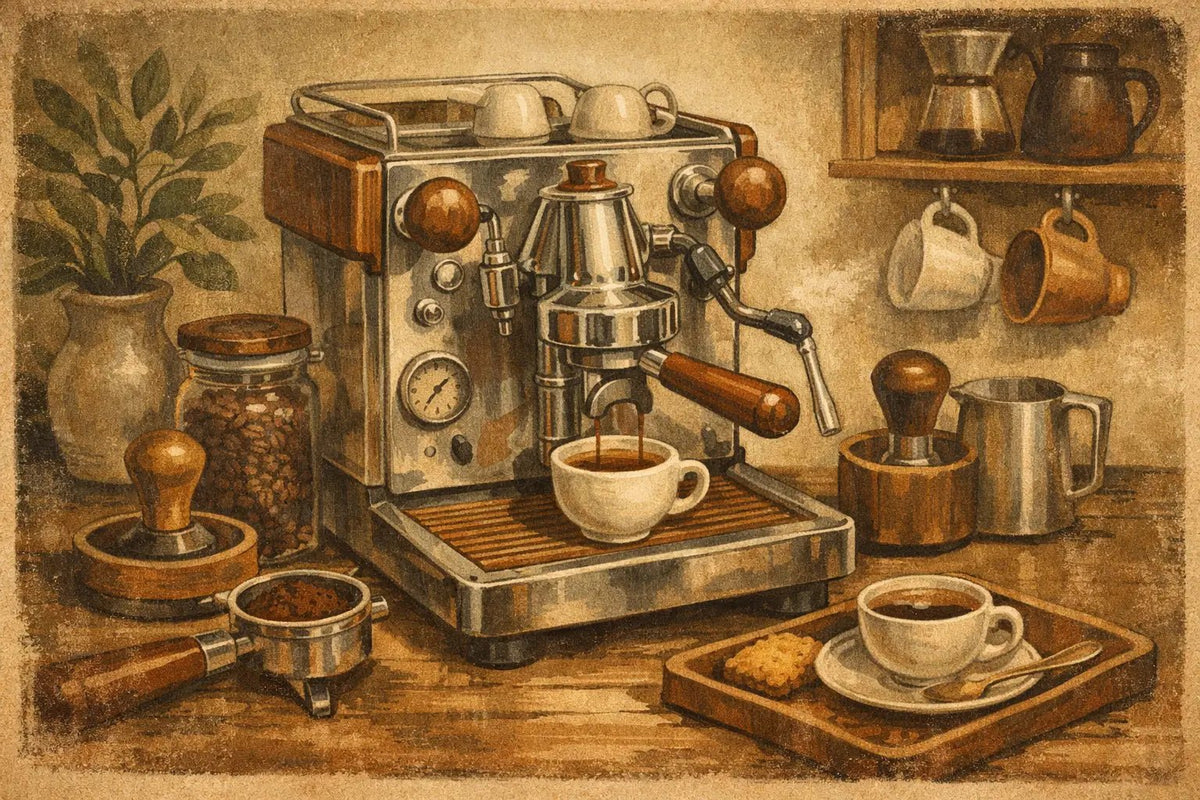
A well-built espresso setup earns its character one touchpoint at a time. This wooden espresso accessories guide focuses on the parts you use every day: the portafilter handle you lock in, the steam knob you turn, the tray beneath your grinder, and the tools that keep your puck prep clean. The right wood upgrade should not be decoration alone. It should fit correctly, feel natural in hand, and hold up to the real rhythm of making coffee.
Wooden Espresso Accessories Guide: Start With Fit
Before choosing a wood species or matching a color, confirm exactly what your machine or grinder needs. Premium espresso equipment is not interchangeable by default. A Breville steam knob does not use the same connection as an ECM knob, and a portafilter handle for a Lelit may differ from one made for a Rocket, Gaggia, Profitec, or La Marzocco setup.
Model-specific fitment matters because these accessories interact with moving, heat-exposed parts. A handle must seat securely on the portafilter head. A steam knob needs the proper insert, depth, and attachment point to turn smoothly without slipping. A hopper lid must sit level and clear the grinder’s working parts. Even a simple drip tray cover or grinder tray should be sized around the equipment it serves, not selected by appearance alone.
When ordering, identify the manufacturer, machine or grinder model, and the original part you are replacing. Photos of the existing component, its mounting area, and any measurements are especially helpful for older machines or modified equipment. Custom work is often the best route when a stock part is discontinued, worn out, or difficult to source.
Portafilter handles: the upgrade you feel most
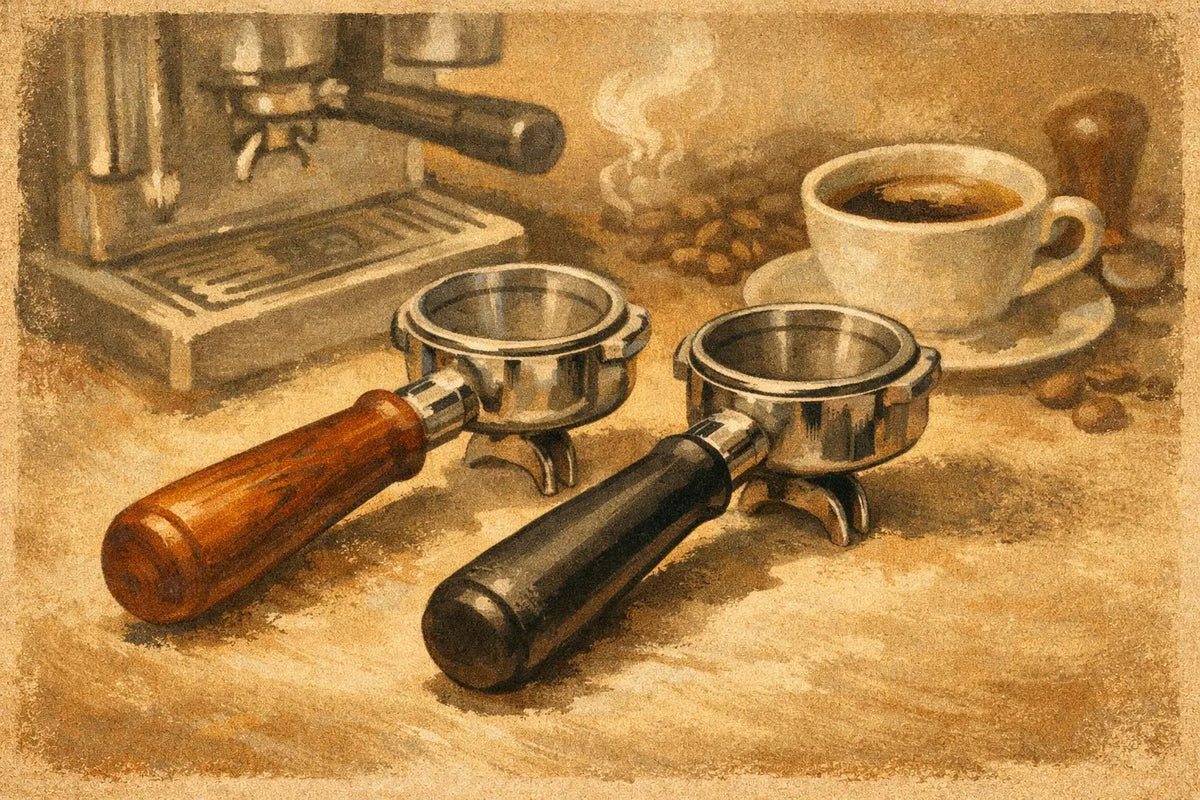
A wooden portafilter handle is usually the most noticeable change in a home bar. It is in your hand for every dose, distribution, tamp, lock-in, and knock-out. The best profile depends on how you work. A thicker handle can feel more secure for users who prefer a firm grip, while a slimmer shape may suit a compact machine or a lighter, more agile feel.
Pay attention to the handle’s thread and mounting style. Some portafilters use threaded handles, while others require a specific proprietary fitting or adapter. Do not assume a handle that looks right will install correctly. A poorly matched thread can damage the portafilter body or leave the handle loose under pressure.
Wood also changes the feel of a hot workflow. Unlike bare metal, it remains more comfortable to hold around a busy group head. That does not mean it is maintenance-free, but it makes a practical difference for people who pull several shots in a session.
Steam knobs, flow control knobs, and brew levers
Small controls can make an espresso machine feel entirely different. A handcrafted steam knob adds grip and warmth to one of the most frequently used controls on the machine. For manual machines and flow-control setups, a properly sized wood knob can make fine adjustments more comfortable and more deliberate.
The trade-off is heat and clearance. Steam-related components sit near heat, moisture, and moving metal parts, so the wood piece must be designed with the right internal hardware and dimensions. It should also leave enough space for your fingers to operate the control safely. A larger knob may look substantial, but it is not always the better choice on a narrow front panel.
Hopper lids and machine details
A wooden bean hopper lid can bring a grinder into the same visual family as your espresso machine. It is a clean upgrade for owners who have already replaced a portafilter handle or steam knob and want the whole bar to feel intentional. The lid needs an accurate diameter and seating edge, particularly on grinders that use a gasket, a locking collar, or a shaped hopper opening.
Other details deserve the same attention. Wooden replacement knobs, lever caps, group-head accents, and tray components can refresh equipment that still performs well but no longer looks the way you want. For a beloved machine with years of use, replacing a tired plastic or damaged factory part can be more satisfying than replacing the machine itself.
Build a Better Workflow Around the Wood
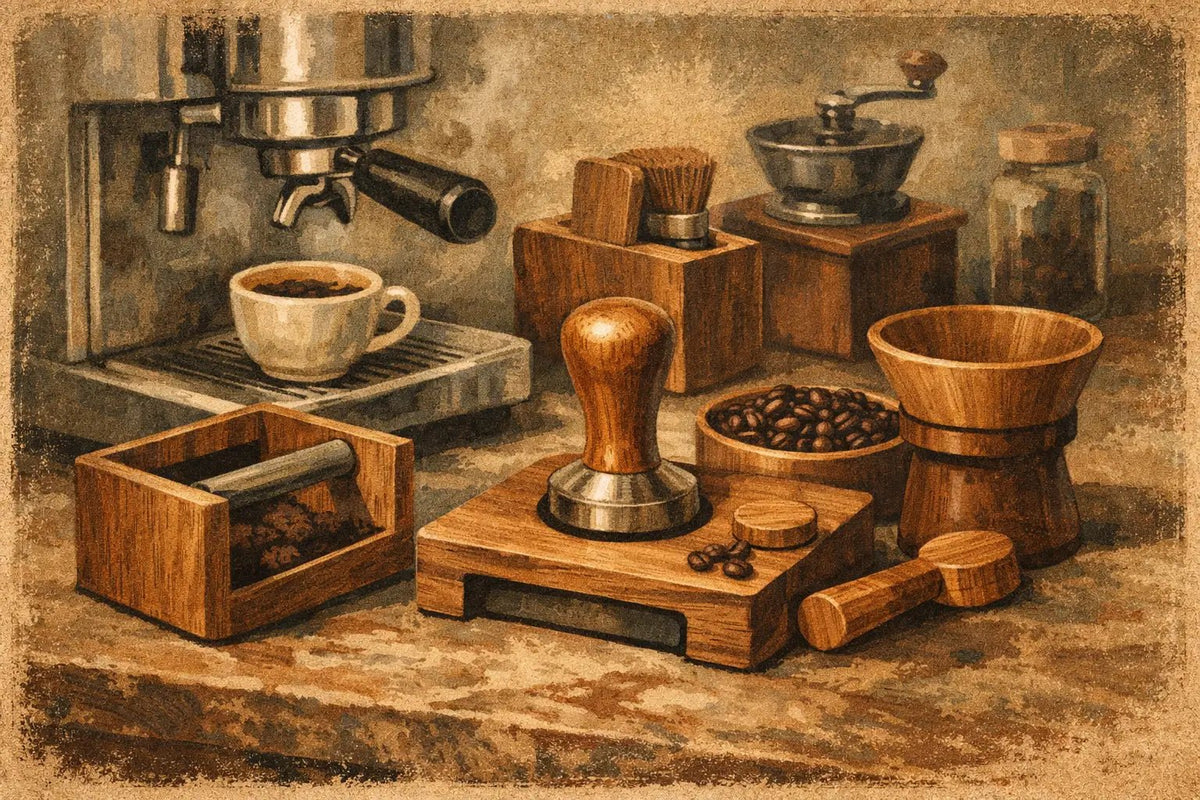
Wooden accessories work best when they support the tasks around espresso, not when they crowd the counter. Start with the points where your current routine creates friction. If grounds spill around the basket, a dosing funnel may be the first practical upgrade. If your WDT tool rolls around or your tamper has no home, a wood stand or organizer can keep the station cleaner and faster to reset.
A matching set can include a dosing funnel, WDT tool, tamper stand, puck screen holder, and grinder tray. These are not all necessary for every bar. A compact setup may benefit more from one excellent funnel and a slim tray than from a large collection of display pieces. Larger stations, especially those built around dual boilers and dedicated grinders, have room for coordinated accessories that organize the workflow from dose to extraction.
Grinder trays are particularly useful for single-dosing routines. They define a landing area for the dosing cup, bellows, brush, and stray grounds that would otherwise end up across the counter. Choose a tray based on the footprint of your grinder and the clearance you need to remove the cup or portafilter. A tray that looks beautiful but blocks normal movement becomes a frustration quickly.
Wooden WDT handles offer a different kind of benefit. The needles do the distribution work, but the handle determines balance and control. A well-shaped wood handle gives the tool a more substantial feel without making it cumbersome. For people who already pay attention to grind retention, dose weight, and puck preparation, that tactile consistency is part of the appeal.
Match Wood, Finish, and Machine Style
There is no single best wood for espresso accessories. Walnut often brings a darker, classic look that pairs naturally with stainless machines, black grinders, and warm kitchen finishes. Oak tends to feel lighter and more contemporary. Maple can brighten a setup, while deeper exotic woods create a stronger contrast against polished metal.
The practical question is not only which wood you like in a product photo. Consider the rest of the coffee bar: cabinet color, grinder finish, machine side panels, countertop material, and lighting. A dark walnut portafilter can look refined against brushed stainless steel but may disappear visually against a black machine. A lighter wood can create contrast, though it may show coffee oils or handling marks sooner.
Handcrafted wood has natural grain variation. That is part of the material, not a defect. Two accessories made from the same species will not have identical color or figure, and that makes a custom set feel more personal than a factory-molded kit. If matching matters, order related pieces together and communicate your preference for light, medium, or dark character when custom options are available.
Care for Wooden Accessories Without Overthinking It
Coffee bars are humid, busy spaces. Steam wand use, wet towels, splashes, and oily fingers are all normal. Wood handles this environment well when it is finished properly and treated with reasonable care.
Wipe wooden accessories with a soft, lightly damp cloth when needed, then dry them right away. Do not soak them, run them through a dishwasher, or leave them sitting in standing water. Avoid harsh degreasers and strong detergents, especially on finished surfaces. For a portafilter handle, clean stray coffee residue promptly instead of letting it build up at the metal-to-wood connection.
Over time, the finish may benefit from a light refresh depending on how often the piece is used and how dry your home is. Follow the maker’s specific care guidance rather than applying random kitchen oils. Some oils can become sticky or rancid, which is the opposite of what you want near espresso equipment. A properly cared-for wood accessory develops a gentle patina from use, not a worn-out appearance.
Know When Custom Is Worth It
Custom ordering makes the most sense when fitment is uncertain, when you are building a coordinated set, or when your machine has a part that generic sellers do not support. It is also valuable if you want a particular handle shape, wood tone, or hardware detail that is hard to find off the shelf.
NepoCoffee approaches these requests as equipment upgrades, not generic decor. That means the useful conversation starts with the machine model and the part you need, then moves to wood selection and the look you want. For rare, vintage, or heavily modified equipment, clear photos and measurements give the wooden master the best starting point.
A good wooden accessory should make you want to use your machine, not make you worry about it. Choose the pieces that solve a real fit, comfort, or workflow need first. Then let the grain, finish, and handmade details turn your daily espresso routine into a setup that feels unmistakably yours.