Wood Portafilter Handle vs Plastic: Which Fits?
A portafilter handle is one of the few parts of an espresso machine you touch on every single shot. That makes the wood portafilter handle vs plastic question more than a cosmetic choice. The material affects the feel of locking in, the way your machine looks on the counter, the care your setup needs, and sometimes the confidence you have during a busy morning workflow.
For most prosumer espresso owners, a wood handle is an upgrade in tactile experience and visual character. Plastic remains a practical, low-maintenance option, especially when the factory handle is comfortable and in good shape. The right choice depends on how you use your machine, how much maintenance you welcome, and whether fitment is confirmed for your exact portafilter.
Wood Portafilter Handle vs Plastic: The Real Differences
The brewing result does not change simply because the handle is wood rather than plastic. Basket size, dose, distribution, puck preparation, water temperature, pressure, and grinder adjustment do the work in the cup. A handle upgrade changes the interaction around that work.
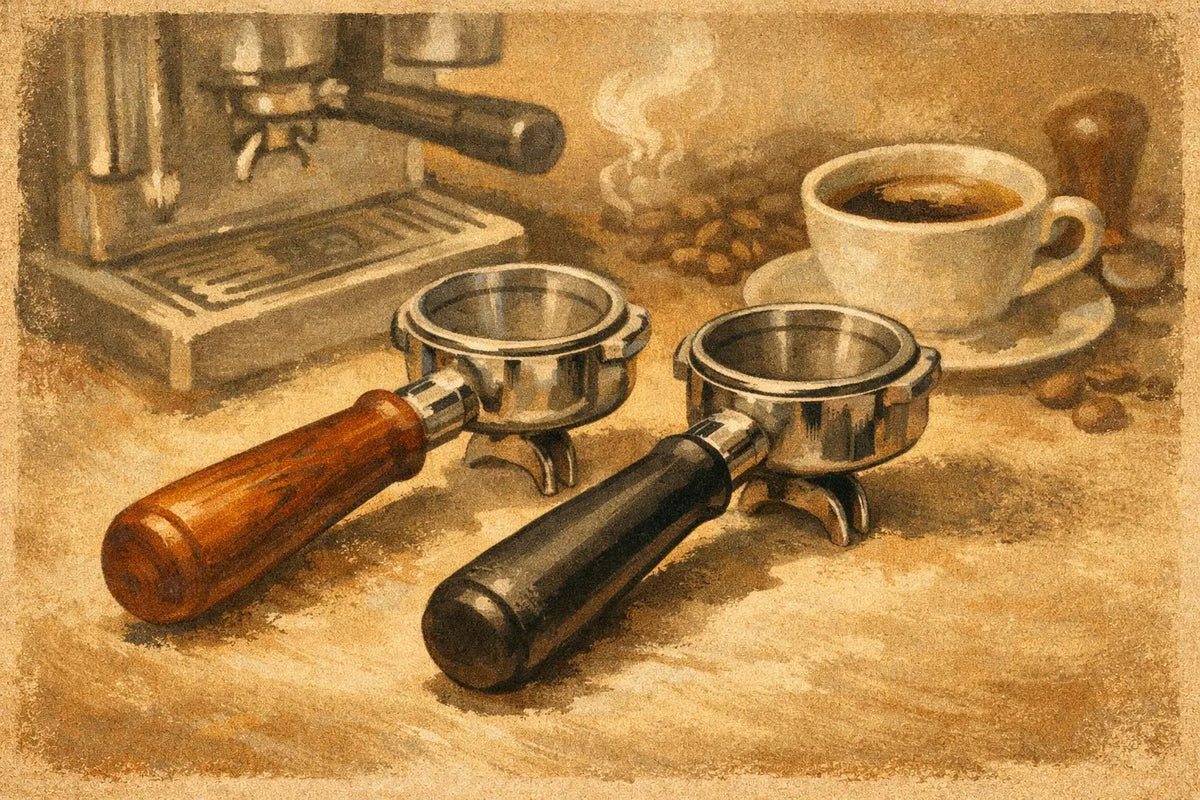
Wood has a warmer, more substantial feel in the hand. It can make a stock portafilter feel less industrial and more like a purposeful piece of bar equipment. Each handle also has natural grain and color variation, so a walnut, oak, olive wood, or other hardwood upgrade brings a less uniform appearance than molded plastic. That is exactly the appeal for many home baristas building a coordinated coffee station.
Plastic is predictable. It is usually lightweight, inexpensive, resistant to routine moisture, and ready for hard daily use with almost no attention. A factory plastic handle may not make a visual statement, but it does not need oiling and is less likely to show minor cosmetic changes from humidity or age.
Grip and workflow
A well-shaped wood handle often feels more secure because it can be made with a fuller profile, a contoured grip, or a length that suits the user and machine. This matters most when you are locking in a heavy 58 mm portafilter or working with a tighter group head gasket. The added sense of control is not necessarily about more torque. It is about a grip that feels natural and deliberate.
Plastic handles vary widely. Some are slim, angular, or hollow-feeling. Others are very comfortable and have served their owners for years without complaint. If your current handle already feels right, there is no performance emergency to solve. The argument for wood is usually better ergonomics, a more premium touchpoint, and a custom look rather than a required brewing upgrade.
Heat and comfort
The handle itself should stay far cooler than the metal portafilter head, regardless of material. Both wood and plastic are poor conductors compared with stainless steel or brass, which helps keep the grip comfortable after the portafilter has been sitting in a hot group head.
Wood feels warmer at room temperature and less synthetic in the hand, a small detail that becomes noticeable when you make espresso every day. Plastic is also comfortable, but low-quality plastic can feel slick when wet or become less pleasant over time. Neither material eliminates the need to handle a hot portafilter carefully near the basket and metal body.
Durability Depends on Care and Construction
A properly finished hardwood handle can last for years. The key is that it must be made for a coffee environment, with a secure threaded insert or compatible mounting arrangement and a finish appropriate for repeated handling. Good craftsmanship matters more than the word “wood” on its own.
Wood is a natural material. It can darken slightly, develop a richer patina, or show small signs of use. Many enthusiasts enjoy that lived-in look. But wood does not belong in a dishwasher, and it should not be left soaking in a sink. Repeated saturation, harsh detergents, and dramatic swings in moisture can damage the finish or stress the material.
Plastic generally wins the low-maintenance durability contest. It tolerates splashes, cleaning products, and casual treatment more easily. It can still crack, loosen, discolor, or become sticky with age, particularly on older machines or lower-cost parts. When a plastic handle fails, it is usually replaced rather than restored.
Caring for a wood handle
Daily care is simple. Wipe the handle with a soft, damp cloth if coffee residue or fingerprints build up, then dry it. Avoid abrasive pads and strong degreasers. If the finish begins to look dry after extended use, follow the maker’s care guidance for the specific wood and finish.
Do not confuse portafilter cleaning with handle cleaning. You may need to soak baskets, screens, and the metal portafilter body in espresso cleaner, but the wood handle should be removed first when possible. This preserves the finish and keeps cleaning chemicals away from the wood.
Style Is a Valid Reason to Upgrade
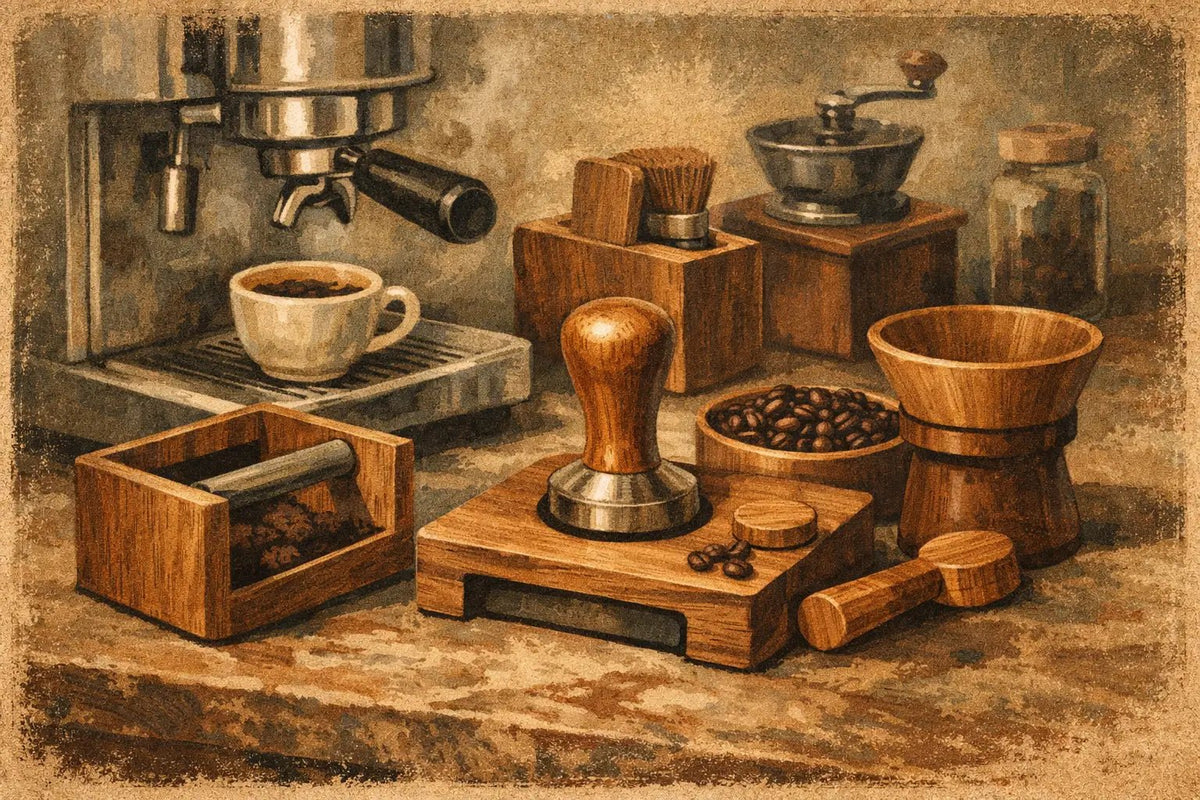
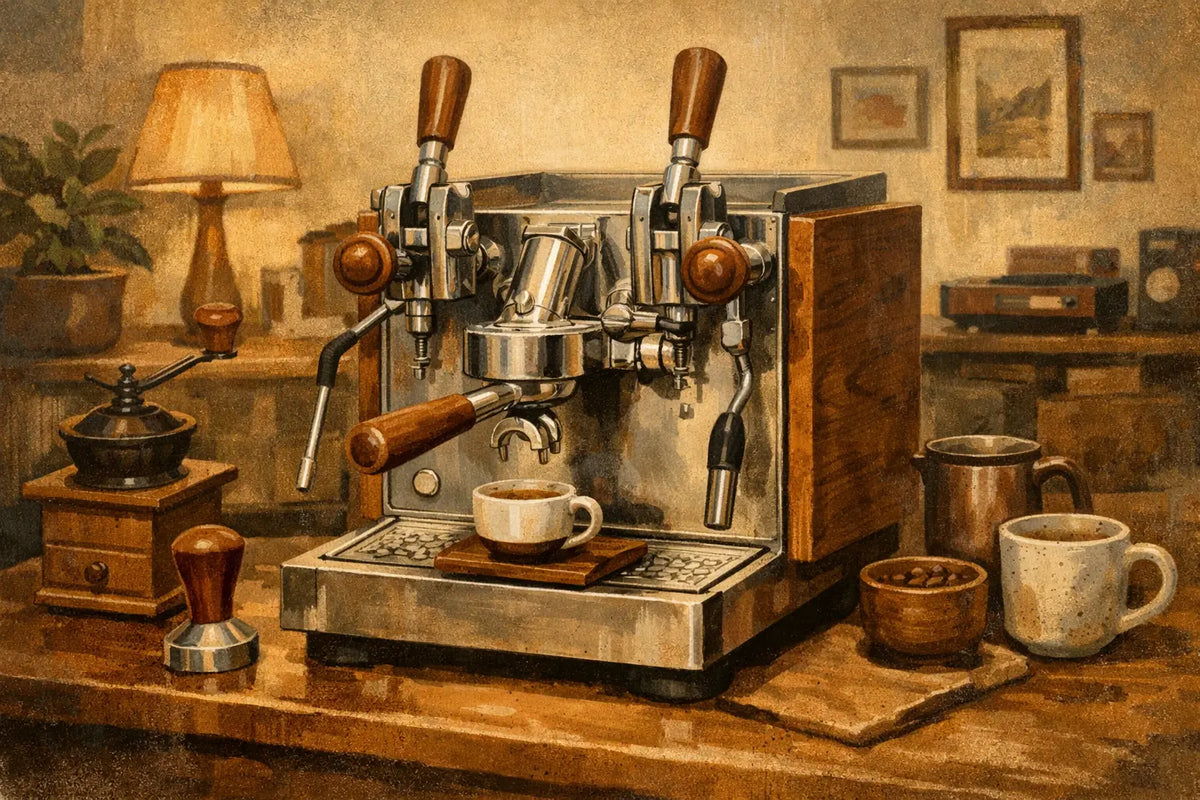
Home espresso equipment is functional, but it is also part of the kitchen or coffee bar. A wood portafilter handle can tie together a grinder tray, tamper handle, steam knob, bean hopper lid, WDT tool, or dosing funnel. On machines from Breville, Gaggia, Lelit, ECM, Rocket, Profitec, and La Marzocco, that coordination can turn an otherwise stock setup into one that feels genuinely personal.
Walnut often suits darker machines, black grinders, and stainless steel cases. Lighter woods can brighten a compact setup or complement warm cabinets and open shelving. The goal is not to make every accessory match perfectly. A few intentional wood touchpoints usually look better than a counter crowded with unrelated finishes.
Plastic makes more sense when you prefer the original manufacturer look, share the machine with people who will not follow special care instructions, or need a replacement that can take a lot of rough treatment. It is also a sensible choice for a secondary portafilter used mainly for backflushing or for a utility-focused setup where appearance is not the priority.
Fitment Matters More Than the Material
Before choosing either option, confirm how the handle attaches. Portafilter handles are not universal. Thread diameter, thread pitch, mounting depth, collar design, handle angle, and the portafilter body itself can differ by machine and even by production generation.
A handle that looks right in a product photo may not fit a Breville, E61-style, Gaggia, or commercial-style portafilter without the correct thread and insert. A poorly matched handle can sit crooked, bottom out before tightening, wobble, or damage the mounting point. That is why model-specific details are worth providing when ordering a replacement or custom piece.
If you have a nonstandard bottomless portafilter, an aftermarket basket carrier, or a machine with uncertain history, measure the existing threaded stud or remove the old handle and verify the attachment style. Clear photos and dimensions can prevent an expensive guess. NepoCoffee can help with custom requests when standard listings do not match the portafilter in your hand.
When Plastic Is the Better Choice
Choose plastic when your first priority is minimum upkeep. It is especially practical for households where multiple people use the machine, for rental properties, or for anyone who prefers to clean every removable part without thinking twice about finish care.
Plastic also makes sense if you are still sorting out your workflow. Spend first on a capable grinder, fresh coffee, a precise basket, a scale, and puck-prep tools if those areas need attention. A beautiful wood handle improves the ownership experience, but it will not compensate for an inconsistent grind or poor distribution.
When a Wood Handle Is Worth It
Choose wood when your machine is already performing well and you want it to feel more like your own. It is a particularly satisfying upgrade for owners who pull espresso daily, value the tactile details of their setup, and want accessories that look considered rather than factory-standard.
It is also worth choosing wood when the stock handle is worn, loose, uncomfortable, or visually out of place with the rest of your station. A correctly fitted handcrafted replacement gives you a practical repair and a visual upgrade at the same time.
The best handle is the one you will enjoy using without compromising fit or maintenance. Confirm your portafilter details, choose a shape that feels good in your hand, and let the material support the kind of coffee bar you actually want to use every morning.