Can Wood Handles Be Refinished for Espresso?
A well-used wooden portafilter handle tells the truth about a coffee bar. It picks up heat, coffee oils, water spots, and the small knocks that come with daily dialing-in. So, can wood handles be refinished? In many cases, absolutely. A careful refinish can bring back a dry, faded, or lightly scratched handle without changing the character that made you choose wood in the first place.
The key is knowing what you are working with. A solid wood handle with surface wear is a strong candidate for restoration. A handle with deep cracks, loose hardware, swelling around the insert, or an unknown coating that is peeling may need more than a quick sanding and fresh oil. For espresso equipment, function matters as much as appearance: the handle must remain secure, comfortable, and able to handle routine heat and moisture.
Can wood handles be refinished without ruining them?
Yes, provided the wood is structurally sound and you remove only as much material as necessary. Most refinishing mistakes come from sanding too aggressively, using a finish that feels sticky or plasticky, or rushing the cure time before putting the handle back into service.
Wooden espresso handles are commonly made from hardwoods such as walnut, maple, oak, or olive wood. Each reacts differently to moisture and finishing products. Walnut tends to refinish beautifully and develops a rich, deep tone with oil. Maple is lighter and less forgiving of uneven stain or dirty sanding marks. Open-grained woods may need a little more attention to achieve an even feel.
Before you begin, inspect the handle in bright light. Fine scratches, dullness, and minor water rings are cosmetic. A hairline crack near the threaded insert is not. If the metal fitting moves inside the wood, stop there. Sanding and oil will not restore a compromised connection, and a loose portafilter handle is not a part to gamble with.
Identify the existing finish first
Not every wood handle has the same finish. Some are treated with penetrating oils or hardwax oils, while others have a lacquer, polyurethane, varnish, or thick factory coating. The right approach depends on what is already on the wood.
An oiled finish usually looks natural and feels close to bare wood. It may fade or become dry around the areas your hand grips most often. This is the easiest type to refresh because a light scuff sanding and a compatible oil can often do the job.
A film finish sits on top of the wood. It may look glossy, very smooth, and slightly thicker at the edges. If it is intact but dull, gentle cleaning and polishing may be enough. If it is chipped or peeling, plan on sanding the coating back evenly before applying a new finish. Spot repairs on a glossy film finish can show as obvious patches.
If you do not know what was used originally, start conservatively. Clean the handle, test a small hidden area with very fine sandpaper, and see whether the surface powders lightly or softens. Avoid strong solvents unless you know the finish and have a safe workspace. They can discolor certain woods, affect adhesives around inserts, and create more work than they save.
How to refinish a wooden portafilter handle
Remove the handle from the portafilter if the design allows it. Working with the wood separated from the metal is cleaner and gives you better control around the threaded end. If the handle cannot be removed, carefully mask the metal and keep moisture away from seams.
Start by wiping the wood with a soft cloth that is only lightly dampened with warm water and a small amount of mild dish soap. The goal is to lift coffee oils and hand residue, not soak the handle. Dry it completely before sanding. Water left in the wood can raise the grain and make the final finish feel rough.
For light wear, begin with 320-grit sandpaper. Sand with the grain using gentle, even passes. You are not trying to reshape the handle or erase every mark. A few small dents and darker areas are part of natural wood, and chasing them can make a rounded handle uneven.
If the existing coating is damaged or the scratches are more pronounced, start at 180 or 220 grit, then move through 320 and 400 grit. Keep the paper moving around curves and edges. Flat spots, especially near the ferrule or threaded insert, are a common sign of over-sanding. After each grit, remove dust with a clean, dry cloth.
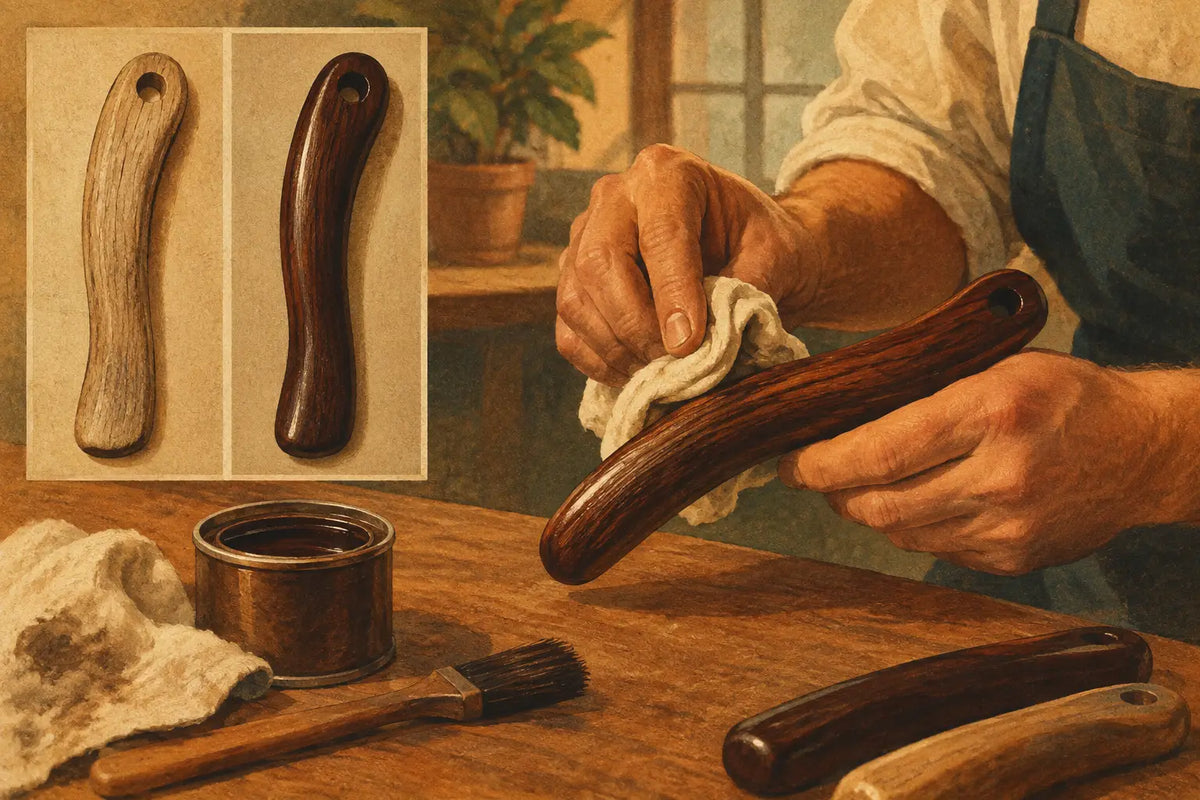
Once the surface feels consistently smooth, apply a finish made for wood items that are handled often. A food-safe hardwax oil or a quality curing wood oil is often a good fit for espresso handles because it leaves a natural feel and is easier to renew later than a thick gloss coating. Apply a small amount with a lint-free cloth, let it penetrate according to the product directions, then wipe away all excess.
This last step matters. Excess oil left on the surface can dry tacky, attract dust, and leave fingerprints. Several thin coats are better than one heavy coat. Let the handle cure fully before reinstalling it and exposing it to the heat and steam of a coffee routine. Dry to the touch is not always cured, so follow the finish manufacturer’s timing rather than guessing.
Keep water and heat in perspective
A finished wood handle is durable, but it is not maintenance-free. Espresso equipment creates a humid environment, especially around a steam wand, drip tray, and sink. Do not soak a wooden handle, run it through a dishwasher, or leave it resting in standing water. Wipe it dry after cleaning and avoid strong degreasers that strip oils from the surface.
Heat from a portafilter is usually manageable for a properly made hardwood handle, but extreme cycles can stress both wood and hardware over time. If your handle feels unusually hot, check whether the metal insert is seated correctly and whether the handle design provides enough insulation for your machine and workflow.
When refinishing is not the best answer
Some handles are better replaced than restored. Deep splits, rot-like soft spots, persistent odors from absorbed oils, or a loose threaded insert are practical reasons to start fresh. The same goes for a handle that has been sanded repeatedly and no longer has an even shape.
Replacement also makes sense when you want a different feel at the bar. A longer or more contoured portafilter handle can improve leverage, while a new wood species can tie together a grinder tray, tamper handle, dosing funnel stand, or steam knob. For owners of Breville, ECM, Lelit, Rocket, La Marzocco, Gaggia, Bezzera, and Profitec machines, compatibility is the detail that cannot be treated as an afterthought. Thread size, insert depth, handle angle, and machine-specific fit all matter.
A custom replacement is often the cleaner choice when the original part has questionable construction or when you want a coordinated upgrade rather than a repair. NepoCoffee builds handcrafted wood accessories around those fitment details, with options for enthusiasts who want their portafilter, grinder, and machine to feel like one intentional setup.
A simple care routine after refinishing
You do not need to baby a refinished handle. Wipe it with a dry or barely damp microfiber cloth after use, especially if it has been splashed with coffee or cleaner. Every few months, check for dryness by looking at the sheen and feeling the surface. If the wood starts to look faded or feels less smooth, a light refresh with the same compatible finish is usually all it needs.
Avoid switching among unrelated oils and coatings. Consistency makes future maintenance easier and prevents adhesion problems if you ever decide to sand and refinish again. Keep a note of the product used, particularly if you have several matching wooden accessories.
A good wooden handle should earn its patina, not deteriorate under it. Restore it when the wear is only surface-deep, replace it when the structure or fit is no longer trustworthy, and give the finished piece enough cure time to become part of your daily espresso ritual again.