Espresso Machine Aesthetic Upgrades That Work
A polished stainless machine can make excellent coffee and still feel unfinished on the counter. The factory black plastic handle, a scratched steam knob, and a mismatched hopper lid can pull attention away from an otherwise thoughtful setup. The right espresso machine aesthetic upgrades make the station feel intentional without turning it into a display piece you are afraid to use.
For home baristas, appearance is not separate from the ritual. You touch the portafilter, move the grinder tray, adjust steam, and reach for the tamper every day. Materials, shape, and fit affect how the process feels as much as how the coffee bar looks in a photo.
Start With the Parts You Touch Most
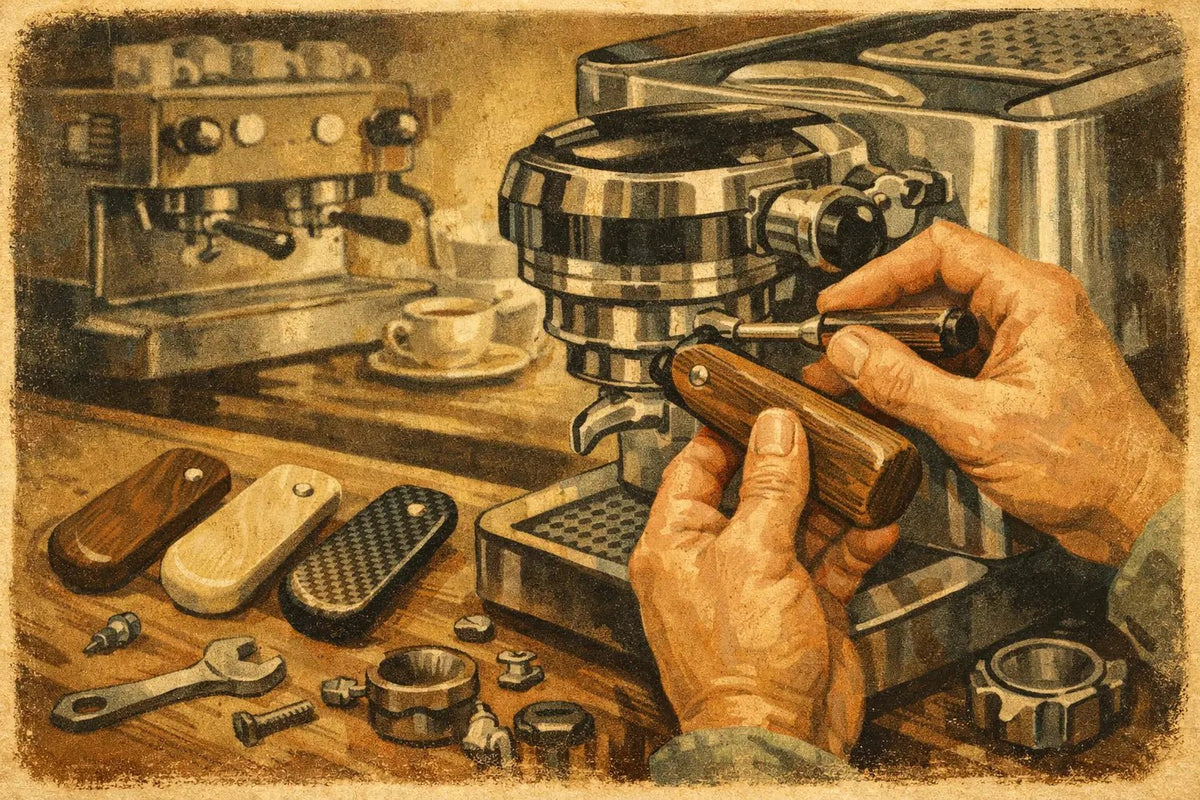
The best first upgrade is usually a portafilter handle. A handcrafted wood handle changes the visual balance of a machine immediately, especially on Breville, Gaggia, Lelit, Rocket, ECM, Profitec, and E61-style equipment where chrome and dark plastic are common. It also gives your hand a warmer, more substantial contact point during dosing and locking in.
Wood choice matters. Walnut creates a deep, classic contrast against stainless steel. Olive wood brings movement and natural variation, so no two pieces look exactly alike. Maple and lighter woods can make a compact setup feel brighter and more modern. There is no universal best choice. A darker machine, black grinder, and warm kitchen cabinetry may call for a lighter accent, while a bright steel machine often looks grounded with walnut.
Match the handle profile to the way you brew. A slim, elegant handle can suit a machine used for occasional espresso, while a fuller profile feels better for repeated milk drinks and back-to-back shots. The practical detail is fitment: thread type, length, and portafilter compatibility matter more than a beautiful product photo. Confirm your exact machine or portafilter model before ordering any replacement handle.
Steam knobs are another small change with oversized impact. They sit at eye level and are used constantly on milk drinks. Replacing a generic plastic knob with a wood or custom-finished alternative can visually tie the machine to the portafilter and grinder. Just be realistic about heat exposure and clearance. A knob must be designed for the machine’s valve and should operate cleanly without rubbing the body panel.
Build a Coordinated Coffee Station, Not a Matching Set
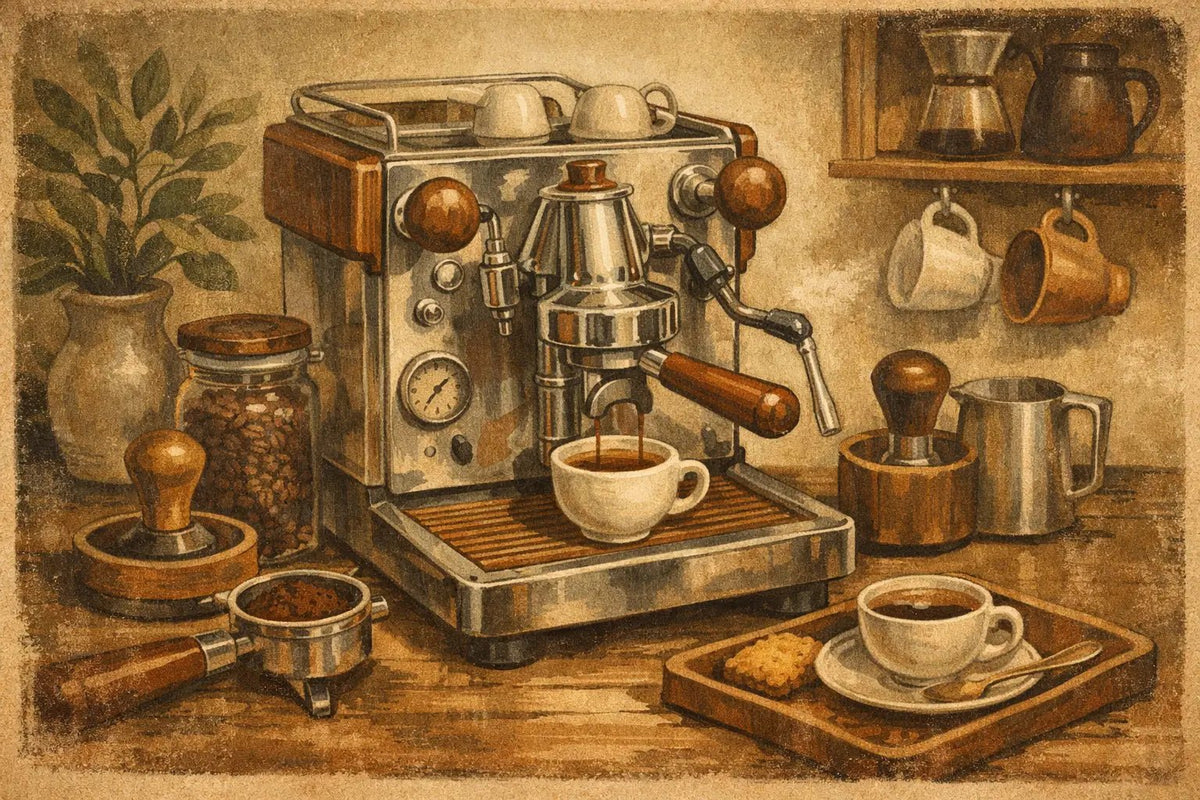
A coordinated setup does not require every accessory to be the same wood species or color. In fact, a perfectly matched collection can look more staged than personal. A better approach is to repeat one or two visual cues: warm wood against metal, black hardware against dark grain, or a rounded profile across the portafilter, tamper, and dosing tools.
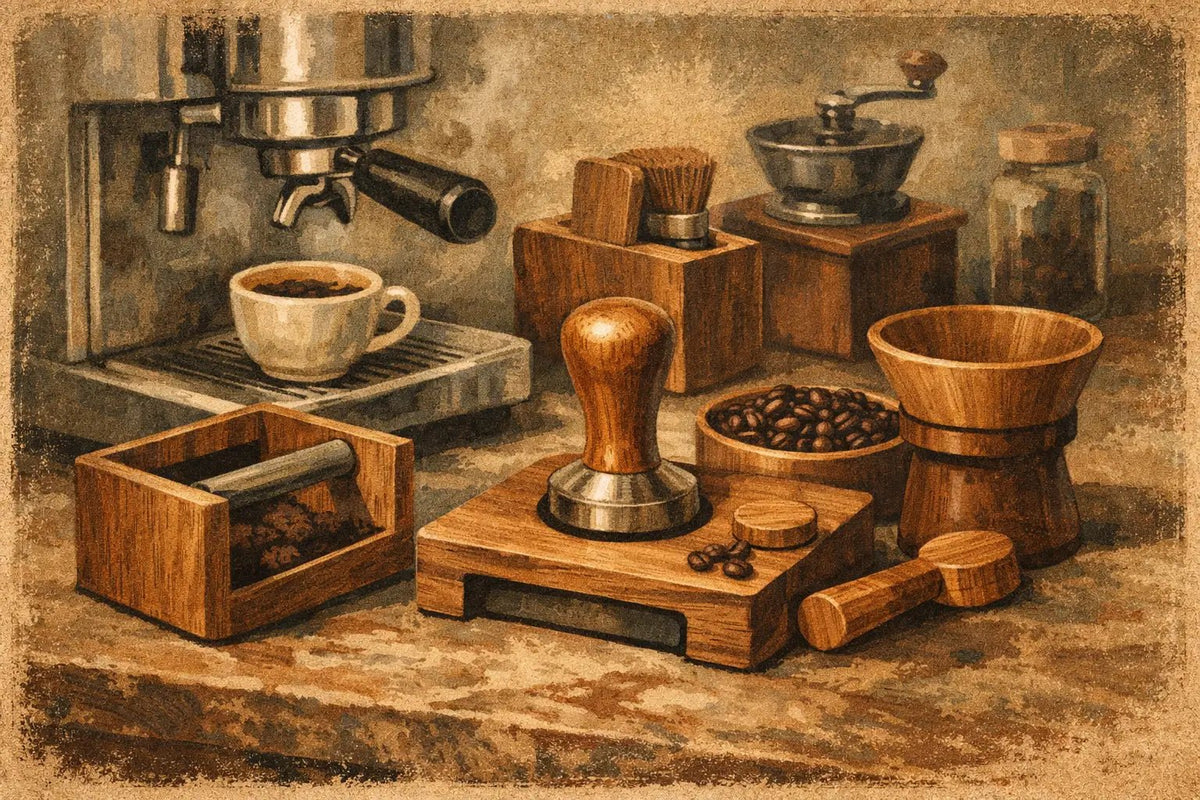
Your grinder deserves the same attention as the machine. A wood bean hopper lid, dosing cup stand, or grinder tray can make a capable grinder feel like part of the station instead of a separate appliance. This is especially useful when the grinder has a large plastic hopper or a prominent factory-branded top that dominates the counter.
Think about the counter as a whole. If your machine and grinder are polished steel, wood accessories can soften the industrial look. If you have a black Breville or dark-coated machine, a lighter wood may prevent the setup from becoming visually heavy. If the kitchen is already full of oak, walnut, or brass details, choose a finish that relates to those materials rather than competing with them.
The goal is continuity, not uniformity. A walnut portafilter handle with a black WDT tool and a stainless dosing funnel can look more refined than three accessories forced into the same finish.
Espresso Machine Aesthetic Upgrades Should Improve Workflow
The most satisfying upgrades earn their place during every shot. A dosing funnel, for example, can reduce grounds on the counter while giving the prep area a cleaner, more finished look. A well-made funnel should fit securely on the basket, clear the grinder chute, and leave enough room for distribution. The wrong diameter or magnetic arrangement can be more frustrating than helpful.
A WDT tool is another practical visual upgrade. It is easy to treat it as countertop decor, but needle spacing, handle comfort, and storage all affect whether it becomes part of your routine. Choose one that feels balanced in hand and has a place to live between shots. A tool that rolls around the counter or catches on a towel will not make the coffee bar feel more organized.
Tamping accessories deserve the same standard. A wood-handled tamper, a fitted tamper stand, or a matching puck screen holder can bring order to the station, but only if the tamper is sized correctly for the basket you use. Precision baskets often need a more exact diameter than stock baskets. Measure first, then choose the finish.
Flow control upgrades can also change the machine’s appearance, particularly on E61 groups. A custom knob makes the control feel more deliberate and gives the front of the machine a personal signature. Still, function comes first. Check the specific group-head configuration, shaft dimensions, and whether the upgrade is intended for your valve assembly. A custom part should feel like it belongs there, not like it was adapted to fit.
Know When to Restore Instead of Redesign
Not every machine needs a new look. Sometimes the best aesthetic upgrade is a correct replacement part. A cracked hopper lid, worn steam knob, faded rubber foot, or damaged portafilter handle can make premium equipment look neglected even when it is mechanically sound.
Replacement parts are especially valuable for machines that are otherwise hard to personalize. A fresh, model-specific component restores the original function while giving you the opportunity to choose a more distinctive material or finish. This can be a smarter investment than changing several accessories at once.
Take a close look at the details before deciding what to replace. Are the machine’s plastic parts actually worn, or do they simply contrast with the rest of your setup? Is the issue cosmetic, or is the part loose, uncomfortable, or difficult to clean? That distinction helps prioritize money where it has the most effect.
For older machines, preservation may matter more than a total visual overhaul. Keep original parts if you may sell the machine later, and choose reversible upgrades where possible. A custom portafilter handle is easy to swap back. Permanent modifications to panels or electronics are a different commitment.
Choose Materials That Can Handle a Coffee Bar
Wood is a natural fit for espresso equipment because it brings warmth to machines built from steel, aluminum, and plastic. It also needs sensible care. Wipe wood components with a lightly damp cloth rather than soaking them, avoid dishwashers, and do not leave them sitting in standing water near the drip tray. Coffee oils and steam are part of the environment, so a properly finished accessory matters.
Stainless steel and aluminum accessories offer a crisp, technical look and are often easier to wipe down. They can be the better choice for high-volume households, especially around wet areas. Black-coated accessories provide contrast, but coatings can show wear at contact points over time. That is not necessarily a deal-breaker - some owners like the patina - but it is worth expecting.
Custom work adds another consideration: natural wood grain varies. That variation is the point of handcrafted accessories, not a flaw. If you need a very specific color relationship with cabinetry, a tamper, or another wood piece, communicate that before production. At NepoCoffee, the most useful custom requests include the machine model, the part being replaced, preferred wood, and any measurements or photos that clarify fitment.
Plan Your Upgrade Order
A thoughtful coffee bar usually comes together one functional layer at a time. Begin with the portafilter handle or steam knob, then bring in the grinder with a hopper lid or tray. After that, refine the prep area with a dosing funnel, WDT tool, tamper, and storage. This order prevents a pile of accessories from overwhelming the machine itself.
Before committing, check four things: the exact model, the required thread or diameter, operating clearance, and how the new part will interact with heat and moisture. Those checks take minutes and prevent the most common disappointment with custom espresso accessories: a beautiful piece that is almost right.
A coffee station should show that it is used, not merely styled. Choose upgrades that make you want to dose carefully, steam confidently, and wipe down the counter after the last shot. When the parts fit both your machine and your routine, the finished setup will feel personal long after the novelty wears off.