Grinder Accessories That Improve Every Dose
A great grinder can produce excellent coffee, but the space around it often decides whether your morning routine feels precise or frustrating. Static clinging to the chute, grounds scattered across the counter, an awkward dosing cup, or a hopper lid that does not suit your setup can turn a capable grinder into a daily annoyance. The right grinder accessories solve those small problems while giving your espresso station a more intentional, personal finish.
For home baristas who already care about dose weight, distribution, and shot consistency, accessories are not just decorative add-ons. They can make the workflow cleaner, faster, and easier to repeat. The key is choosing pieces that fit your grinder, your brewing habits, and the amount of space you actually have on the counter.
Start With the Problems You Notice Every Day
Before buying anything, pay attention to the moments that interrupt your workflow. If grounds land beside the portafilter, a dosing funnel may be more useful than another decorative upgrade. If you single dose and keep moving your cup under the chute, a properly sized dosing cup or grinder tray can bring order to the process. If your hopper lid is cracked, loose, or visually out of place next to a customized espresso machine, a replacement lid may be the upgrade that makes the most sense.
This approach matters because not every accessory improves every setup in the same way. A tall dosing funnel can be excellent for a deep basket and a careful WDT routine, but it may feel unnecessary if you grind directly into a dosing cup and transfer grounds with a short, controlled shake. A large tray looks beautiful and catches stray grounds, but it needs enough counter depth to remain practical.
Build around the parts of your routine that create friction. The best upgrades are usually the ones you stop thinking about after a week because they simply make the process work better.
Grinder Accessories for a Cleaner Dosing Workflow
Mess control is one of the most practical reasons to upgrade a grinder station. Fine espresso grounds have a way of finding every gap between the grinder, scale, portafilter, and counter. Static can make this worse, particularly in dry homes or when using light, fluffy roasts.
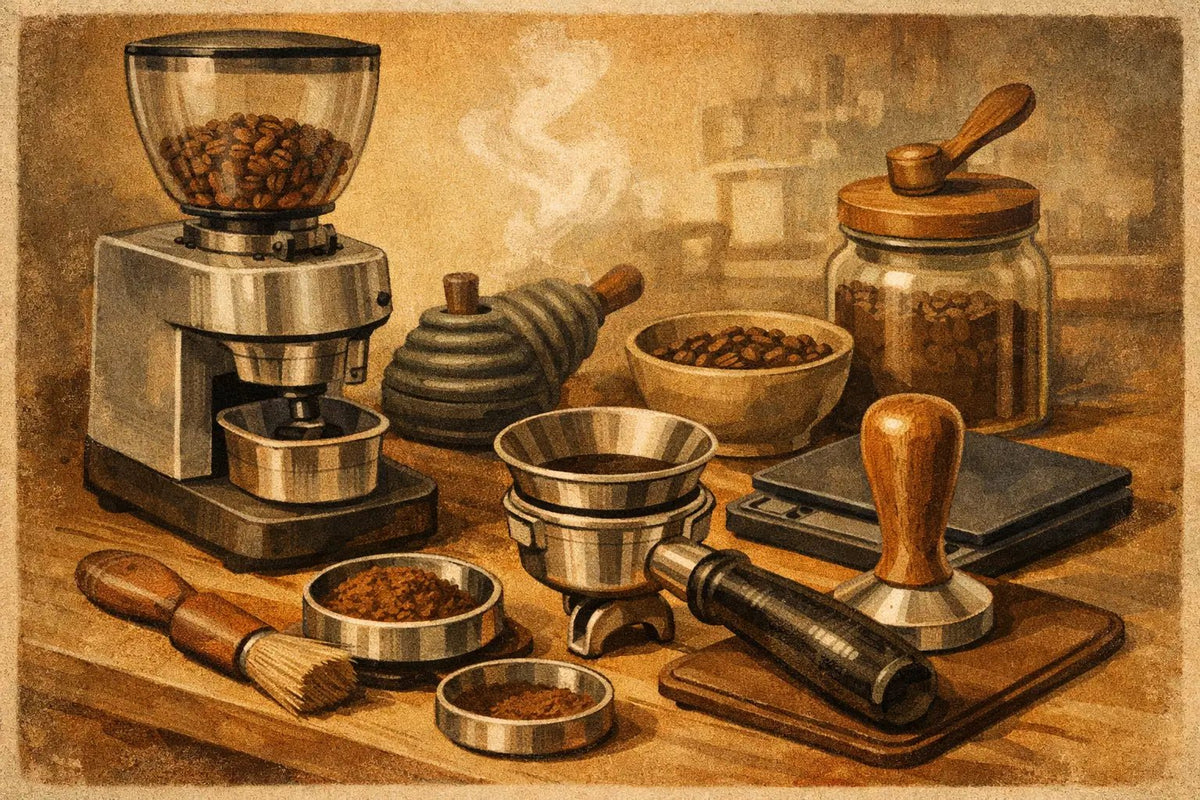
A dosing funnel helps keep grounds inside the basket while you grind, distribute, and break up clumps. It is especially useful with wider portafilter baskets, high-dose recipes, and WDT tools. The funnel should sit securely on the basket without interfering with the grinder chute or creating a lip that traps coffee. Magnetic designs can be convenient, but fit and basket compatibility matter more than the mounting style.
A dosing cup is another useful option for single-dosing workflows. It lets you grind into a contained vessel, weigh if needed, and transfer coffee to the basket with less loss. The fit between the cup, grinder chute, and portafilter is the detail that separates a convenient accessory from one that causes more spills. Diameter, height, and rim shape all affect the transfer.
Grinder trays are often underestimated. A well-sized tray catches fines and stray grounds where they fall, rather than letting them migrate under the grinder. It also gives the grinder a defined place on the bar, which can make a compact home espresso setup feel more organized. Choose a tray with a stable base and enough room for normal use, not just enough room for the grinder itself.
Improve Distribution Before You Tamp
Grinding is only the first step. Once coffee reaches the basket, uneven density can still lead to channeling, uneven extraction, and shots that taste thinner or more bitter than expected. This is where a WDT tool and a dosing funnel work as a pair.
A good WDT tool uses fine needles to separate clumps and distribute coffee throughout the basket. The goal is not to stir aggressively. Use gentle, consistent movements that reach the lower part of the coffee bed, then finish with a light leveling pass near the surface. A funnel gives you the room to do this without sweeping grounds over the edge of the basket.
Needle thickness changes the feel of the tool. Very fine needles move through the coffee with minimal disruption and are often preferred for espresso. Slightly thicker needles can be more durable, but they may create larger channels if used too forcefully. Like most espresso variables, technique matters as much as the tool itself.
For enthusiasts using a bottomless portafilter, improved distribution is easy to evaluate. If a WDT routine leads to a more even, calm extraction with fewer obvious spurts, it is earning its place on the bar. If your grinder already produces very low-clump coffee, the improvement may be subtler, but the cleaner workflow can still be worthwhile.
Do Not Treat Accessories as a Fix for Poor Grinder Setup
Accessories help refine a good process. They cannot compensate for stale beans, poorly aligned burrs, an unsuitable grind setting, or a basket that is badly overfilled. If shots are inconsistent, start by confirming dose, yield, grind size, and puck preparation. Then use accessories to make those variables easier to repeat.
This is also why compatibility should come before appearance. A beautiful wood accent that does not fit securely, blocks a control, or makes cleaning difficult is not a functional upgrade. The most satisfying custom pieces are the ones that look right because they were made to work right.
Personalize the Parts You Touch Most
Grinders and espresso machines are often the centerpieces of a home coffee bar, yet many arrive with generic plastic components that do little for the overall feel of the setup. Custom wooden accessories bring warmth and character to the station while remaining useful in the hand.
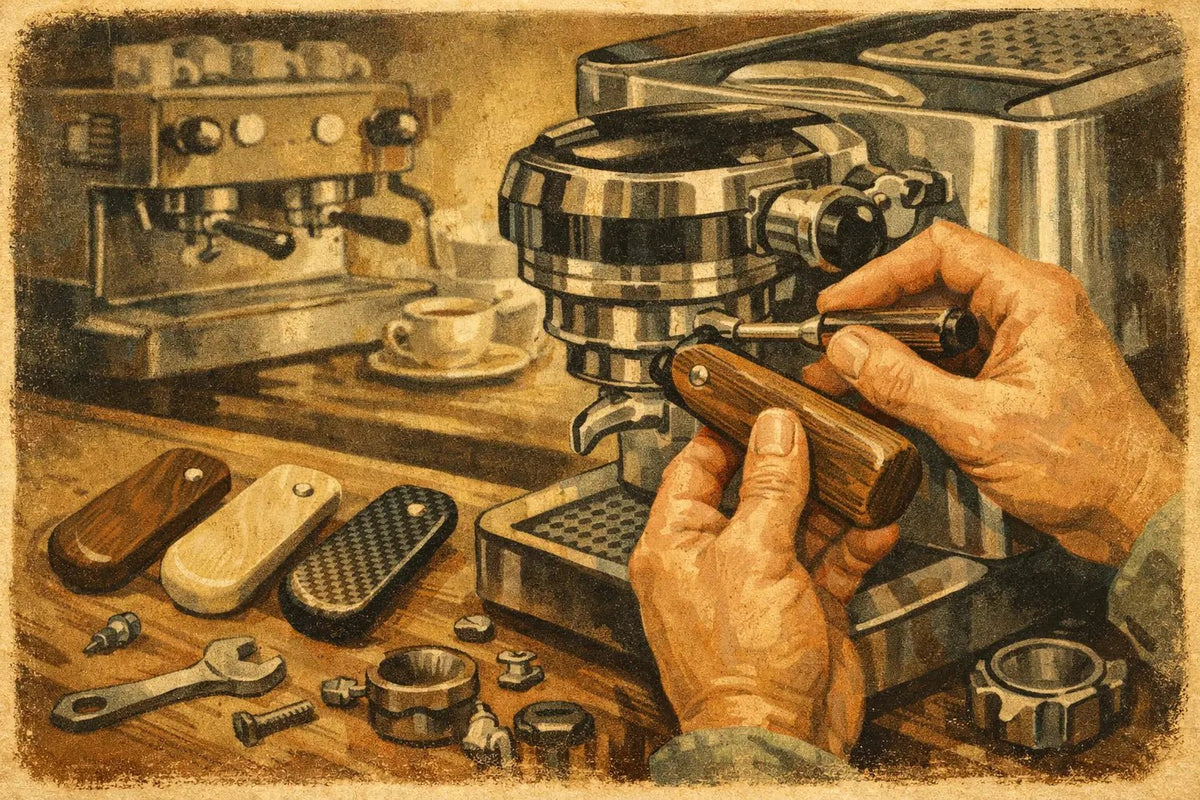
A handcrafted hopper lid can give a grinder a more finished look, especially when paired with a wooden portafilter handle, steam knob, or machine accents. Wood also changes the tactile experience. The difference is small but noticeable: the parts you reach for every morning feel considered rather than purely industrial.
The trade-off is that handcrafted accessories require accurate measurements and clear model information. Grinder lids, trays, and replacement parts are not universal. Even within the same brand, dimensions can change between models and production versions. Confirm the exact grinder model, inspect the original part where possible, and ask about fitment before ordering a custom piece.
At NepoCoffee, custom work starts with that detail. A grinder accessory should complement the equipment you own, not ask you to adapt your routine around it. For uncommon models, matching existing wood finishes or creating a special-size piece can make more sense than settling for a close-enough mass-market option.
Choose Materials That Suit the Coffee Bar
Material selection affects both appearance and maintenance. Metal dosing funnels and cups are durable, easy to wipe clean, and a natural fit for modern stainless steel machines. They are often the best choice for heavily used workflow tools.
Wood is ideal for exterior accents, handles, lids, and trays where feel and visual warmth matter. Different wood species can coordinate with cabinetry, shelves, or existing machine upgrades. Because wood is a natural material, grain and color variation are part of the appeal. A handcrafted walnut piece will not look identical to every product photo, and that individuality is usually the point.
For any accessory near coffee grounds, keep cleaning simple. Brush away loose grounds regularly and wipe surfaces with a lightly damp cloth when needed. Avoid soaking wooden pieces or using harsh cleaners that can affect the finish. If a part sees frequent contact with coffee oils, a quick routine is better than waiting for buildup.
Buy for Fit, Then Build a Cohesive Setup
When selecting grinder accessories, begin with the grinder model and the portafilter size you use most. Check dimensions, attachment points, chute clearance, and whether the accessory affects your ability to use a scale, dosing cup, or stock hopper. These practical details prevent the most common disappointment: receiving a well-made piece that is not right for your specific workflow.
Then consider the visual side. You do not need to customize every component at once. A matching hopper lid and portafilter handle can create a coordinated look, while a tray and dosing funnel improve the working area. Add pieces as you identify a real need, rather than treating accessories as a checklist.
Your espresso station should feel like a place you want to use, not a collection of gear you have to manage. Start with the accessory that removes one repeated irritation, choose it for the exact equipment in front of you, and let the rest of the setup evolve from there.