How to Customize an Espresso Machine with Purpose
A polished espresso setup rarely comes from one expensive purchase. It comes from the details your hands touch every morning: the portafilter handle, steam knob, hopper lid, dosing area, and the tools that keep your workflow clean. Learning how to customize espresso machine components starts with choosing upgrades that fit your specific machine, improve daily use, and create a setup that feels like yours.
For most home baristas, the best customization is not a full rebuild. It is a thoughtful combination of functional replacements, handcrafted accents, and workflow upgrades that make the machine more enjoyable to use without compromising fitment or serviceability.
Start With Your Machine Model and Daily Routine
Before choosing colors, woods, or accessory styles, identify the exact brand and model of your espresso machine. A Breville Barista Express, Lelit Bianca, ECM Synchronika, Rocket Appartamento, Gaggia Classic, and La Marzocco Linea Mini may all accept upgrades, but their attachment points, threads, dimensions, and clearances are not interchangeable.
Check the model name, production version, and the part you want to replace. Measure when needed. A steam knob can look similar across several machines while using a different shaft shape or mounting method. Portafilter handles also vary by group style, basket size, and thread design. Model-specific fitment is what separates a satisfying upgrade from a part that sits unused on the counter.
Then consider your actual routine. If you make milk drinks most days, a more comfortable steam knob may matter more than a decorative cup rail detail. If you single-dose and weigh every shot, a dosing funnel, grinder tray, and WDT tool can have a bigger effect on your station than another display piece. Good customization follows the way you brew.
Customize the Touch Points First
The best first upgrades are usually the parts you reach for repeatedly. They deliver a visible change, but they also improve the physical experience of making espresso.
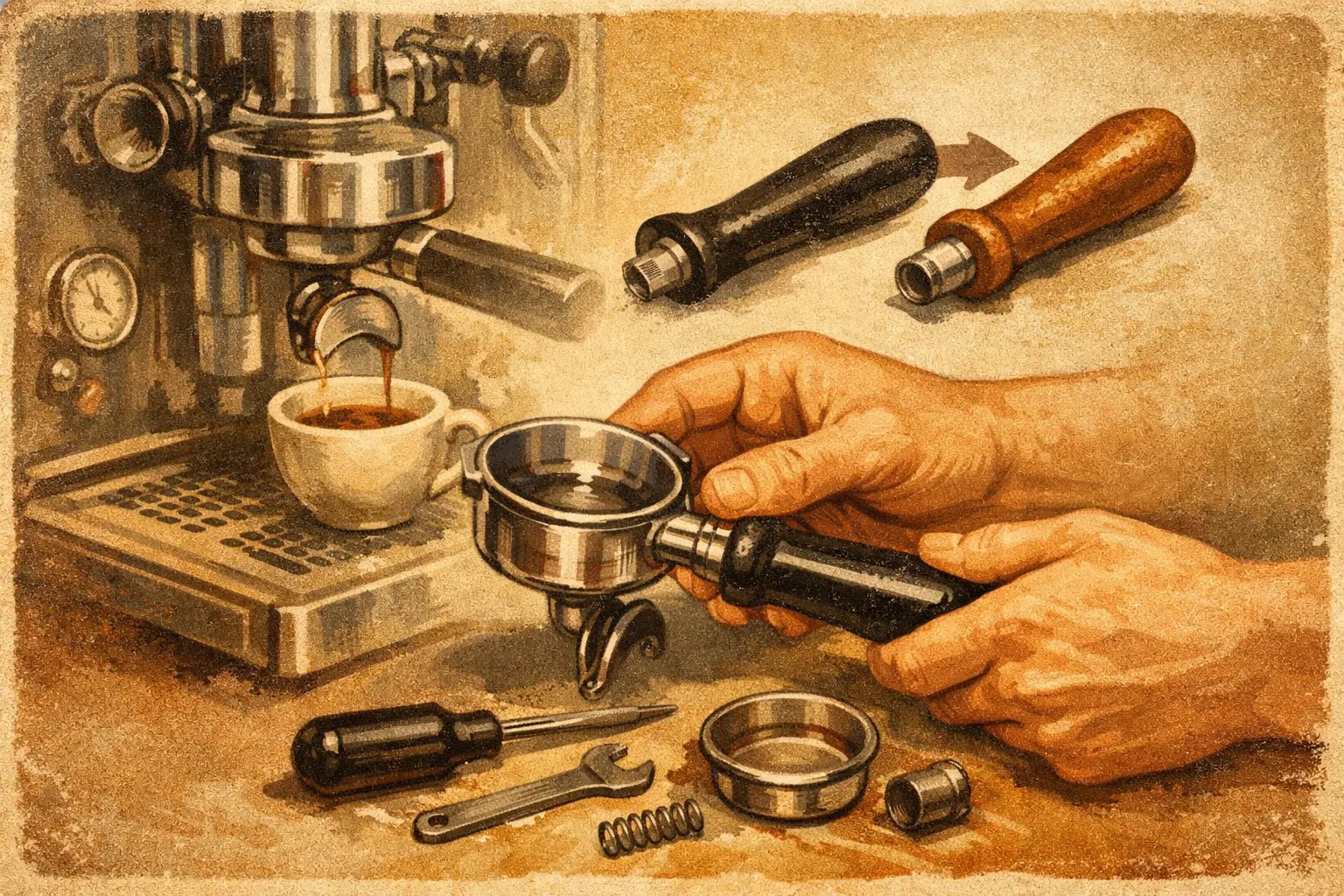
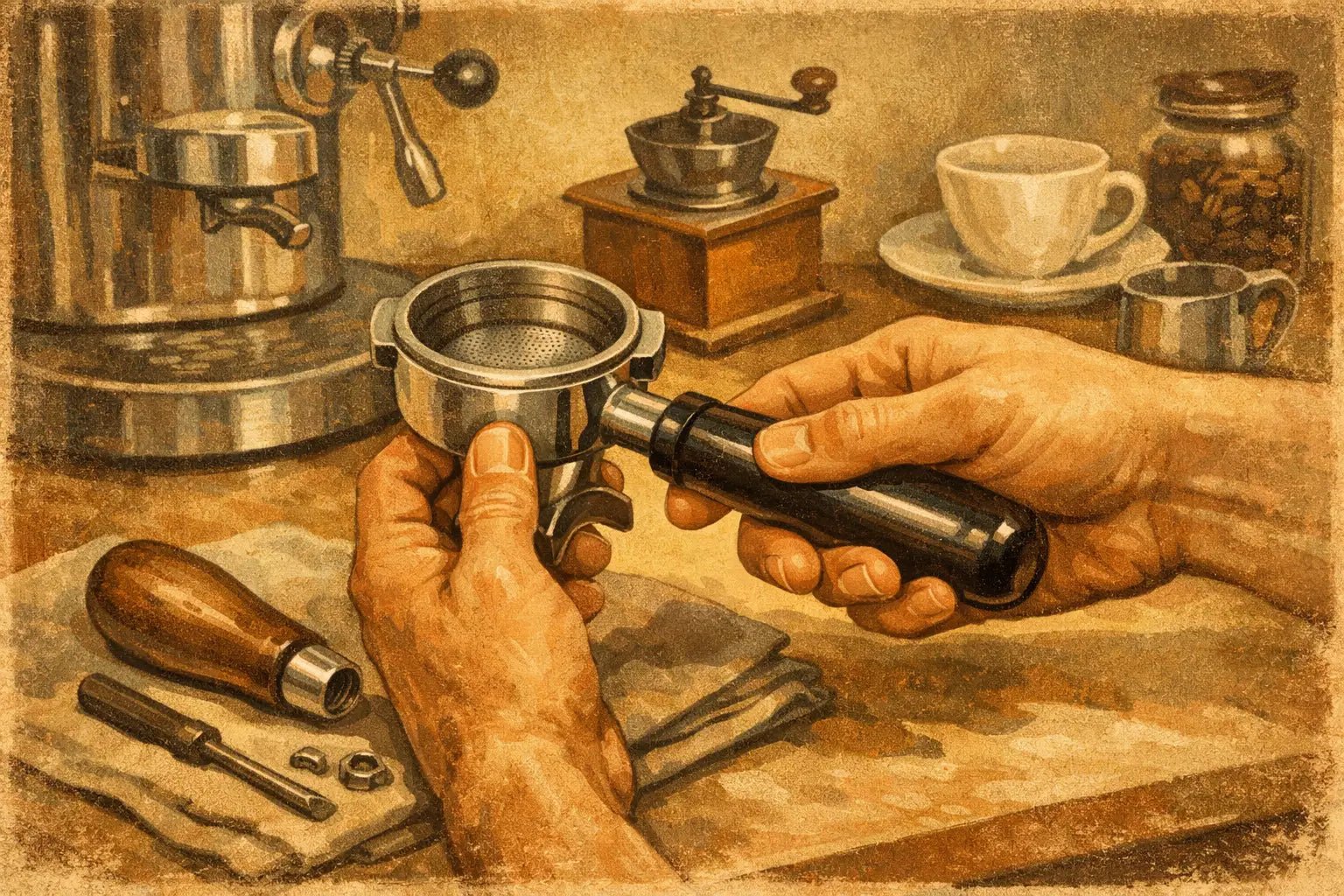
Add a handcrafted portafilter handle
A wooden portafilter handle gives an espresso machine immediate character. It can bring warmth to stainless steel, black powder coating, or chrome while offering a more natural feel than a stock plastic handle. Walnut, oak, maple, and other wood tones can be selected to complement cabinets, open shelving, grinder accents, or an existing coffee bar.
Fitment remains the priority. Some portafilters use removable threaded handles, while others require a specific adapter or replacement assembly. If you use bottomless and spouted portafilters, matching handles can make the setup feel intentional without changing your brewing hardware.
Wood is not maintenance-free, but it rewards basic care. Wipe it dry after use, avoid soaking it, and keep it away from prolonged steam exposure. A well-finished handle is made for the coffee bar, not the dishwasher.
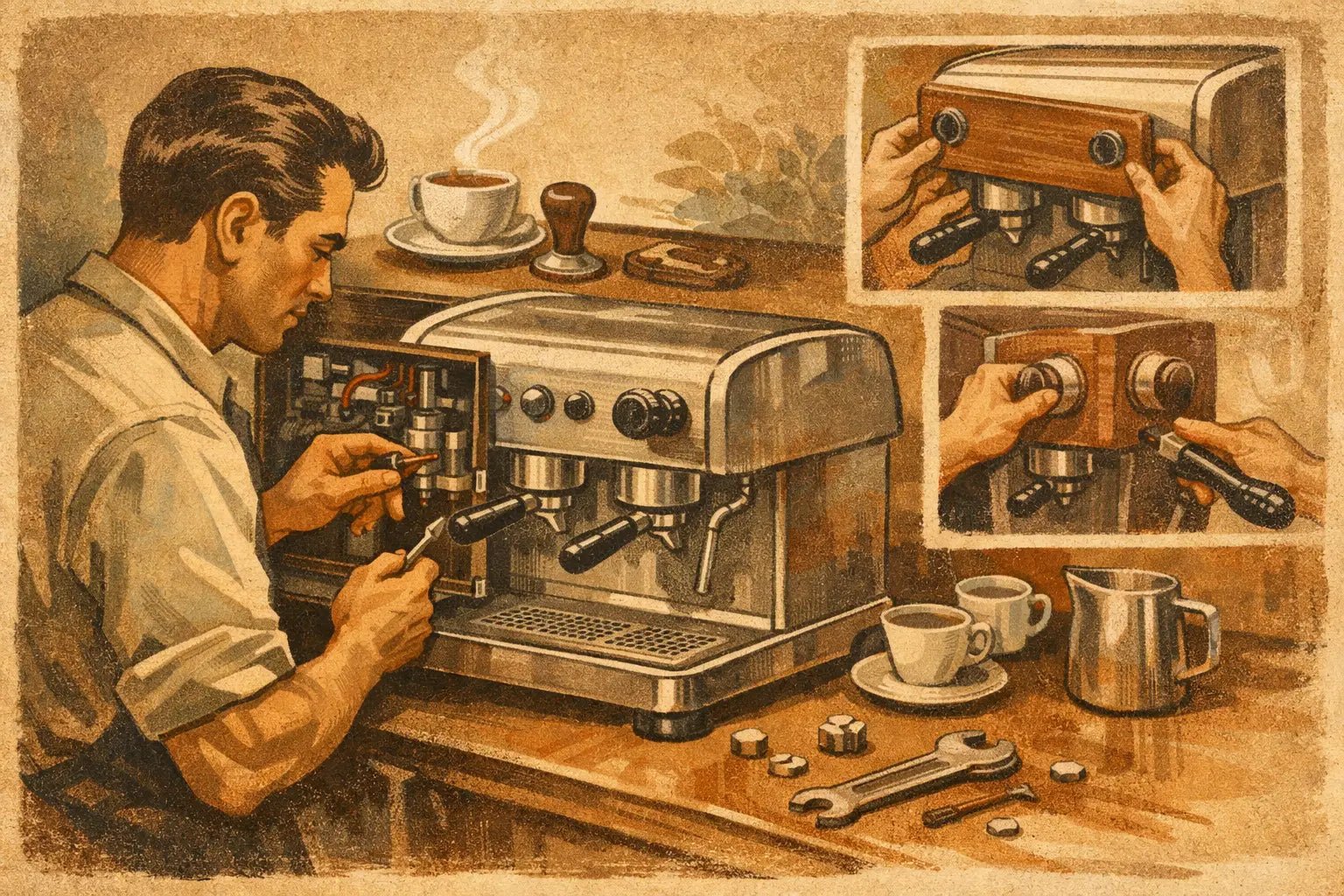
Upgrade steam and flow control knobs
Steam knobs are small parts with an outsized effect on how a machine feels. A larger or better-shaped knob can provide more control when opening steam, particularly on machines with a firm valve. It can also make a daily milk-drink routine more comfortable when your hands are damp or moving quickly.
Flow control knobs serve a different purpose. On machines equipped for flow profiling, a custom knob can make precise adjustments easier while giving the brew group a more finished appearance. The trade-off is simple: a knob should never interfere with the valve’s full range of movement or make it harder to feel subtle adjustments. Choose a design made for the specific hardware, not a universal piece that merely looks close.
Refresh bean hopper lids and grinder details
The grinder deserves the same attention as the machine. A custom bean hopper lid, wooden dosing cup, grinder tray, or matching handle can tie the entire station together. These upgrades are especially worthwhile when the grinder is always in view and used as often as the espresso machine itself.
A hopper lid must fit securely enough to keep beans protected while remaining easy to remove. For single-dose users, the better question may be whether a lid, bellows setup, dosing cup, or funnel supports the workflow you prefer. Customization should make the grinder easier to live with, not add another unnecessary step.
Improve Workflow Before Adding Decoration
A beautiful machine can still feel frustrating if grounds scatter across the counter or puck prep feels inconsistent. Workflow tools are often the most practical way to customize espresso equipment because they address the small points of friction between grinding, distributing, tamping, and brewing.
A dosing funnel helps keep grounds inside the basket, particularly when using a fluffy grind, a smaller basket, or a grinder that produces static. It also gives you room to use a WDT tool without sending coffee over the rim. For home baristas dialing in lighter roasts or experimenting with higher doses, this can make puck preparation noticeably cleaner.
A well-made WDT tool is useful when it is comfortable to hold and its needles are fine enough to break up clumps without aggressively stirring the coffee into a mess. Pair it with a tamper that matches your basket diameter and a compact tamping station if counter space allows. These tools do not replace good grinding or a sound recipe, but they can make your process more repeatable.
Consider the order of your station, too. Keep the scale, dosing cup, WDT tool, tamper, knock box, and cloth where your hands naturally move. A custom grinder tray can define that workspace while catching loose grounds. The result is less clutter and fewer little interruptions between dose and extraction.
Match Materials Without Making Everything Match
Wood accents are popular because they soften the industrial look of espresso equipment. The goal is not to cover every available part in the same finish. A more convincing setup usually repeats one material or tone in two or three places: perhaps a portafilter handle, steam knob, and hopper lid.
Darker woods pair naturally with black machines, warm kitchens, and brass details. Lighter woods can brighten a stainless-steel setup and work well in clean, modern spaces. If your machine has olive wood, walnut, or maple details already, matching closely can look excellent. Complementary tones can look just as good when the finish is intentional.
Be realistic about the environment around the machine. Espresso stations deal with heat, steam, water, coffee oils, and cleaning products. Decorative materials should be properly finished and used in locations where they can be maintained. Do not place wood where it will be routinely saturated or exposed to direct boiler heat.
Know Which Changes Affect Performance
Not every customization is cosmetic, but performance changes deserve more caution. A bottomless portafilter, precision basket, shower screen, flow control accessory, or upgraded steam tip can alter the way you diagnose and prepare espresso. These can be worthwhile upgrades, yet they require a willingness to adjust your grind, dose, distribution, and technique.
For example, a bottomless portafilter does not automatically improve flavor. It exposes channeling and uneven puck prep that a spouted portafilter can hide. That visibility is useful for a hobbyist who wants feedback, but it can be frustrating if you only want a fast morning cappuccino.
Likewise, flow control can open up more experimentation with preinfusion and pressure profiles, especially for lighter coffees. But it also adds variables. If your current shots are inconsistent because of grinder retention, stale beans, or poor puck prep, solve those basics before adding another control to manage.
Avoid modifications that bypass electrical safeguards, alter boiler pressure without expertise, or interfere with the machine’s warranty and service access. Custom handles, knobs, lids, and externally fitted workflow accessories are generally a lower-risk place to start. Internal modifications should be handled by a qualified technician when there is any doubt.
Plan for Fitment, Care, and Future Changes
The strongest custom setups are built in stages. Begin with one high-impact touch point, use it for a few weeks, then decide what still bothers you. Maybe your portafilter now feels perfect, but your real issue is grounds escaping during WDT. Or perhaps the machine looks finished, but the stock steam knob remains awkward during milk texturing.
When ordering custom work, provide clear machine details and photos if the part is unusual, discontinued, or previously modified. A maker who understands espresso equipment can help confirm dimensions, thread types, and practical limitations before production. NepoCoffee approaches custom pieces with that model-first mindset, because a handcrafted part should earn its place through both fit and daily use.
Keep original parts in a labeled bag whenever possible. They are useful for future resale, warranty work, troubleshooting, or returning a machine to stock condition. It also gives you a reference if you later want to customize a second portafilter or create a matching set.
Your espresso machine does not need to look like anyone else’s coffee bar. Choose the parts that make you want to pull another shot, keep the fitment exact, and let the useful details guide the visual ones.