12 Best Espresso Machine Accessories for Better Shots
A great espresso machine can make a disappointing shot when the puck is uneven, the dose is inconsistent, or the workflow gets messy at the exact wrong moment. The best espresso machine accessories solve those small but real problems. They help you prep with more control, keep your station cleaner, and make equipment you use every day feel more like your own.
For a home barista with a capable grinder and machine, the goal is not to buy every tool on the coffee shelf. It is to choose accessories that match your routine, your basket size, and your specific equipment. Some upgrades improve repeatability in the cup. Others make steaming, dosing, and cleaning easier. The best ones do both while looking right at home beside a machine you invested in.
The Best Espresso Machine Accessories by Workflow
1. A WDT tool for more even extraction
A Weiss Distribution Technique, or WDT, tool is one of the most useful additions for espresso drinkers using fine grinds and non-pressurized baskets. Its thin needles break up clumps and spread coffee evenly through the basket before tamping. That can reduce channeling, where water finds weak spots in the puck and creates an uneven, harsh, or thin extraction.
Use it after grinding and before tamping. A few gentle circles through the full depth of the basket are usually enough. Needle thickness matters: very fine needles move coffee without aggressively pushing it around. If your grinder produces fluffy, consistent grounds, the change may be subtle. For many home grinders, though, a WDT tool is a low-cost way to make shot dialing feel less random.
2. A dosing funnel that keeps grounds in the basket
A dosing funnel sits on top of the portafilter basket and gives you more room to grind, distribute, and stir without sending coffee over the edge. It is especially helpful with 58 mm baskets, high doses, light roasts, and grinders that throw grounds slightly off-center.
The practical benefit is cleaner prep. Less coffee on the counter means less waste and less cleanup between shots. A funnel also makes WDT easier because you can work the coffee without losing grounds. Choose one that fits your basket and portafilter properly, and check whether it works with your grinder’s dosing setup. Magnetic models are convenient, but fit and clearance matter more than the magnet count.
3. A tamper matched to your basket
Tamping does not need to be theatrical. You do not need a perfectly calibrated arm or extreme pressure. You do need a tamper that sits flat, feels stable in your hand, and closely matches your basket diameter.
Many nominal 58 mm baskets benefit from a 58.5 mm tamper, while other machines use 54 mm, 53 mm, or brand-specific sizes. A poor fit can leave a ring of loose grounds near the basket wall, creating an easy path for water. A fitted tamper helps create a level, consistent puck with less guesswork.
For a coffee bar you use often, a handcrafted wood tamper handle can make a surprisingly meaningful difference in feel. It does not change the physics of extraction by itself, but a comfortable handle encourages a more repeatable routine and gives your setup a finished look.
4. A leveling tool, used with restraint
A distributor or leveling tool can help move grounds across the basket surface before tamping. It can be useful for baristas who want a fast, repeatable motion, especially when paired with a dosing funnel. But it is not a replacement for good distribution throughout the puck.
Set it shallow enough that it levels the top rather than compressing coffee deep inside the basket. Too much depth can create dense layers and work against even extraction. For many enthusiasts, WDT followed by a light leveling pass and a proper tamp is a more reliable approach than relying on a distributor alone.
5. A portafilter handle that fits your hand and machine
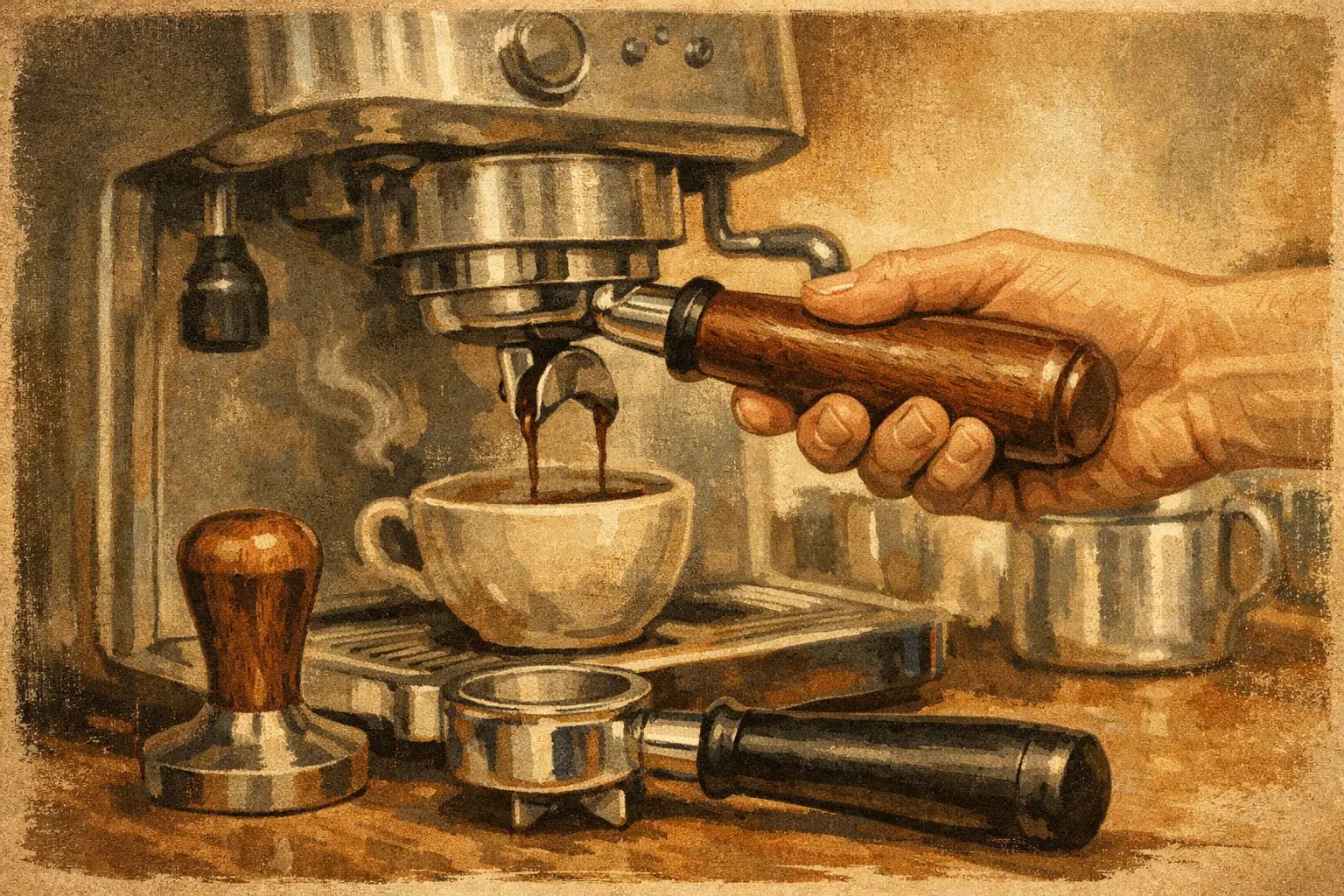
The portafilter is one of the few parts of an espresso machine you touch for every shot. Replacing a worn, generic, or uncomfortable handle with a custom wooden handle changes the daily experience immediately. It can improve grip, reduce heat transfer to your hand, and bring visual balance to a stainless-steel machine.
Compatibility is the first consideration. Thread size, thread depth, and handle angle vary across Breville, ECM, Lelit, Rocket, Gaggia, Profitec, La Marzocco, Bezzera, and other brands. A beautiful handle that does not fit precisely is not an upgrade. Confirm the machine model and portafilter connection before ordering, especially with older or modified equipment.
Wood also brings variation. Grain, tone, and figure will differ from piece to piece, which is part of the appeal of handcrafted work. If you are building a coordinated station, ask about matching your portafilter handle with a steam knob, bean hopper lid, or tamper handle.
6. A bottomless portafilter for feedback, not just photos
A bottomless portafilter exposes the underside of the basket, letting you see how the espresso exits during extraction. It is a powerful diagnostic tool. Spraying, fast streams from one side, or a blonding center can reveal distribution, grind, dose, or tamping issues that a spouted portafilter hides.
It is also less forgiving. A bottomless setup can make a messy shot look worse, but that feedback is useful while dialing in a new coffee. Make sure the basket and portafilter are compatible with your group head. A standard 58 mm basket does not guarantee that every portafilter will lock in correctly on every machine.
7. A precision basket for your usual dose
A quality precision basket can offer more consistent hole geometry and improve flow uniformity compared with many stock baskets. This matters most when you already have a capable grinder and stable puck preparation. It will not rescue stale beans or an inaccurate grind, but it can make a well-dialed coffee easier to repeat.
Buy for the dose you actually use. If you usually pull 18 g shots, an oversized 22 g basket may force you into awkward headspace and recipe changes. Check basket height as well as diameter, particularly if you use a bottomless portafilter or have limited clearance beneath the shower screen.
8. A puck screen for a cleaner group head
A puck screen rests on top of the coffee bed during brewing. It helps diffuse water at the start of the shot and can keep coffee grounds from sticking to the shower screen. For users who dislike knocking a wet, broken puck out of the basket, that cleaner finish alone can make it worthwhile.
The trade-off is headspace. A screen takes room, so you may need to reduce your dose slightly. It also needs cleaning. Rinse it after each use and soak it periodically to prevent coffee oils from building up in the fine mesh. Treat it as a workflow accessory, not a magic extraction fix.
9. A reliable espresso scale
Espresso recipes are built on ratios, not guesses. A compact scale lets you measure dry dose and beverage yield, making it easier to tell whether a shot changed because of grind, coffee age, or preparation. For example, if 18 g of coffee yields 36 g of espresso in 28 seconds one day and 42 g in 20 seconds the next, you have useful information instead of a vague impression.
Look for a scale that fits under your cup, reads quickly, and handles heat and occasional drips. Auto-timing can be convenient, but accuracy, size, and a stable platform matter more in a home setup.
10. A knock box that protects your portafilter
A knock box keeps spent pucks out of the sink and gives you a dedicated place to clear the basket between shots. The best designs have a sturdy base, a removable bar, and enough capacity for your normal brewing volume. A soft or replaceable bar is easier on portafilter edges than bare metal.
This is a simple accessory, but it reduces friction in the routine. If your coffee station is compact, choose a low-profile model that can sit beside the grinder rather than a large commercial box that takes over the counter.
11. Steam knob upgrades for better daily control
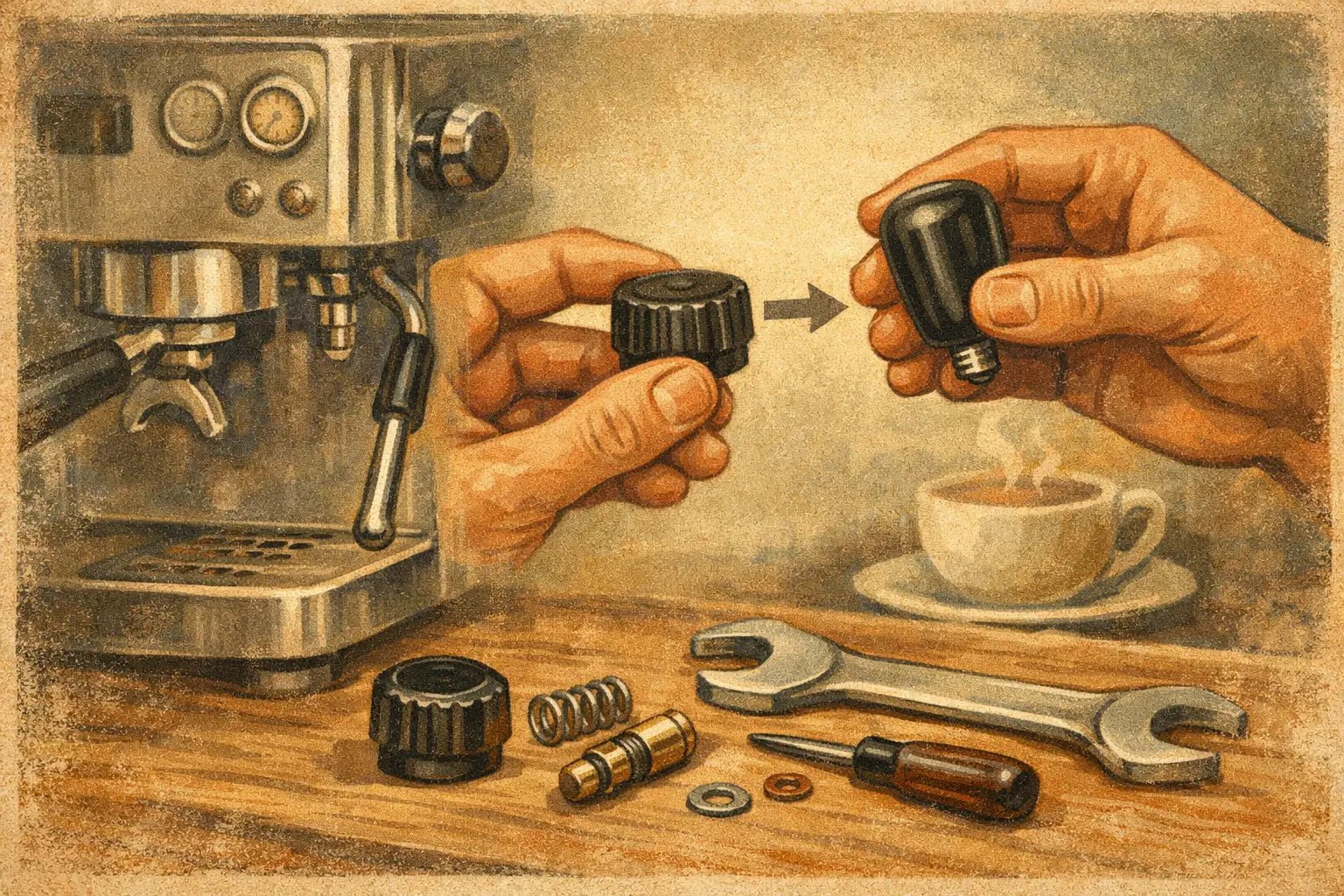
If your machine has a small, slippery, or worn steam knob, an upgraded knob can improve comfort every time you texture milk. A larger or more ergonomic profile gives you a clearer grip when the machine is hot and you need quick, controlled steam power.
This is also one of the most visible ways to personalize an espresso machine. Wood can soften the industrial look of polished steel, while matching the knob with a portafilter handle creates a considered setup rather than a collection of unrelated parts. Because steam knob shafts and attachment methods differ by machine, model-specific fitment is essential.
12. A cleaner and a replacement-parts plan
The accessory that protects every other investment is proper maintenance. Use espresso machine cleaner for backflushing where your machine allows it, descale only according to the manufacturer’s water and maintenance guidance, and replace worn group gaskets, shower screens, and seals when performance or leaks suggest it is time.
Keep a small brush for the group head and grinder chute, plus a microfiber cloth for the machine body. These are not glamorous purchases, but old coffee oils and neglected seals can affect taste, hygiene, and machine longevity far more than a decorative upgrade ever will.
How to Choose Accessories That Actually Fit
Start with the bottleneck in your workflow. If grounds are scattered everywhere, choose a dosing funnel. If shots spray or taste inconsistent, focus on a WDT tool, basket fit, and scale before changing cosmetic parts. If you love your espresso but dislike touching the machine, a portafilter handle or steam knob upgrade may be the change you notice most.
Then verify dimensions and model compatibility. Measure basket diameter, check your portafilter’s thread connection, and identify the exact machine model rather than relying on brand name alone. This matters with premium equipment, where small variations between generations can affect fit. NepoCoffee specializes in the kind of handcrafted, model-aware upgrades that make this step worth getting right, particularly for owners looking to match functional parts across a setup.
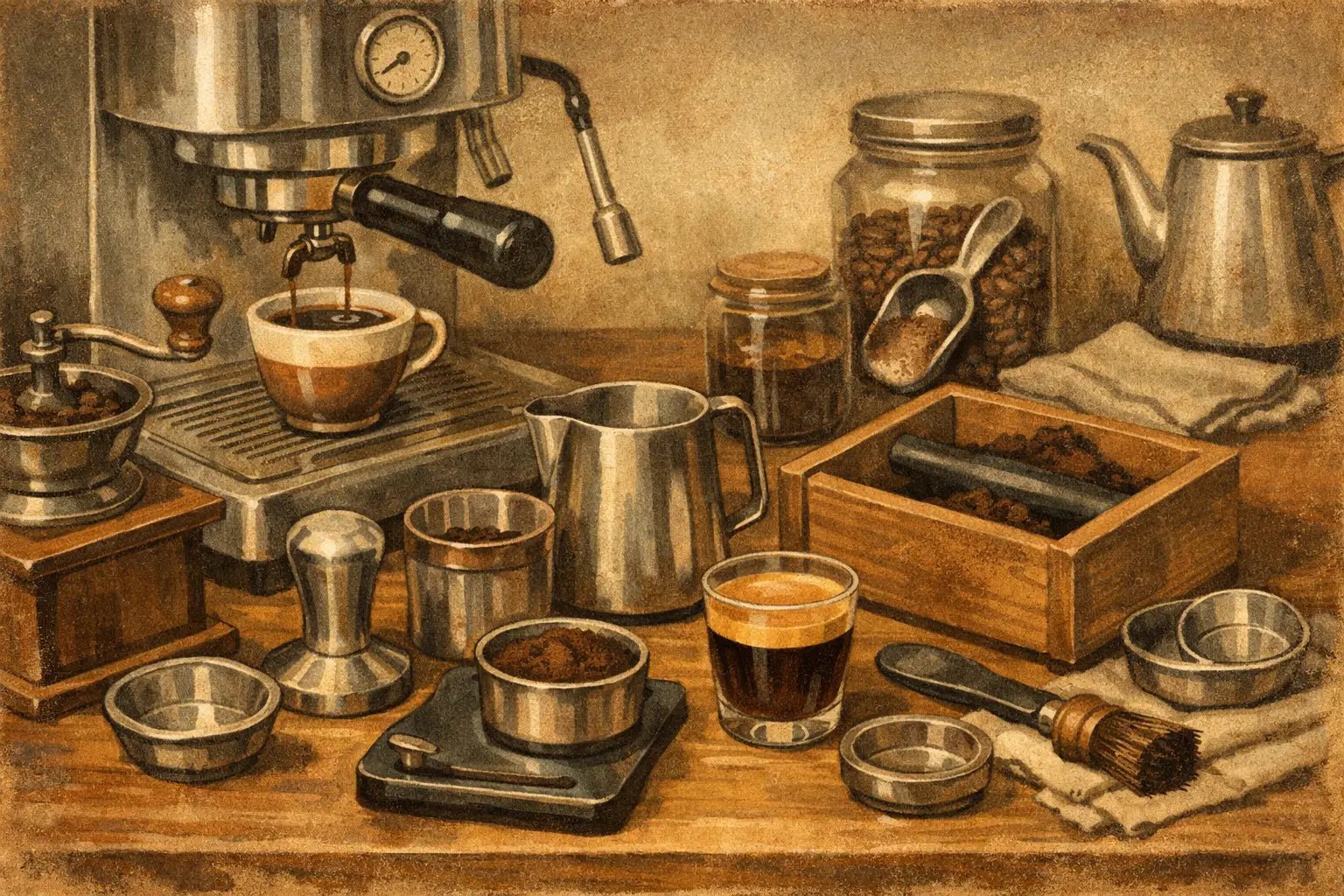
Build gradually. A scale, WDT tool, dosing funnel, and fitted tamper are a strong foundation for most home espresso stations. Add a precision basket or puck screen when you want to refine extraction, then choose custom wood details when you are ready to make the machine feel unmistakably yours.
The right accessory should earn its place every morning. Choose the piece that removes one annoyance, supports one better habit, or makes you want to pull one more careful shot.