Choosing a Fellow Stagg Handle That Feels Right
A Fellow Stagg handle is a small detail that has an outsized effect on every pour. The Stagg’s clean silhouette, narrow gooseneck, and deliberate flow control already make it a favorite on serious brew bars. Replacing the stock handle with a carefully made wood version can add warmth, a more personal feel, and a tactile connection to the kettle you use every day.
That said, a kettle handle is not simply decorative hardware. It carries the weight of hot water, affects balance during a controlled pour, and has to match the exact mounting points of the kettle. The best upgrade respects all three.
Why upgrade a Fellow Stagg handle?
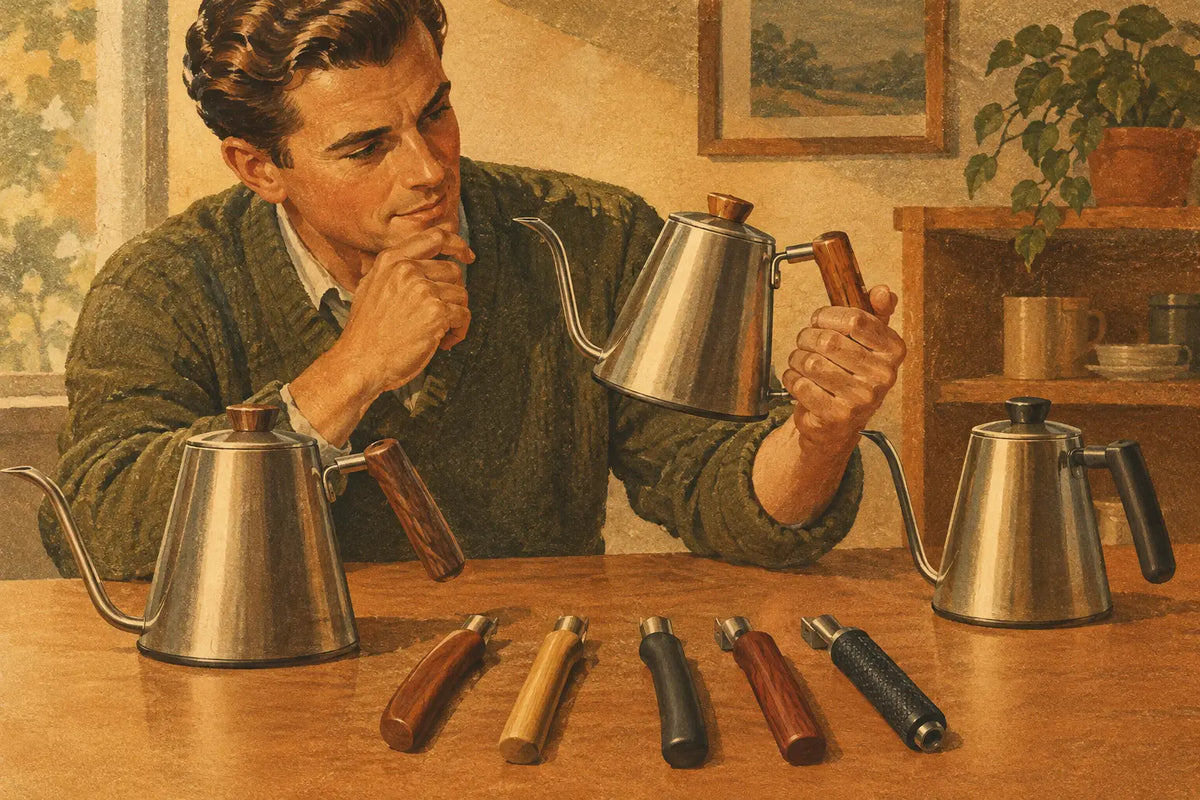
For many coffee enthusiasts, the appeal starts with the material. Powder-coated metal and plastic components are practical, but natural wood gives a coffee station a different character. Walnut brings a deep, classic tone; oak feels lighter and more understated; darker stained finishes can complement black grinders, espresso machines, and scales.
The difference is also physical. A well-shaped wooden handle can feel more substantial in the hand than a factory part, with softened edges and a profile that suits a controlled wrist movement. This matters most when you are making repeatable pour-over recipes and paying attention to bloom coverage, drawdown, and agitation. A handle will not change the kettle’s flow rate or make a recipe better by itself, but comfort can make a careful pouring routine more enjoyable.
There is a practical reason to consider replacement, too. A damaged handle, worn finish, loose mounting hardware, or a kettle purchased secondhand may call for a new part rather than a whole new kettle. In that case, correct fitment matters far more than choosing a wood species from a photo.
Fitment comes before finish
“Fellow Stagg” can refer to more than one kettle configuration. The Stagg EKG electric kettle and Stagg Pour-Over Kettle share a recognizable design language, but they are not automatically interchangeable. Product generations, regional versions, finish options, and mounting hardware can also affect compatibility.
Before ordering a replacement Fellow Stagg handle, confirm the full kettle model and inspect the existing handle closely. Look at the number and location of fasteners, the spacing between mounting points, the shape of the metal brackets, and whether any screws or internal fittings will be reused. Take clear photos from both sides and from underneath if you are requesting a custom-made part.
Measurements help prevent expensive guesswork. Record the center-to-center distance between mounting screws, the width of the handle at each mounting point, the diameter and depth of each hole, and the handle’s overall length. It is also useful to note whether the original handle uses threaded inserts, through bolts, washers, or hidden fasteners.
A handcrafted replacement should be made for the actual kettle, not just a product name. Two handles can look nearly identical on a countertop and still have different mounting geometry. If anything is uncertain, pause before drilling, sanding, or forcing hardware into place. A handle under load should sit naturally against its mounts without tension or misalignment.
What photos should show
For a custom request, a few useful photos are better than a long description. Include a full side view of the kettle, close-ups of both handle ends, the removed handle if possible, and a photo of the mounting hardware placed beside a ruler or tape measure. This gives a maker a much better starting point for confirming what can be produced.
At NepoCoffee, custom work starts with those practical details. The goal is not to make a handle that merely resembles a Fellow part. It is to make one that is appropriate for the specific kettle and intended use.
Wood selection for a daily-use kettle
Not every beautiful wood belongs on a frequently handled coffee tool. A good kettle handle needs stable grain, thoughtful shaping, and a finish suitable for regular contact with warm hands and occasional kitchen moisture.
Hardwoods are generally preferred because they hold their shape well and can take a smooth, durable finish. Walnut remains popular for its rich grain and ability to pair with nearly any setup. Maple offers a cleaner, brighter look and works especially well beside white or stainless equipment. Oak has visible texture and a more traditional furniture-like presence. Exotic woods can be striking, but their density, oil content, grain pattern, and workability should be considered on a case-by-case basis.
Wood is a natural material, so no two pieces will match perfectly. Grain direction, mineral streaks, knots, and color variation are part of what makes a handcrafted handle different from a molded factory component. If you are building a coordinated coffee bar, it is reasonable to request a family of tones rather than expecting every wood accessory to be identical.
The finish is equally important. A good finish should protect the wood while preserving a natural hand feel. It should not feel overly slick, sticky, or thick around the grip. Because a kettle is exposed to steam and changing temperatures, the finish needs regular common-sense care rather than aggressive cleaning.
Comfort, balance, and pouring control
The Stagg is designed for slow, precise pours. Its handle shape is part of that experience. A replacement should preserve a comfortable grip and keep the kettle balanced as the water level drops.
A thicker handle may feel excellent to someone with larger hands, while a slimmer profile may better suit a light fingertip grip. Neither choice is universally better. It depends on how you hold the kettle, whether you brew one cup or multiple cups at a time, and whether other people in your home use the same setup.
Be cautious about changing the handle’s geometry too radically. Moving the grip too far from the kettle body, adding unnecessary weight, or altering the angle can make a familiar kettle feel less predictable. The visual upgrade should support the original function, not compete with it.
Heat is another consideration. Wood generally feels more comfortable than bare metal, but it is not a promise that every surface will remain cool. Steam, a hot kettle body, and a freshly boiled load of water all deserve normal caution. Always allow the kettle to cool before installation, adjustment, or cleaning.
Installing a replacement handle carefully
Installation should be calm and methodical. Work on a clean, padded surface so the kettle finish is protected. Keep the original screws, washers, and brackets organized in the order they were removed. If replacement hardware is supplied, verify that it matches the required thread type and length before tightening anything.
Start all fasteners by hand. This helps avoid cross-threading and lets you confirm that the handle is seated evenly on both ends. Tighten gradually, alternating between mounting points instead of fully tightening one side first. The aim is secure attachment, not maximum force.
Overtightening can damage wood, strip threads, compress a finish, or put stress on the kettle’s mounting area. Once installed, test the kettle empty first. Hold it as you normally would, check for movement or clicking, and make sure the handle clears the body properly. Then test again with a modest amount of cool water before returning it to hot-water use.
If the handle shifts, the screws do not engage cleanly, or the fit leaves a visible gap that was not present with the original part, stop and reassess. A custom component should never require force to become functional.
Caring for a wooden kettle handle
Daily care is straightforward. Wipe away splashes with a soft, lightly damp cloth, then dry the handle promptly. Avoid soaking it, putting it in the dishwasher, or leaving it in standing water near the sink. Strong degreasers and abrasive scrubbers can dull or weaken the finish over time.
A kitchen with changing humidity can cause natural wood to expand and contract slightly. That is normal, but it is another reason to check mounting screws periodically. Do not tighten them automatically every week. Instead, inspect the handle when it feels loose or during routine coffee-station cleaning.
If the finish begins to look dry after extended use, ask the maker what maintenance product is appropriate for that specific finish. Random oils can darken the wood, leave residue, or interfere with future refinishing. The right care keeps the handle feeling like a considered part of your brew setup, not a fragile display piece.
A Fellow Stagg handle is worth upgrading when the new part delivers more than a new color. Choose one made for your exact kettle, shaped for the way you pour, and finished for everyday use. Then let it earn its character one careful kettle at a time.