Gaggia Steam Knob Replacement for Better Control
A loose, cracked, or uncomfortable steam knob can make an otherwise capable Gaggia feel frustrating every time you texture milk. A Gaggia steam knob replacement is a small repair, but it has a direct effect on how confidently you can open and close the steam valve - especially when the machine is hot and you are trying to keep your milk routine moving.
For many home baristas, this is also one of the most visible opportunities to move beyond a generic plastic control. The right replacement should feel secure in the hand, suit the machine’s valve hardware, and look at home beside the rest of your espresso setup.
Start With the Actual Problem
Not every steam-control issue calls for a new knob. If the knob is visibly split, stripped inside, missing, or spins without reliably turning the valve stem, replacement is often the sensible first move. A worn knob can lose its grip on the stem, leaving you with poor leverage or no control at all.
But if the knob is intact and steam continues to leak from the wand after you close it, the fault may be inside the steam valve. A new exterior knob will improve the feel of operation, but it will not repair a worn valve seat, damaged seal, or internal buildup. Likewise, a stiff knob may be caused by the valve itself rather than the handle you are turning.
That distinction matters. Replace the knob when the knob is the failed part. Service the valve when the machine is not shutting off properly. Owners who diagnose this before ordering avoid replacing a handsome part only to find the underlying issue remains.
Gaggia Steam Knob Replacement Fitment Matters
“Gaggia” covers a long list of machines, and their controls are not all interchangeable. Classic-style machines, newer Classic variants, espresso machines with different case designs, and older domestic models can use different valve stems, mounting methods, knob depths, and clearances.
Before choosing a Gaggia steam knob replacement, identify the exact machine model and, when possible, its production generation. A clear photo of the existing knob removed from the machine is often more useful than a front-facing photo. Pay attention to the shape and diameter of the valve stem, whether the knob uses a set screw, and how far the knob sits from the front panel.
A replacement that looks correct from the outside can still be wrong if its internal bore does not match the stem. It may wobble, sit too far forward, rub the case, or fail to turn the valve consistently. This is why model-specific parts are worth seeking out rather than relying on a universal-looking knob.
What to check before you order
Start with the machine’s full model name, then confirm the attachment style of the original knob. Remove it only after the machine is cool and unplugged. Check for a small retaining screw, a cap hiding a fastener, or a knob that pulls straight off the stem. Do not force it. If it resists more than expected, stop and inspect the connection rather than prying against the machine’s front panel.
Also consider clearance. A larger handcrafted knob can offer better grip, but it needs room to turn without contacting the case, adjacent controls, or the steam wand assembly. On compact machines, a few millimeters can make the difference between a polished upgrade and an awkward fit.
Choosing Between OEM-Style and Custom Knobs
An OEM-style replacement is usually the practical answer when you want to restore the original appearance and function with minimal decision-making. It is especially useful for a machine that is being repaired, sold, or kept in its factory configuration.
A custom knob makes more sense when usability and presentation are equally important. Wood, metal, or mixed-material designs can make the steam valve easier to grasp and give a well-loved Gaggia a more intentional place on the coffee bar. A rounded, larger profile often feels better during repeated steaming than a small, hard plastic control, though personal preference matters. Some baristas prefer a compact knob that stays close to the machine, while others want a fuller shape for greater leverage.
Material choice has real trade-offs. Hardwood brings warmth and character, and every grain pattern is a little different. It should be properly finished for a kitchen environment, but it is still wise to wipe away milk splashes and moisture rather than leaving liquid on the surface. Metal offers a precise, durable feel, but it can feel hotter or cooler depending on the machine and room temperature. Plastic is familiar and low-maintenance, though it rarely adds much to the tactile experience.
At NepoCoffee, custom work is approached as a fitment project first and a visual upgrade second. A beautiful knob is only useful when it seats correctly, turns smoothly, and keeps the machine comfortable to use every day.
How to Replace a Gaggia Steam Knob Safely
Replacing the external knob is typically straightforward, but steam equipment deserves respect. Let the machine cool fully, switch it off, unplug it, and release any remaining pressure according to your machine’s normal shutdown routine. Never work around the steam valve immediately after steaming milk.
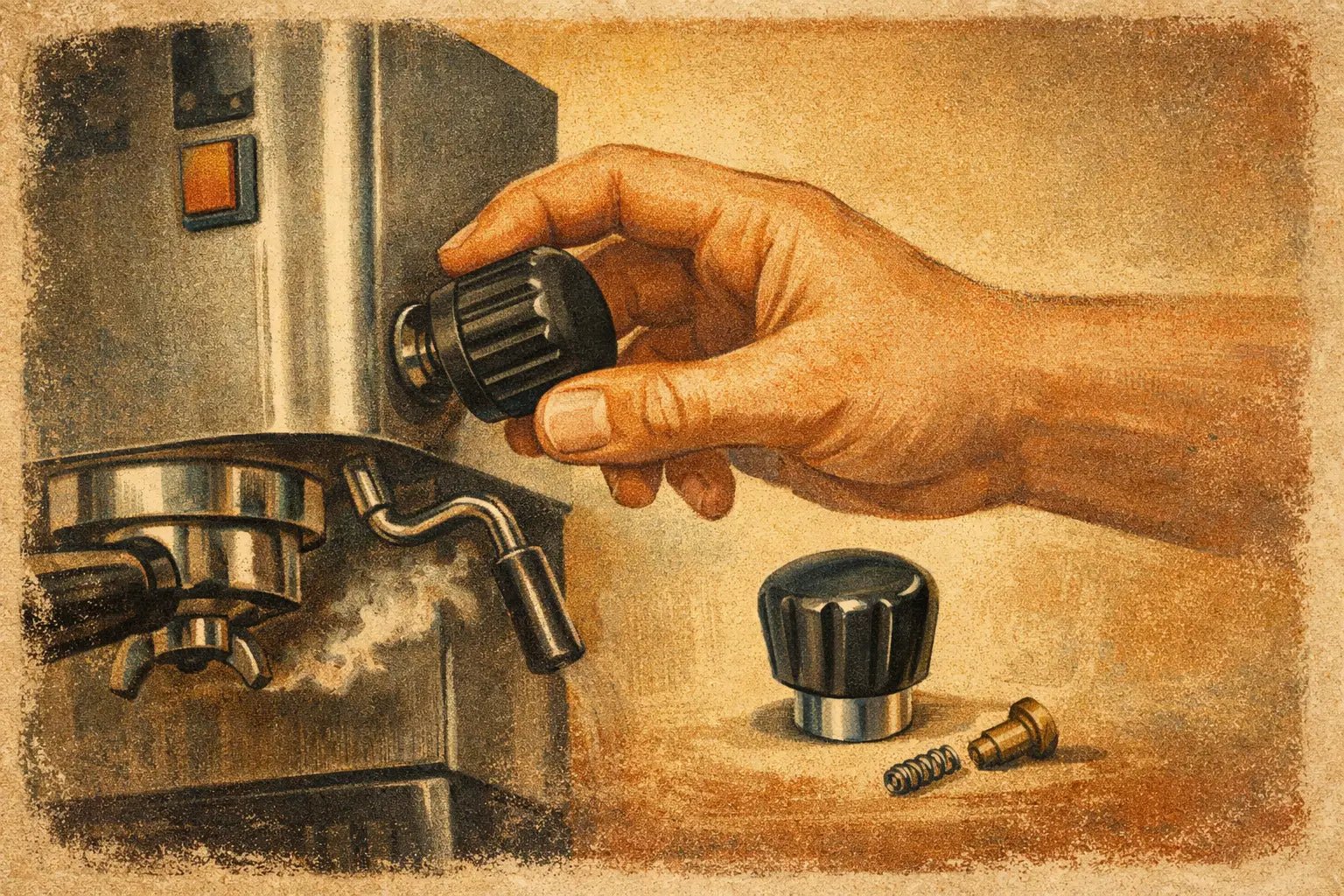
Place a towel beneath the work area to protect the drip tray and catch a small screw if one drops. Remove the original knob using the fastening method you identified. If there is a set screw, use a correctly sized driver and keep steady pressure so you do not strip the screw head. Set the screw aside where it cannot roll away.
Once the old knob is off, inspect the valve stem. It should not be badly rounded, corroded, or visibly damaged. Wipe away dust and residue with a dry cloth. Avoid spraying lubricant or cleaner into the valve area unless you are performing a proper valve service and know the product is appropriate for espresso-machine use.
Fit the new knob onto the stem without forcing it. It should sit straight and, if applicable, align with the set-screw position. Tighten the screw only until the knob is secure. Over-tightening can damage threads, distort some knob materials, or make future removal more difficult.
After reassembly, turn the knob gently through its normal range while the machine is still cold. You should feel the valve engage without slipping or interference. Then heat the machine and test steam operation carefully. Check that the knob opens the valve predictably, closes fully, and remains secure after a few cycles.
If the new knob slips or will not seat
Do not compensate for a poor fit by cranking down a set screw. A slipping knob may have the wrong internal size, an incorrectly positioned screw, or a damaged valve stem. A knob that will not seat can be too shallow, have an incompatible bore, or be contacting the machine panel.
Take the knob back off and compare the internal attachment point with the original part. Confirm the machine model again before modifying anything. Filing, drilling, or shimming a replacement may seem tempting, but it can create a loose control, damage the finish, and complicate future service. For a custom piece, providing measurements and photos before production is the cleaner route.
Make the Upgrade Part of Your Workflow
The steam knob is one of the few parts you touch during nearly every milk drink. That makes its feel more significant than its size suggests. A secure, comfortable control lets you focus on listening to the milk, adjusting wand position, and stopping at the texture you want instead of wrestling with a slippery or damaged handle.
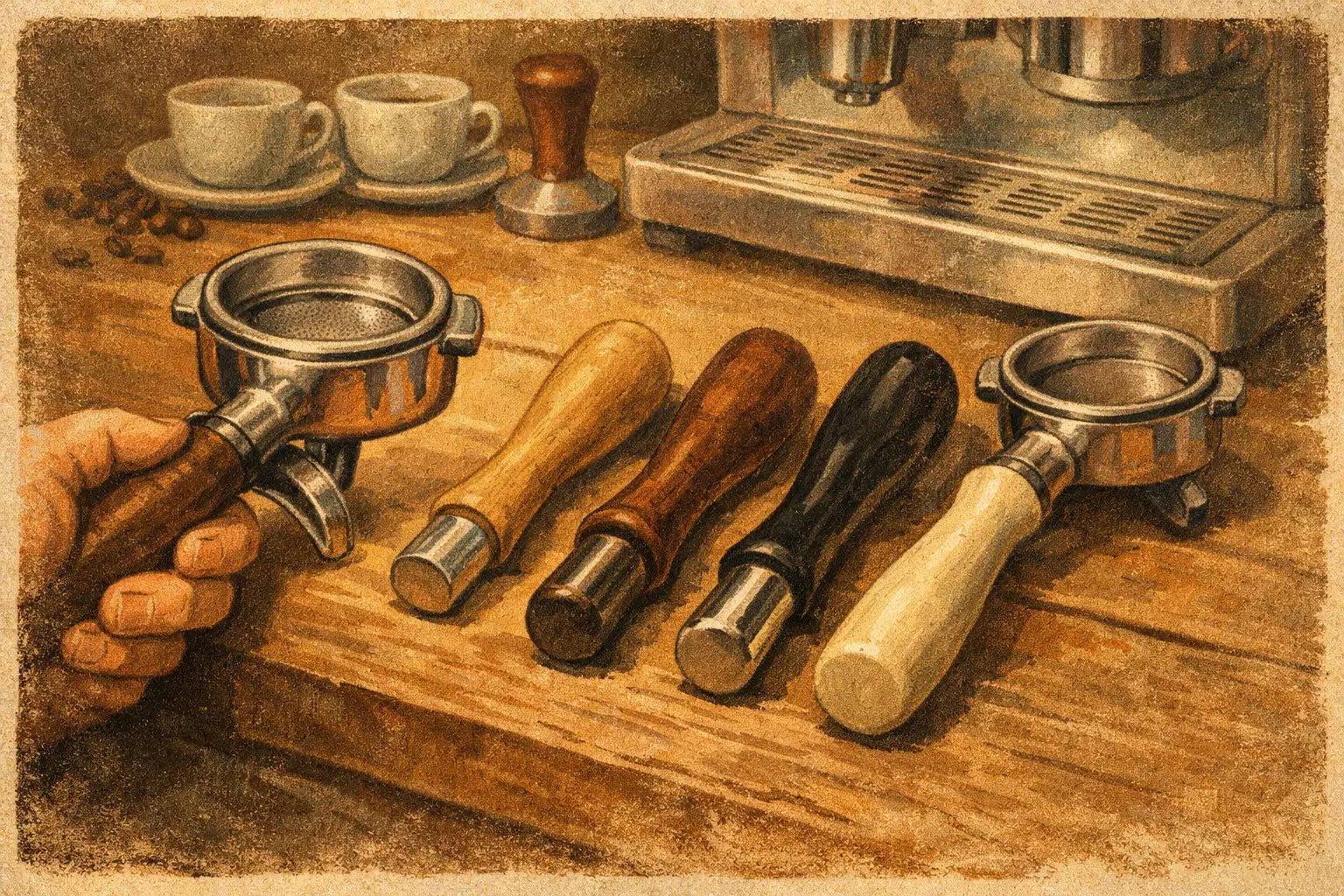
It can also tie a setup together. A walnut-toned knob beside a matching portafilter handle, grinder tray, or dosing accessory creates a coffee station that feels personal without changing the machine’s core character. The best upgrades are not decorative distractions. They make the routine more pleasant while respecting the equipment underneath.
If your current knob has started to crack, loosen, or feel out of place, take a close look at the valve stem and machine model before choosing a replacement. A properly matched knob is a small detail that can make every cappuccino, flat white, and practice pitcher feel more deliberate.