Best Dosing Funnels for Espresso Workflow
A dosing funnel is one of those small espresso upgrades that earns its place quickly. The best dosing funnels espresso workflow is not about adding another accessory to the counter. It is about keeping every gram of coffee in the basket, giving your WDT tool room to work, and making repeatable puck prep feel less fussy.
For a home barista using a capable grinder and a 54 mm or 58 mm portafilter, scattered grounds are more than a cosmetic problem. Retained coffee on the portafilter rim can affect how the basket seats, while a messy dose makes it harder to see whether your workflow is actually consistent. The right funnel solves those problems quietly, provided it fits your equipment and the way you make espresso.
What makes a dosing funnel worth using?
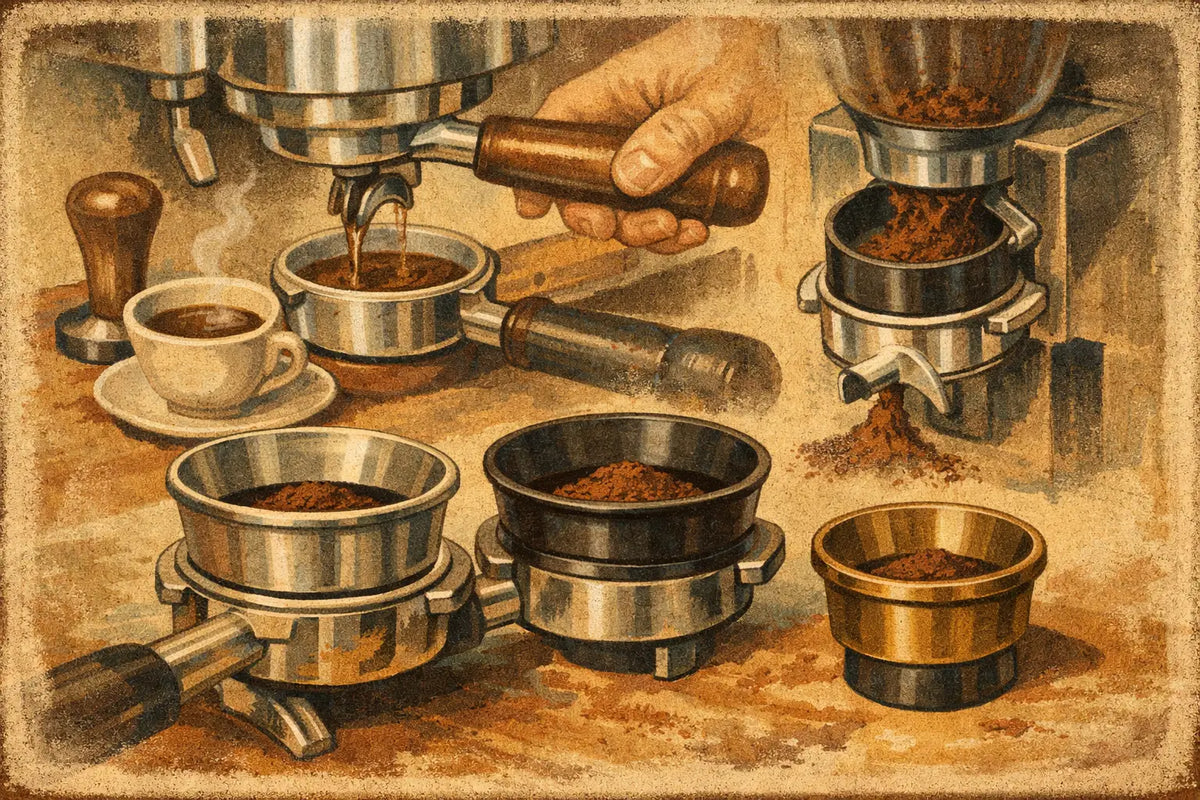
A good funnel creates a taller working area above the basket. That extra wall height lets you grind directly into the portafilter, break up clumps with a WDT tool, and distribute coffee without sweeping a pile of grounds off the counter afterward. It is especially useful with fluffy light-roast grinds, high-output single-dose grinders, and baskets that sit close to their intended dose limit.
The benefit is not that a funnel automatically produces better espresso. Distribution, grind quality, dose, and puck prep still do the heavy lifting. A funnel simply gives you more control over those steps by containing the coffee while you work. That means fewer lost grounds, less cleanup, and a more consistent process from shot to shot.
It also protects a clean-looking setup. If you have invested in a handcrafted portafilter handle, a wood grinder tray, or custom machine details, a ring of coffee grounds around every tool can make the station feel unfinished. A well-fitted dosing funnel is a practical piece of the same considered workflow.
Best dosing funnels for espresso workflow: choose by fit first
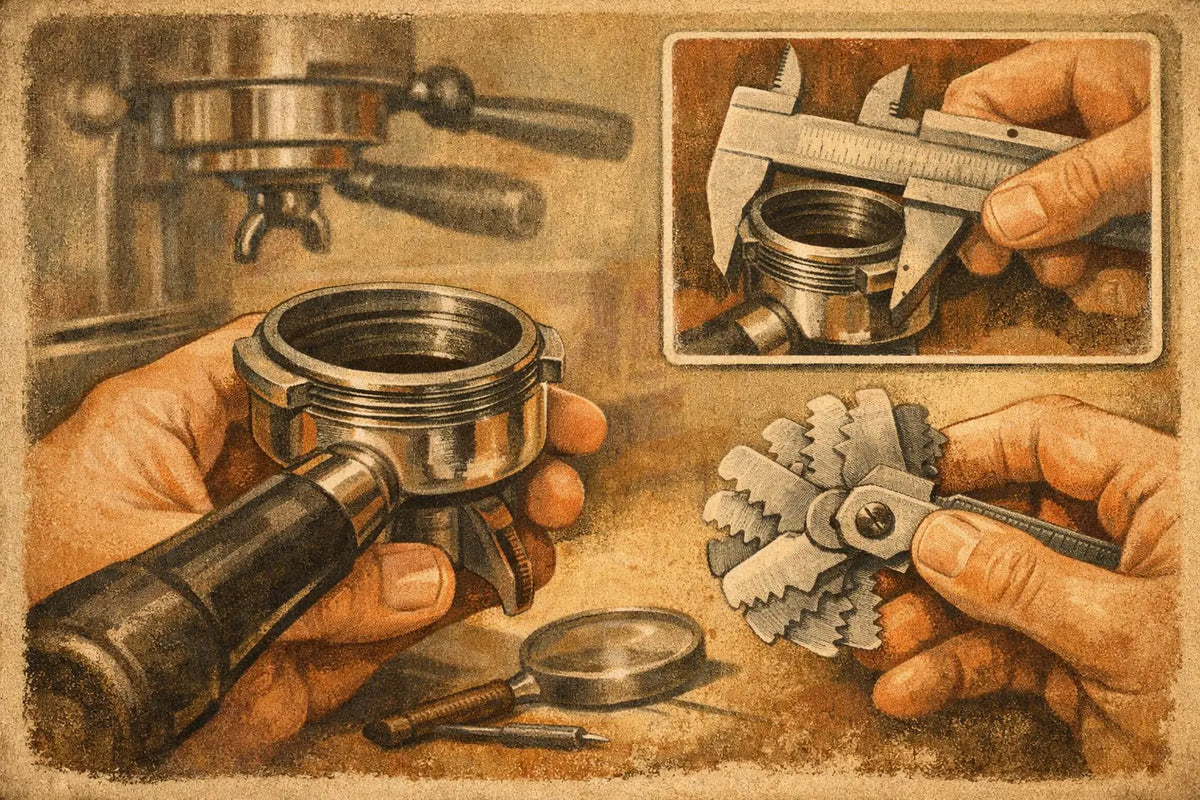
The word 58 mm causes a surprising amount of confusion. A funnel labeled 58 mm may refer to the portafilter size, the basket diameter, or a general category rather than an exact internal dimension. Before choosing one, confirm your portafilter and basket dimensions, then check how the funnel mounts.
Most prosumer machines from ECM, Profitec, Rocket, Lelit, La Marzocco, Bezzera, and many E61-style setups use a 58 mm portafilter. That does not guarantee every 58 mm funnel will fit every basket or portafilter cleanly. Basket rims vary, and some portafilter ears, spouts, or bottomless designs can affect clearance. Breville machines are another common example: many use a 54 mm portafilter, so a standard 58 mm funnel will not be the right choice.
A model-specific or accurately measured funnel is worth the extra attention. The goal is a stable fit with no excessive wobble, no gap that catches grounds, and no interference with the basket rim. If your setup has unusual dimensions or you are matching a custom accessory set, it is often smarter to ask a maker about fitment before ordering rather than trying to make a generic part work.
Magnetic, twist-lock, or friction fit?
Magnetic funnels are popular because they are quick to place and remove. Strong magnets hold the ring in place while you grind and stir, which is useful when you are moving through several drinks. The trade-off is compatibility: a magnetic funnel needs enough ferrous metal at the basket rim to hold securely. Some baskets and coated rims respond differently, so do not assume every basket will work the same way.
Twist-lock funnels attach more positively to the basket or portafilter. They can feel especially secure during vigorous WDT, but the locking mechanism adds bulk and may take an extra second to remove. They are a good fit for baristas who want the funnel firmly attached while they work.
Friction-fit funnels rely on a close, simple fit around the basket. With the right dimensions, they are clean and dependable. With the wrong dimensions, they can lift when you remove them or create a narrow ledge that holds coffee. This is where precise manufacturing matters more than a broad universal claim.
Height matters more than most buyers expect
A short funnel may be enough for dosing directly from a low-retention grinder, but it can be limiting when you use a WDT tool. As the needles move through the coffee bed, grounds can bounce over a shallow rim. A taller funnel gives you room to stir thoroughly without turning the process into a cleanup job.
For most home espresso workflows, a medium-to-tall wall is the practical sweet spot. It contains grounds during grinding and WDT while remaining easy to remove before tamping. Extremely tall funnels can work well for high-volume dosing, but they may obstruct your view of the coffee bed or conflict with a grinder chute. If you dose 18 to 20 grams into a standard double basket, prioritize enough height for your WDT pattern rather than choosing the tallest ring available.
The inner surface matters too. Smooth walls help loose grounds fall back into the basket instead of clinging to a rough edge. A rounded lower lip is helpful when it guides coffee inward without covering so much of the basket that distribution becomes awkward.
Match the funnel to your actual routine
There is no single best funnel for every coffee station. The best choice depends on how you dose, distribute, and tamp.
If you grind straight into the portafilter and use WDT for every shot, choose a secure funnel with enough wall height for full needle movement. Magnetic or twist-lock styles are usually the most convenient because they stay put while you work.
If you dose from a cup, weigh beans before grinding, and transfer grounds into the basket, a taller funnel can make the transfer much cleaner. Look for a wide opening and a lower edge that sits neatly around the basket. This setup is particularly helpful with single-dose grinders, where the grounds often exit as a soft, airy mound rather than a compact stream.
If you rarely use WDT and want only to prevent a few stray grounds, a low-profile ring may be all you need. It keeps the accessory drawer simple and can be faster to remove before tamping. Just be honest about your routine: if you start stirring aggressively with a shallow funnel, you may outgrow it fast.
For espresso lovers who use a self-leveling tamper, remember that the funnel comes off before tamping. Check that it releases cleanly without disturbing the coffee bed. A funnel that drags against the grounds or catches on the basket rim can undo some of the advantage it gave you during distribution.
A cleaner workflow from grinder to group head
A funnel works best as part of a repeatable sequence. Start with a dry, clean basket. Grind into the portafilter or transfer from your dosing cup. With the funnel in place, use WDT only as much as your coffee needs, reaching the lower part of the basket without scraping the metal. Then give the portafilter a light settling tap if that is part of your method, remove the funnel straight upward, level the coffee, and tamp.
Avoid rapping the portafilter hard on the counter after removing the funnel. That can shift the coffee bed and create the very unevenness you were trying to prevent. A calm, repeatable motion usually beats a dramatic one.
Cleaning is equally simple. Brush loose grounds from the funnel after use and wipe it periodically with a soft cloth. Keep magnets and the lower rim free of oily coffee residue, especially if the funnel begins to feel less secure or no longer releases smoothly. A small accessory should reduce friction in your routine, not become another item that needs constant attention.
Materials and finish: practical details that affect daily use
Metal dosing funnels are common for good reason. They are durable, easy to wipe down, and pair naturally with stainless portafilters and espresso machines. A matte or coated finish can reduce fingerprints and give the station a more coordinated look, while polished metal offers a classic appearance but may show coffee oils more readily.
Plastic funnels can be lightweight and budget-friendly, though they may not have the same long-term feel or visual match for a premium setup. They can still be perfectly functional if the fit is accurate and the edge is smooth. The important point is not choosing the heaviest material. It is choosing a funnel that sits securely, cleans easily, and suits the tools you reach for every morning.
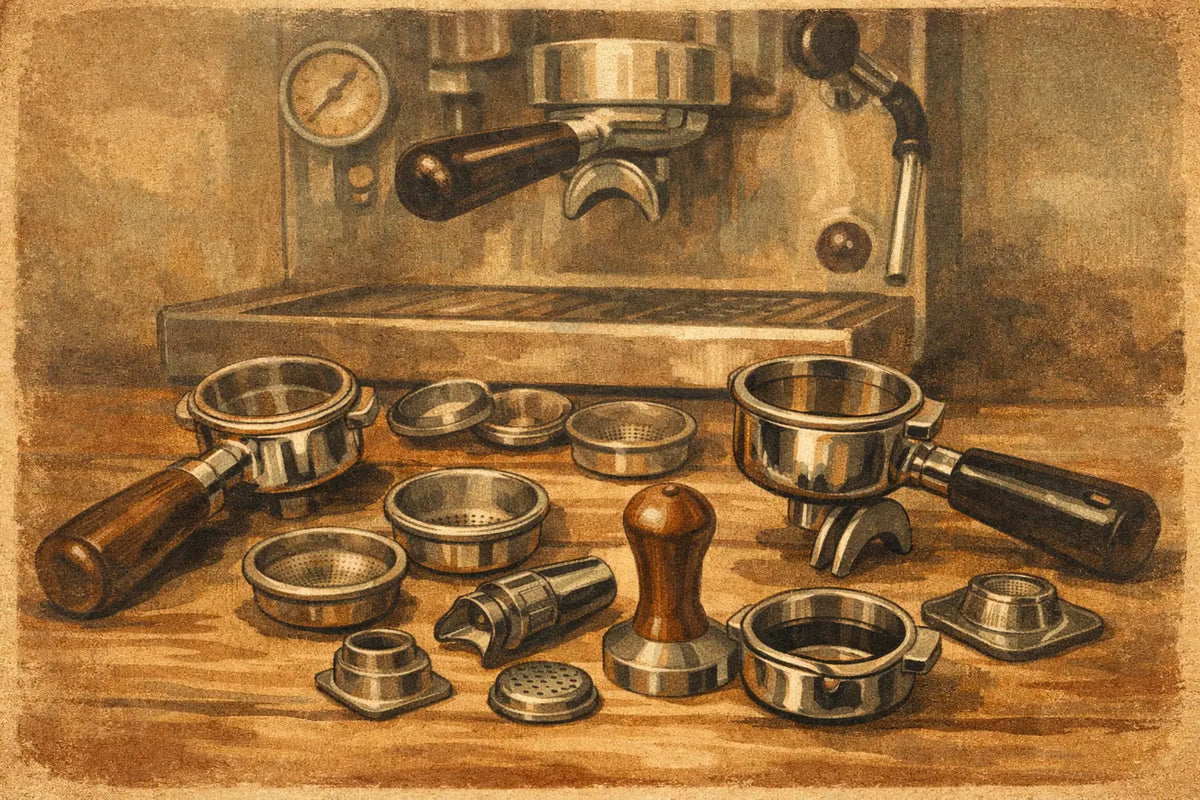
For a personalized coffee station, accessory details count. A dosing funnel can sit beside custom wood portafilter handles, a matching tamper, or a grinder tray without competing for attention. NepoCoffee approaches these small upgrades with the same focus: useful fitment first, then a finish that makes the setup feel like yours.
When a dosing funnel is not the answer
If coffee is still spraying out of your grinder chute, the issue may be static, chute geometry, or grinder cleanliness rather than the lack of a funnel. If your shots remain inconsistent after adding one, revisit grind size, puck preparation, and basket dose. A funnel helps contain the process, but it cannot correct a badly matched basket, stale coffee, or an uneven tamp.
It may also be unnecessary for someone who doses with a very tidy grinder, skips WDT, and values the fastest possible routine. That is a valid preference. Good workflow tools earn their keep by reducing hassle, not by making every barista use the same ritual.
Choose the funnel that matches your portafilter, gives your distribution method enough room, and disappears from your attention once the shot is underway. When it does that, the counter stays cleaner and your focus can return to the part that matters most: tasting the espresso.