How to Choose the Right ECM Flow Control Knob
A flow-control upgrade changes a familiar part of the espresso routine: instead of simply starting a shot and watching the gauge, you can gently influence water entering the coffee puck. The ECM flow control knob is the part your hand meets every time you make that adjustment, so its fit, grip, and finish matter more than they may seem.
For a machine that lives at the center of a carefully built coffee bar, a handmade wood knob can also replace the cold, factory-standard feel with something more personal. The right choice should look at home beside your portafilter handles and steam knobs while operating cleanly on your specific ECM setup.
What an ECM Flow Control Knob Actually Does
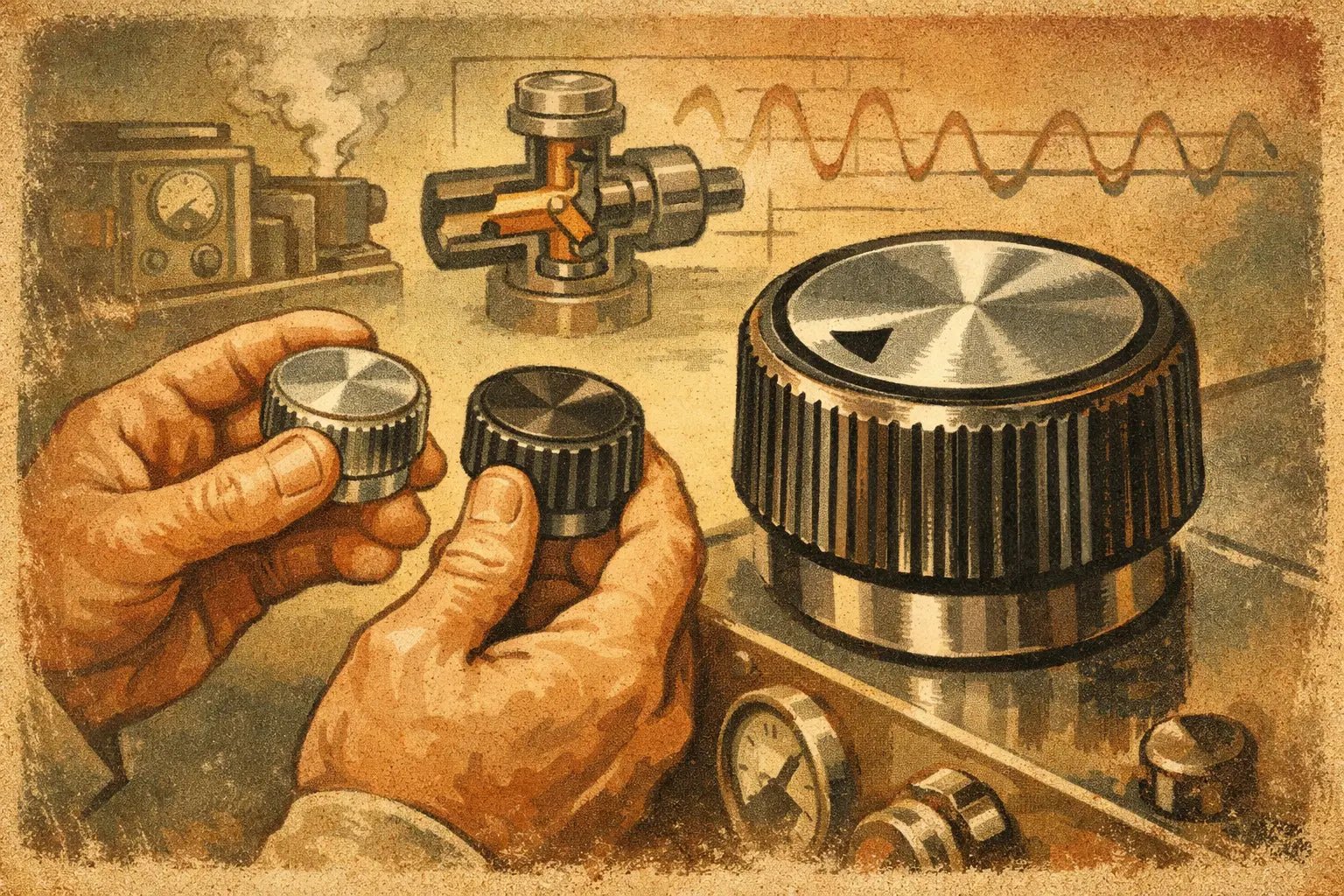
The knob itself does not create flow control. The flow-control device at the E61 group does that work through an adjustable valve or needle mechanism. Turning the knob opens or restricts the water path, allowing you to change the flow rate during preinfusion or throughout extraction.
A properly sized ECM flow control knob gives you a comfortable, repeatable way to make those changes. You can start a shot with the valve partly closed, let the puck saturate at low pressure, then gradually open it as the coffee begins to flow. Some espresso drinkers use this to soften a bright light roast, manage a very fresh coffee, or extend preinfusion without relying entirely on the machine's standard pressure profile.
It is not a shortcut around dialing in. Grind size, dose, distribution, temperature, and coffee freshness still set the foundation. Flow control gives experienced users another variable to work with, and a knob with secure engagement makes that variable easier to use deliberately.
Why Knob Shape and Material Matter
Flow profiling is usually done in small movements. A knob that feels too narrow, slick, or sharp can make those movements less pleasant, especially when your hands are damp or you are moving quickly through a morning routine.
Wood offers a naturally warmer touch than metal and adds visual contrast to ECM's polished stainless steel. Walnut brings depth and a classic dark tone; olive wood has active grain and a lighter, expressive look; maple and other light woods can create a cleaner, modern pairing. Because wood grain varies by nature, no two handcrafted pieces look exactly alike. That is a feature, not a flaw.
Shape also changes the experience. A rounded profile feels natural for fingertip adjustments, while a wider form can offer more purchase when the valve has resistance. The best style depends on how you use flow control. If you make small, frequent corrections during a shot, prioritize easy tactile control over a dramatic oversized design.
Wood needs sensible care around heat and moisture. A well-finished knob is made for normal espresso use, but it should not be soaked, placed in a dishwasher, or repeatedly exposed to harsh cleaners. Wipe it with a soft damp cloth, then dry it. This keeps the finish looking good and helps the wood retain its character over time.
ECM Flow Control Knob Compatibility Comes First
An attractive knob is only useful if it fits the installed flow-control assembly. ECM has produced multiple machine configurations, and flow-control kits may be factory-installed, added later, or supplied by different manufacturers. A machine name alone is not always enough to confirm fitment.
Before ordering, identify the exact machine model and inspect the current group-head control. Look closely at how the existing knob attaches. Depending on the assembly, the connection may involve a set screw, a threaded interface, a specific shaft profile, or a dedicated adapter. The diameter and depth of the internal opening matter just as much as the outside shape.
This is especially relevant for owners of E61-style ECM machines such as the Synchronika or other machines that have received a flow-control conversion. Two machines that look nearly identical from the front can have different hardware under the knob. Do not assume that a knob made for one E61 setup automatically fits every other E61 setup.
A few details make fitment confirmation much easier: your machine model, whether the flow-control unit was factory-installed or aftermarket, clear photos of the current knob and exposed attachment point, and basic measurements when available. If you are replacing a missing knob, a photo of the valve stem is more useful than a photo of the entire machine.
At NepoCoffee, custom work starts with those details. A maker can match the component to the actual hardware rather than asking you to gamble on a generic listing. That extra check is worthwhile for a part that sits directly over a hot, frequently used valve assembly.
Factory Flow Control vs. Aftermarket Kits
Factory-equipped flow control and aftermarket kits can differ in their knob mounting design even when both are used on ECM equipment. Aftermarket kits are common because many enthusiasts add flow control after purchasing their machine. They can be excellent upgrades, but their dimensions and attachment methods vary.
The practical rule is simple: purchase for the valve assembly you have, not only the espresso machine badge. If a product description calls out a specific kit or compatible shaft style, compare it to your setup before placing an order. When the details are unclear, ask first and include photos. It is faster than receiving a beautiful part that cannot be installed correctly.
Choosing a Finish for Your Coffee Bar
An ECM machine already has a strong visual presence. Stainless panels, gauges, levers, and chrome details create a classic professional look. A wood flow-control knob can either complement that finish quietly or become a focal point.
Dark walnut works well when you want a traditional, unified set alongside dark portafilter handles, a matching steam knob, or a wood-accented grinder tray. Olive wood suits owners who like visible grain and a more organic contrast against polished metal. Lighter woods can brighten a compact coffee station and pair nicely with pale cabinetry or neutral ceramics.
Matching is not mandatory. In fact, a slightly varied wood grain across your accessories often looks more handmade and less like a factory bundle. What matters is choosing a direction: coordinated dark wood, warm mixed natural tones, or a deliberate contrast with the machine's metal finish.
If you are building a full set, consider the parts you touch most often. A flow-control knob, portafilter handle, steam knob, and brew lever detail can create a more consistent experience without changing the machine's core identity. Start with the component that solves the immediate need, then add matching pieces over time if that is your style.
Installation: Keep It Careful and Simple
Installing an ECM flow control knob should be a low-drama job when the part is made for the correct assembly. Begin with the machine cool and powered off. The group head and nearby metal components can retain heat long after the machine has been switched off.
Remove the existing knob according to its attachment style. If there is a set screw, use the correct tool and avoid overtightening during reassembly. If the knob threads on, turn it gently and keep it aligned. Forcing a wooden component onto an incompatible shaft or thread can damage both the knob and the control hardware.
Once installed, turn the knob through its full range before pulling a shot. It should move smoothly without rubbing nearby parts, slipping, or binding. Check that the knob remains secure after a few heat cycles. If anything feels wrong, stop and verify fitment rather than trying to compensate with extra force.
A Better Upgrade Starts With the Details
The best ECM upgrades are not always the largest or most technical. A well-made flow-control knob improves the one point of contact between your hand and a useful extraction tool. When it is properly fitted, comfortable to turn, and chosen to suit your machine, it makes profiling feel more intentional every day.
Take a clear photo of your current valve assembly before choosing a style, then select the wood and shape you will enjoy reaching for shot after shot.