Artikel: ECM Synchronika Restoration: Practical Plan
ECM Synchronika Restoration: Practical Plan
A proper ECM Synchronika restoration starts before the first screw comes out. These machines are built to be serviced, and their stainless cases can hide a lot of history: mineral buildup from hard water, a slow drip at a fitting, tired steam valve seals, scratched panels, or an interior that simply needs a careful reset. The goal is not to make an older Synchronika look new for one afternoon. It is to return it to safe, reliable daily use while giving the machine a finish that belongs on your coffee bar.
For most owners, the smartest order is simple: confirm safety and mechanical condition first, restore performance second, and handle cosmetic upgrades last. A beautiful walnut portafilter handle cannot compensate for a leaking boiler fitting. Once the foundation is right, however, a Synchronika is one of the most rewarding machines to restore and personalize.
Start Your ECM Synchronika Restoration With an Honest Assessment
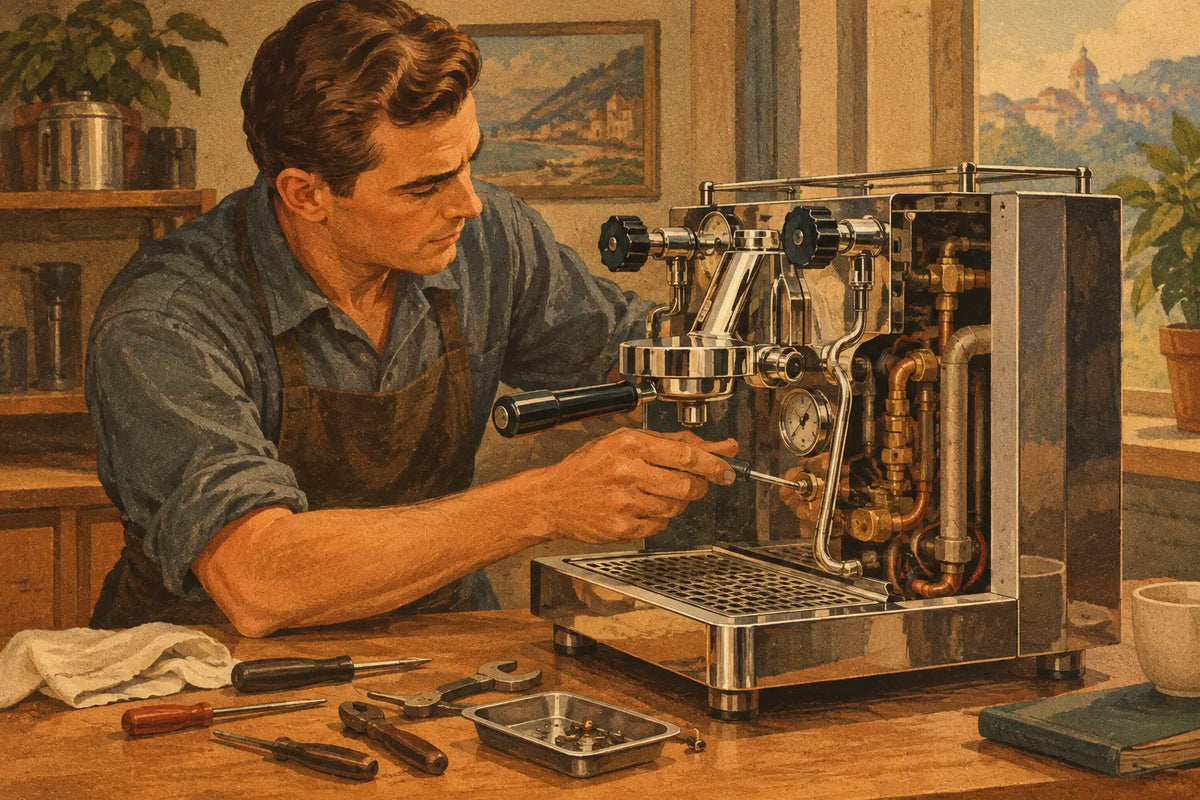
Unplug the machine, let it cool completely, and remove the water tank before opening the case. Take clear photos as you work, especially of wiring routes, hose positions, and the layout around the boilers. The Synchronika has a serviceable design, but photos prevent small reassembly mistakes that turn an efficient project into a long troubleshooting session.
Start with an external inspection. Look for dents around the cup rail, staining near the steam and hot-water valve areas, loose feet, cracked gauges, and worn knob hardware. Check whether the group lever moves smoothly and whether the portafilter locks in without excessive play. A badly worn group gasket can make a good machine seem more worn out than it really is.
Then inspect the machine's service history. Ask or determine when it was last descaled, whether it was run on properly treated water, and whether the pump, safety valve, pressurestat or PID components, and steam valve seals have ever been replaced. Water quality matters more than a machine's age. A five-year-old Synchronika run on low-scale water may need only seals and cleanup, while a newer machine exposed to hard water can need significant boiler work.
Before ordering parts, make a short condition list:
- Any visible leak, corrosion, or mineral scale inside the chassis
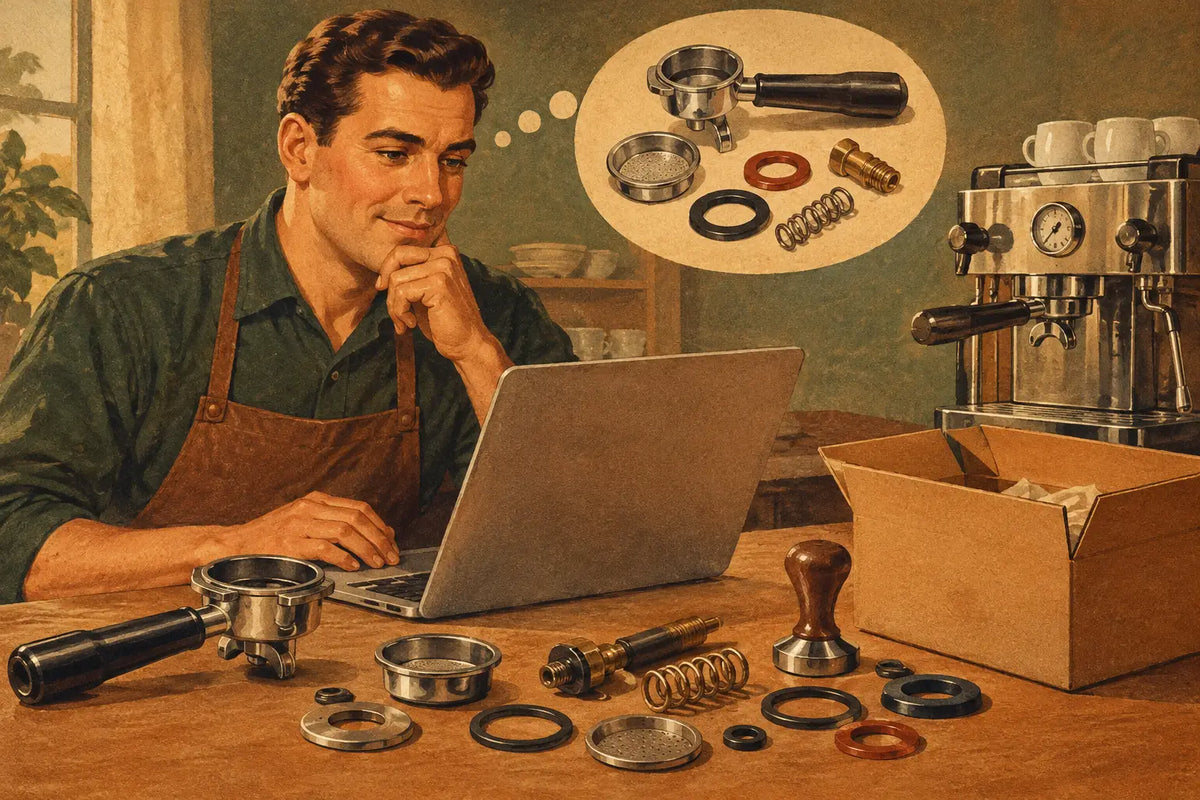
- The condition of the group gasket, shower screen, and dispersion components
- Steam and hot-water valve operation, including drips from the wands
- Pump behavior, brew pressure, and steam pressure stability
- The condition of the case panels, knobs, portafilter handles, and drip tray
Make Safety and Water Quality the First Priority
The ECM Synchronika contains high-voltage wiring, hot boilers, pressurized steam, and plumbing connections that can remain under pressure after use. If you are not comfortable testing electrical components or opening a boiler circuit, use a qualified espresso machine technician for that portion of the restoration. This is especially true if you see damaged insulation, burnt terminals, a repeatedly tripping breaker, or signs of water contacting electrical parts.
Scale is the other concern that deserves respect. Do not automatically run a strong descaling solution through an unknown machine. Heavy scale can break loose, clog valves or jets, and create new leaks at fittings that had been sealed by deposits. In a neglected machine, a controlled teardown and manual inspection may be safer than aggressive chemical descaling.
Once restored, protect the work with water that matches ECM's recommended mineral profile. Filtered water is not always low-scale water, and softened water is not always appropriate for espresso equipment. Test the water you actually use. Consistent, suitable water prevents the repeat repairs that frustrate owners months after a restoration.
Restore Brew Performance Before Chasing Appearance
The E61 group is central to the Synchronika experience, so begin there. Replace the group gasket if it is hard, flattened, or leaking around the portafilter. A fresh shower screen and a thorough cleaning of the group area can improve water distribution and make backflushing more effective. If the lever feels sticky or the group is weeping from the mushroom or cam area, inspect the relevant gaskets and lubricate only with food-safe products intended for espresso machine use.
Next, check brew pressure with a blind basket and a known-good gauge if needed. The vibration pump should build pressure predictably, while the machine's settings should support the coffee you use. Avoid adjusting pressure blindly. A shot that runs too fast may be a grinder, dose, or puck-prep issue rather than a machine-pressure problem.
Steam and hot-water valves are common restoration items. A drip from a wand can be caused by a worn valve seal, debris on the sealing surface, or a valve that has not been closed fully. Rebuilding the valve with the correct seals often restores the firm, controlled feel that owners expect. While you are there, inspect the wand tips and replace damaged ones rather than forcing a cleaning needle through distorted holes.
Dual-boiler performance also depends on stable steam pressure and clean boiler-level operation. Watch for slow heat-up, unusual cycling, weak steam, or a boiler that overfills. Those symptoms can point to sensors, valves, heating components, or control issues. Diagnose methodically instead of replacing several expensive parts at once.
Check the Small Parts That Affect Daily Use
Some of the most satisfying improvements are modest. Replace a tired vacuum breaker or anti-vacuum valve if it hisses excessively after warm-up. Renew brittle silicone hoses, tired O-rings, and flattened drip-tray feet. Clean the drain path and make sure the drip tray sits squarely. These details reduce rattles, drips, and annoying cleanup during the morning routine.
A machine that is mechanically sound should also be easy to live with. If a lever, knob, or portafilter feels awkward every day, that is worth addressing during restoration, not after the case is back together.
Clean Stainless Steel Without Making More Work
The Synchronika's polished stainless exterior is durable, but it shows scratches, fingerprints, and residue quickly. Use a soft microfiber cloth and a cleaner suited to stainless steel. Wipe in the direction of the finish where possible, then dry the surface fully. Avoid abrasive pads, harsh powders, and cleaners that can leave residue around seams or create fine scratches that catch the light.
For water spots around the steam wand and front panel, use a mild approach first. A damp cloth followed by a dry cloth often handles fresh marks. For more persistent spots, use an appropriate stainless-safe cleaner sparingly and keep it away from openings, switches, and printed markings.
Do not overlook the underside of the machine, the rear panel, and the area beneath the drip tray. These are the places where coffee residue and moisture collect unnoticed. A clean interior and base make future leak checks far easier because new moisture stands out immediately.
Choose Upgrades That Respect Synchronika Fitment
Restoration is the ideal time to make the machine yours, but model-specific fitment matters. The Synchronika's hardware, thread sizes, valve stems, and portafilter dimensions are not interchangeable with every E61-style machine. Measure carefully, confirm the model version, and do not assume that a part made for another premium machine will fit correctly.
Wood accessories are a natural match for the Synchronika's stainless frame. A handcrafted portafilter handle can add warmth without changing the machine's function. Matching steam and hot-water knobs can make the front of the machine feel intentional rather than pieced together, while a wood bean hopper lid, dosing funnel, or grinder tray can carry the same material across the entire coffee station.
The trade-off is that wood needs sensible care. Keep it dry, wipe away splashes promptly, and avoid soaking it in water or using harsh cleaners. Quality hardwood handles are made for hands-on espresso use, but they are not disposable plastic parts. The small amount of care is part of the appeal.
If you are building a coordinated setup, choose one wood tone that works with your countertop, grinder, and machine finish. Walnut creates a classic, darker contrast against polished steel. Maple and lighter woods keep the setup bright. A custom piece can also make sense when you want to match an existing grinder handle or need a specific profile for comfort.
Reassemble Slowly and Test in Stages
Reassembly is where patience pays off. Route wires as they were originally secured, keep hoses away from hot surfaces and moving parts, and verify that every connector is fully seated. Do not overtighten brass fittings or case screws. Brass is forgiving until it is not, and stripped threads create an expensive detour.
Before closing the case completely, perform a careful powered test only if you are qualified to do so. Watch for leaks while the machine fills and heats. Test the pump, brew circuit, steam valve, hot-water valve, and drain function one at a time. Confirm that the pressure readings behave normally and that no moisture appears around fittings or electrical areas.
After the first heat cycle, let the machine cool and inspect it again. A fitting that looks dry when cold may reveal a slow seep once the metal expands. This second check is one of the best habits in any ECM Synchronika restoration.
Keep the Restored Machine Looking and Working Right
A restored Synchronika stays easier to own when maintenance becomes routine. Backflush according to your detergent and use pattern, wipe the steam wand immediately after milk texturing, empty and rinse the drip tray, and inspect the group gasket when the portafilter begins to lock in farther than usual. Keep a simple note of filter changes, gasket replacements, and any pressure adjustments.
For custom finishing pieces, choose components made with the machine's actual use in mind, not just for display. NepoCoffee creates handcrafted accessories for enthusiasts who want a coffee bar with real working character, including model-aware custom requests where a standard piece is not the right answer.
The best restored Synchronika does not look like it has been preserved behind glass. It heats quietly, pulls consistent shots, steams with confidence, and has the small personal details that make you want to walk up to it every morning.