58mm Versus 54mm Portafilters: Which Fits?
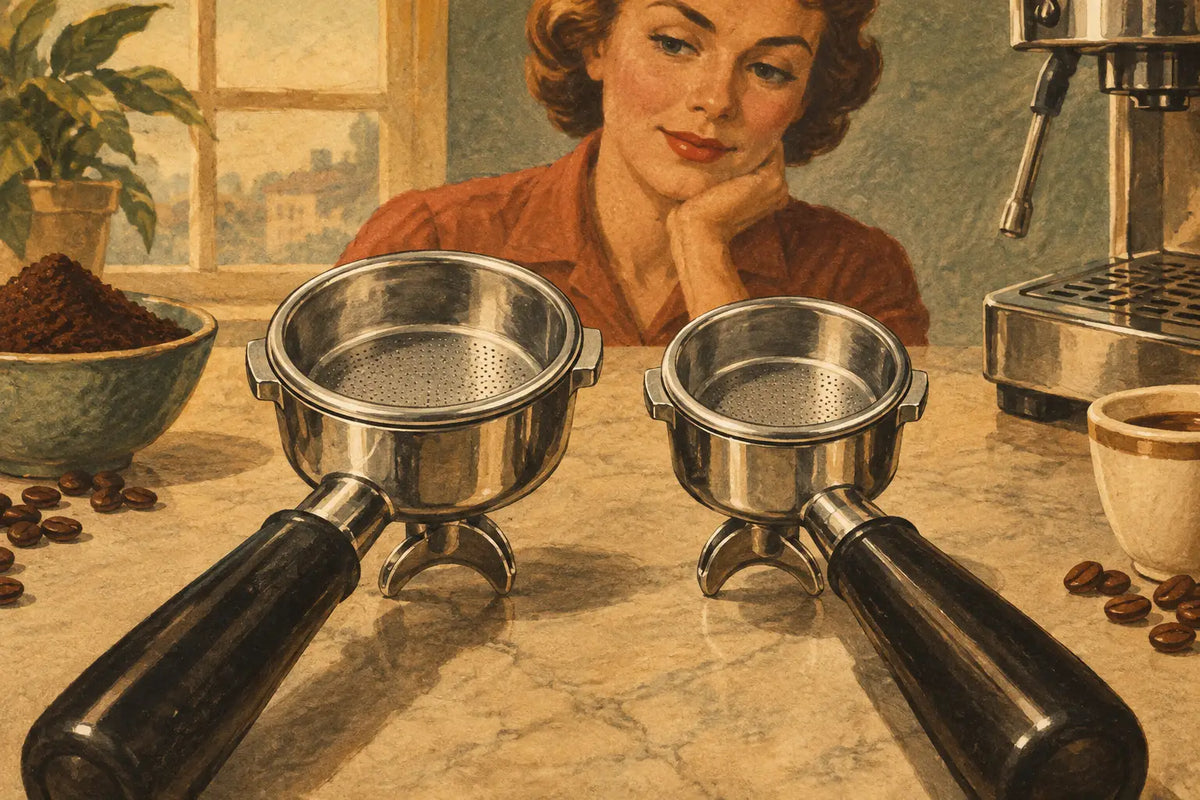
A portafilter can look like a simple piece of metal with a handle attached, but its diameter affects nearly every part of your espresso routine. In the 58mm versus 54mm portafilters discussion, the right choice is not about declaring one size universally better. It is about matching your machine, your preferred basket and dose range, and the accessories that make your coffee station work the way you want.
For home baristas upgrading a handle, bottomless portafilter, basket, dosing funnel, or tamper, compatibility comes first. A beautiful wood handle only earns its place on the bar if its thread, portafilter head, and machine fitment are correct.
What 58mm and 54mm Actually Measure
The number refers to the approximate internal diameter of the filter basket and portafilter system. A 58mm system is the commercial-standard format found on many prosumer and commercial machines. You will see it on equipment from brands such as ECM, Profitec, Rocket, Lelit, La Marzocco, Bezzera, and many E61-based machines.
A 54mm system is common on several popular home machines, especially Breville models such as the Barista Express, Barista Pro, Barista Touch, Bambino Plus, and Dual Boiler. There are exceptions across every brand, so the machine name always matters more than the diameter alone.
That difference of 4mm may sound minor. In practice, it changes the width and depth of the coffee bed, the accessory market available to you, and sometimes the way a given dose behaves in the basket.
58mm Versus 54mm Portafilters: The Practical Difference
With the same dose of coffee, a 54mm basket creates a narrower, deeper puck than a 58mm basket. A 58mm basket spreads that dose over a wider area, producing a shallower puck. Neither shape automatically makes better espresso. Well-designed baskets, fresh coffee, proper distribution, and a dialed-in grinder matter far more.
Still, the geometry can change your workflow. A deeper 54mm puck may be a little less forgiving of uneven distribution or a sloppy tamp, particularly when using a higher dose. A wider 58mm puck can make it easier to work with larger baskets and the 18g to 20g doses commonly used in specialty espresso recipes. These are tendencies, not laws. A carefully prepared 54mm shot can be exceptional, while a poorly prepared 58mm shot will still channel.
The bigger real-world distinction is ecosystem. Because 58mm is widely used in commercial environments, there is a huge selection of precision baskets, tampers, dosing rings, puck screens, distribution tools, and bottomless portafilters designed around it. If you enjoy testing basket styles and refining recipes, 58mm gives you more paths to experiment.
Fifty-four millimeter owners are not short on options, though. The popularity of Breville machines has created a strong market for 54mm baskets, calibrated tampers, funnels, puck screens, and upgraded portafilters. You simply need to buy for your exact size rather than assuming a 58mm accessory will be close enough. It will not be.
Dose, Basket Depth, and Espresso Style
Portafilter diameter does not dictate dose on its own. Basket depth and design do. A 54mm machine can use an 18g basket, and a 58mm machine can use a lower-dose basket for a traditional espresso. Check the basket’s intended dose range instead of trying to force a recipe because of the diameter stamped on your accessories.
For a modern medium or light roast, many home baristas prefer 18g to 20g doses with a ratio around 1:2 or longer. A 58mm system often makes these higher-dose recipes straightforward because the common baskets are designed for them. But a 54mm precision basket can also perform beautifully in that range, provided there is enough headspace and the basket is not overfilled.
Headspace is worth watching. After tamping, coffee should not press hard into the shower screen or screw when the portafilter locks in. Too little clearance can create an uneven puck surface, a messy shower screen, and inconsistent flow. Too much empty space is not automatically a problem, but it can affect the way water meets the puck. Use your machine’s clearance, basket recommendation, and actual shot results as your guide.
Accessory Fitment Is More Than Diameter
A common upgrade mistake is buying a 58mm accessory for a 54mm portafilter, or vice versa. Tampers are the most obvious example. A 58mm tamper will not fit in a 54mm basket, while a 54mm tamper is too small to properly compress a 58mm puck. Even within one nominal size, precision fit matters. A tamper made to 53.3mm, 53.5mm, or 53.55mm can behave differently in a 54mm basket depending on the basket wall and shape.
The same applies to dosing funnels, puck screens, distribution tools, and baskets. Buy for the basket and machine system you own, not just the broad category printed in a product title.
Portafilter handles require another compatibility check. The handle itself does not care whether the basket is 54mm or 58mm. The connection between the handle and portafilter body does. Thread diameter, thread pitch, mounting style, and the shape of the portafilter head vary by manufacturer and model. Two 58mm portafilters can still use completely different handle fittings.
That is why model-specific work matters when choosing a handcrafted handle or custom replacement part. Confirm your machine model, portafilter style, and existing handle connection before ordering. If your machine has an unusual or older configuration, clear photos and measurements can prevent a frustrating mismatch. NepoCoffee can help coffee lovers work through custom fitment details when standard options do not tell the full story.
Does 58mm Make Better Espresso?
No. The 58mm format is popular because it is a practical commercial standard, not because diameter alone creates superior flavor. Its wide accessory availability, familiar basket sizes, and common workflow make it appealing for serious home setups. If you are choosing a machine from scratch and want maximum freedom to change baskets and accessories over time, 58mm is a strong advantage.
But a 54mm machine should not be treated as a compromise by default. Many 54mm machines are capable of excellent espresso, especially with a good grinder and an appropriately fitted basket and tamper. For a home barista who already owns a Breville 54mm machine, the sensible path is usually to build a better workflow around that platform rather than replacing a capable machine just to join the 58mm ecosystem.
Spend attention where it has the greatest effect: coffee freshness, grind consistency, dose control, distribution, temperature management, and repeatable puck preparation. Portafilter size shapes the setup, but it does not replace those fundamentals.
Choosing the Right Upgrades for Your Setup
Start by identifying your exact machine and current basket. Measure only if you need to confirm an unusual part, since the manufacturer model is usually the clearest compatibility reference. Then decide what problem you are trying to solve.
If you want cleaner dosing, choose a funnel made for your basket diameter and portafilter style. If you want more repeatable tamping, choose a tamper that closely matches the basket’s actual internal measurement. If you are moving to a bottomless portafilter, verify the lug geometry and group-head compatibility, not just the basket size. If your stock handle feels generic, worn, or out of place beside a carefully built coffee bar, select a handle made for your specific portafilter connection.
For visual upgrades, wood species and finish deserve the same consideration as fitment. A warm walnut handle can complement darker machine accents, while olive wood brings more natural variation and a lighter presence. The best custom accessories feel personal without making the machine harder to use or maintain.
Your portafilter size is not a verdict on your espresso potential. It is simply the standard your machine was built around. Learn its basket options, buy accessories that truly fit, and build a workflow you will enjoy repeating every morning.