Handmade Espresso Accessories USA That Fit
A walnut portafilter handle can make a machine feel like yours. A properly fitted steam knob can make a daily workflow more comfortable. The best handmade espresso accessories USA buyers choose are not just decorative add-ons - they are practical upgrades built around the machines, grinders, and habits already on the coffee bar.
For serious home espresso, the difference is usually in the details. You may know your preferred dose to the tenth of a gram and recognize channeling before the first drip reaches the cup. It makes sense to expect the same level of care from the parts you touch every morning. Handmade wood accessories, custom replacement pieces, and model-specific workflow tools offer a better path than generic parts that almost fit.
Why Handmade Espresso Accessories USA Buyers Choose Matter
Mass-market coffee accessories can be useful, especially for universal tools like a basic dosing cup or cleaning brush. But espresso equipment is full of exceptions. Portafilter head geometry differs by brand. Steam valve stems vary. Hopper lids, flow control knobs, and grinder trays need dimensions that match the exact equipment on your counter.
A handmade accessory earns its place when it does one of three things well: restores a worn or missing component, improves how the machine feels to use, or gives a familiar piece of equipment a more personal finish. Often, it does all three.
Wood is especially popular because it adds warmth to an otherwise metal-heavy setup. A well-shaped handle has a more natural feel in the hand than a factory plastic part, while a matching set of knobs, handles, and accessories can bring visual order to a mixed coffee station. The trade-off is that handmade wood needs sensible care. Keep it dry, avoid soaking it, and do not use harsh cleaners that can strip its finish.
The right material also depends on the job. Wood works beautifully for handles, knobs, tampers, and lids. Stainless steel or food-safe metal is often the better choice for parts exposed directly to coffee grounds, moisture, or heavy contact during prep. Good customization respects both appearance and function.
Start With Fitment, Not Just Looks
A beautiful accessory that does not fit is still a problem. Before choosing a replacement handle, knob, lid, or upgrade kit, identify the exact brand and model of your machine or grinder. “Breville,” “Lelit,” or “Rocket” alone may not be enough. Different generations can use different thread sizes, shaft profiles, basket dimensions, and attachment methods.
For a portafilter handle, confirm whether the handle is threaded, press-fit, or secured with a particular connector. For steam knobs and flow control knobs, the key details are usually the valve stem shape, mounting point, and machine version. A bean hopper lid or grinder tray needs its model-specific dimensions to sit securely and function without interfering with dosing.
Photos help when ordering a custom part, particularly for older machines, limited editions, or equipment that has been modified over time. A clear image of the existing part, the connection point, and any measurements can prevent a lot of guesswork. This is where buying from a maker who understands espresso equipment details makes a real difference.
NepoCoffee approaches custom work from that practical point of view: first identify compatibility, then create an accessory that belongs on the machine.
Common Fitment Questions to Answer First
Before placing an order, check the machine or grinder model name, production version if known, and the part you are replacing. If the piece connects with threads, measure the thread diameter or share a close-up image. If it is a handle or knob, consider whether you want to match existing wood tones or build a coordinated set over time.
Do not assume a 58 mm portafilter means every related part is universal. Basket size may be shared across many prosumer machines, but the handle connection and group-specific accessories can still differ. Similarly, a dosing funnel may fit the basket diameter yet perform differently depending on its magnetic base, rim depth, and the way you distribute grounds.
Choose Upgrades Around Your Actual Workflow
The most satisfying coffee bar upgrades solve a small annoyance you notice every day. That could be a cracked factory knob, a slippery portafilter handle, grounds scattering around the basket, or a grinder setup that never feels organized.
A wooden portafilter handle is a natural starting point for many home baristas. It changes the main point of contact during every shot and can be made to suit a preferred shape, wood species, and finish. If you pull back-to-back drinks, a comfortable handle profile matters more than an overly elaborate design.
Steam knobs are another high-impact upgrade. They are easy to overlook until the original knob becomes worn, loose, or unpleasant to grip. A well-fitted handmade replacement can offer better tactile control while tying the machine’s appearance to wooden handles or other accents.
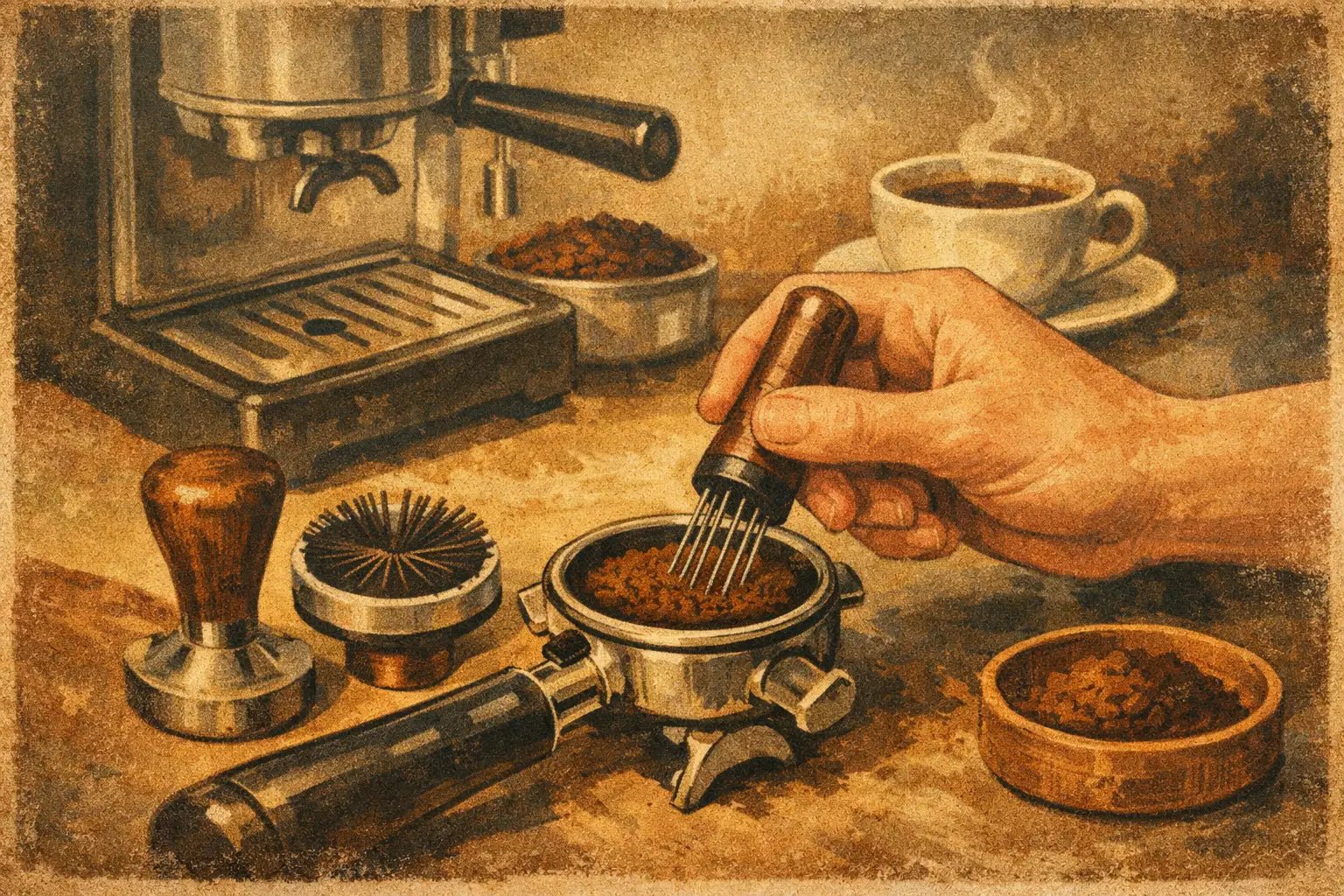
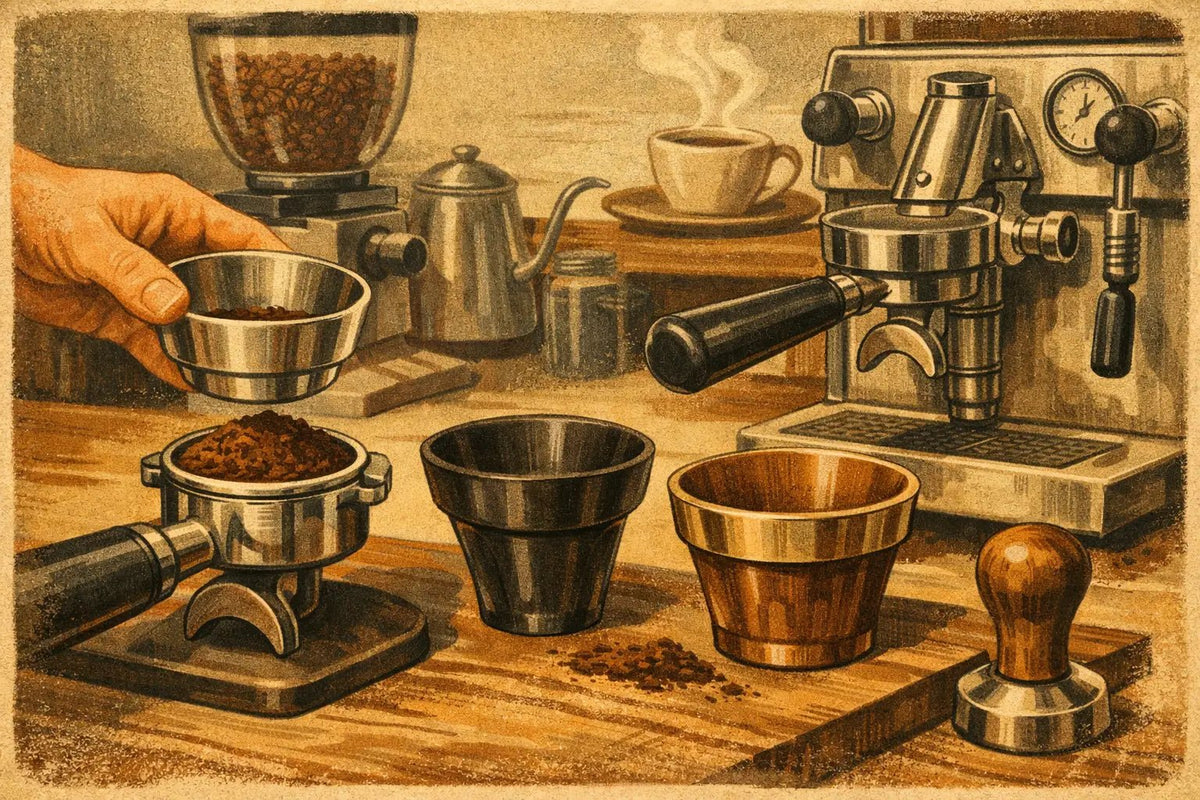
For grinders, practical pieces often deliver the largest workflow gain. A dosing funnel helps keep grounds inside the basket while you grind and distribute. A WDT tool supports more even coffee distribution before tamping. A fitted grinder tray can give a dosing station a cleaner landing area for tools and loose grounds. None of these accessories will fix stale coffee or an incorrect grind setting, but they can make a good process more consistent and less messy.
Flow control knobs appeal to a different kind of enthusiast: the person who wants more direct, repeatable interaction with a manual profiling setup. Here, the design should prioritize grip and clear movement over decoration. If you use flow control frequently, choose a knob shape that feels reliable with dry hands and damp hands alike.
Build a Coordinated Setup Without Making It Too Precious
There is a point where matching accessories can turn a coffee bar into a display instead of a working station. The goal is not to make equipment untouchable. It is to create a setup you want to use, clean, and maintain.
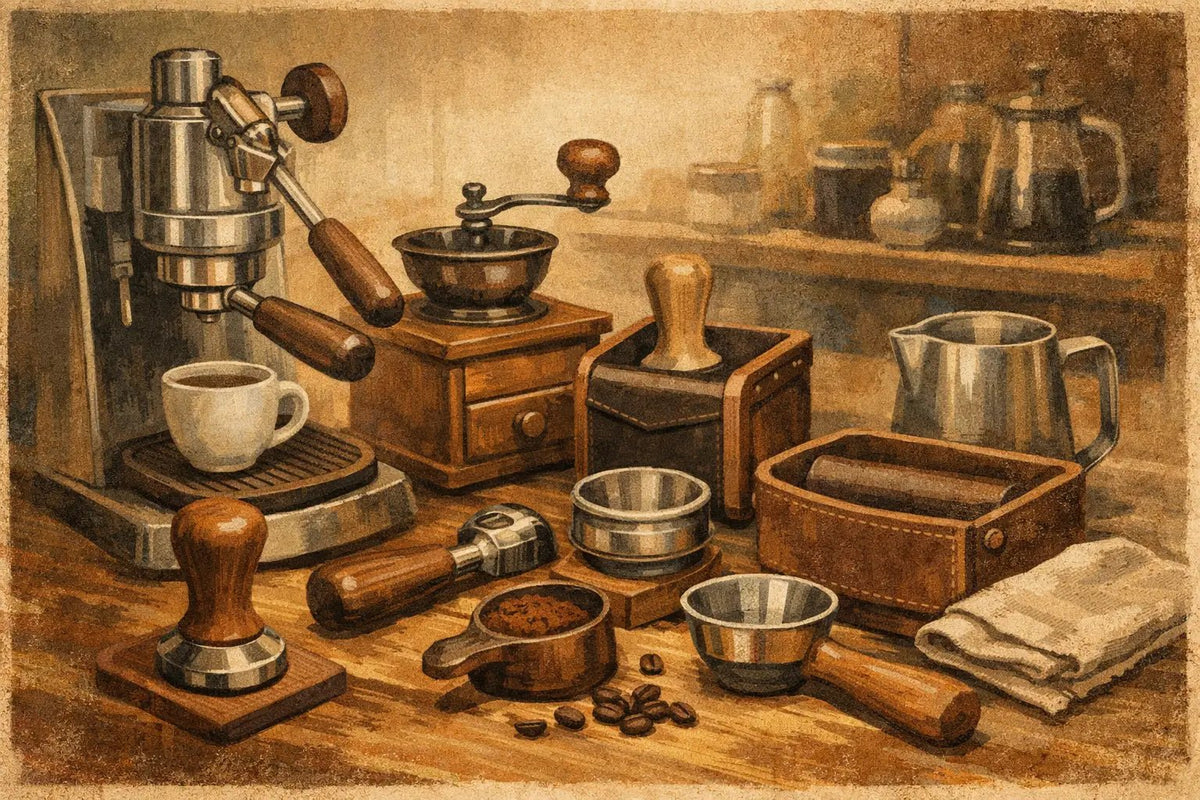
Start with one anchor piece, such as a portafilter handle in walnut, maple, olive wood, or another preferred tone. Add a matching steam knob or hopper lid only if it supports the visual direction and fits your routine. Darker woods often pair well with polished stainless machines from ECM, Rocket, Profitec, and Bezzera. Lighter wood can add contrast to black or brushed-metal equipment from Breville, Gaggia, and Lelit.
Exact matching is not always necessary. A slightly varied grain pattern is part of what makes handmade work feel real. What matters is that the pieces share a deliberate character: similar warmth, finish level, or shape language. A coffee bar with a few well-chosen upgrades usually feels more considered than one covered in accessories.
When Custom Work Is the Better Option
Custom ordering makes the most sense when a standard replacement does not exist, when you are restoring an older machine, or when you want several pieces designed as a set. It is also useful for owners who have a specific ergonomic request, such as a thicker handle profile, a particular knob diameter, or a wood choice that complements cabinetry and other coffee gear.
Custom work requires a little patience. A maker may need measurements, photos, or confirmation of the original part before producing the piece. That is not a delay for its own sake. It is the process that helps ensure the finished accessory fits correctly and performs as intended.
Be clear about what matters most to you. If appearance is the priority, share the finish and color direction you want. If usability comes first, explain how you use the machine and what frustrates you about the current part. A good custom request gives the maker enough information to balance both.
Care for Handmade Parts Like Working Equipment
Handmade accessories are built to be used, but they are not maintenance-free. Wipe wooden pieces with a soft, lightly damp cloth, then dry them promptly. Avoid leaving them near standing water, soaking them, or running them through a dishwasher. Heat, constant moisture, and aggressive cleaners are hard on natural wood and its protective finish.
For machine and grinder components, inspect attachment points occasionally. A handle, knob, or lid should remain secure without being overtightened. If a part begins to loosen or its fit changes, address it before forcing it. Espresso equipment sees vibration, heat, steam, and repeated daily use, so a quick check is part of responsible ownership.
The best upgrade is the one you notice in your hands, not just in photos. Choose accessories that fit your exact equipment, support the way you make coffee, and make you glad to step up to the machine tomorrow morning.