Artikel: Are Wooden Portafilter Handles Durable Enough?
Are Wooden Portafilter Handles Durable Enough?
A portafilter handle takes more abuse than it gets credit for. It is twisted into a hot group head, held over a knock box, wiped after messy shots, and handled every day - often while you are still waking up. So, are wooden portafilter handles durable? A well-made one absolutely can be, but its lifespan depends on the wood, finish, construction, and how it is treated at the espresso bar.
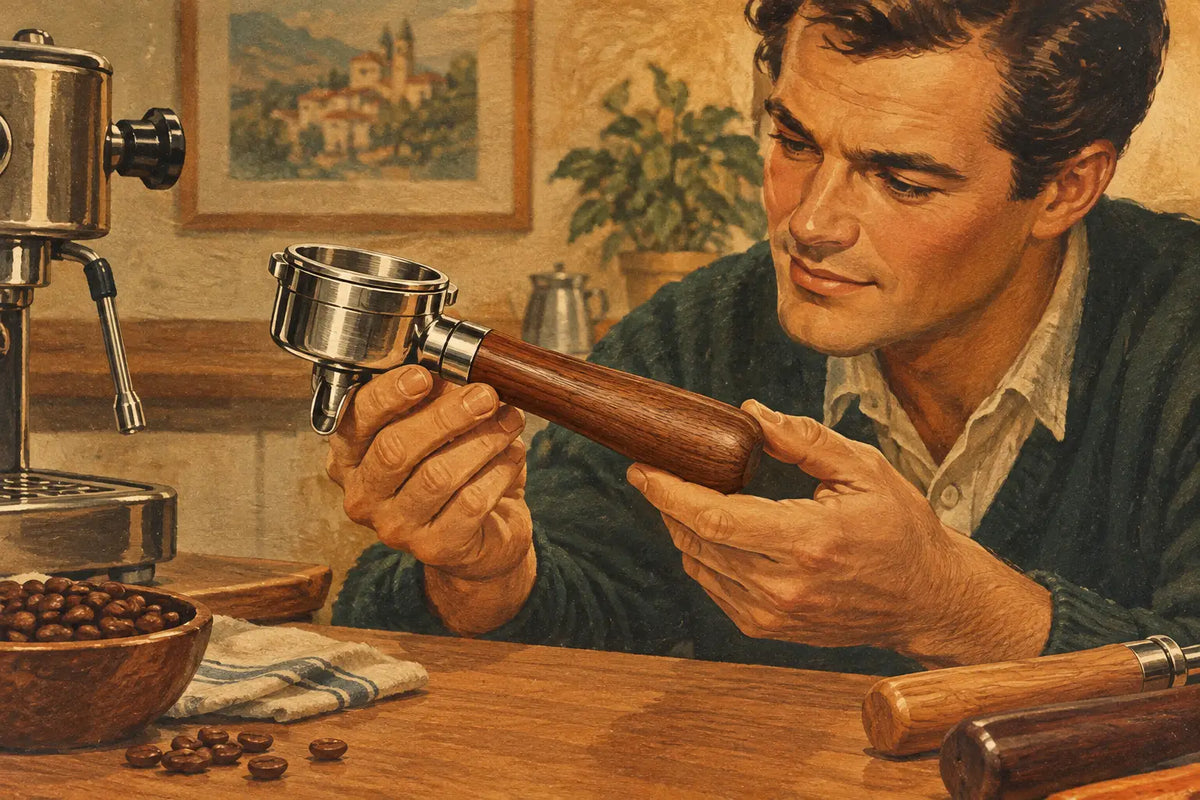
For home espresso enthusiasts, wood is not a fragile decorative choice. It is a practical material with a warmer feel, better grip, and a custom look that can make a machine feel truly yours. The key is choosing a handle made for espresso use rather than a generic wood piece that happens to fit a portafilter.
What Makes a Wooden Portafilter Handle Durable?
Durability starts with the blank itself. Dense hardwoods are the right starting point because they resist dents, wear, and movement better than softwoods. Walnut, maple, oak, olive wood, and similar hardwoods can all make excellent handles when properly selected, dried, shaped, and finished. Each species has its own grain pattern and color, but density and stability matter more than appearance alone.
A good handle should be made from properly seasoned wood. Wood still contains moisture when it is first milled, and if it is shaped before it has stabilized, it can shrink, swell, or develop cracks later. This is especially relevant around an espresso machine, where warm metal, steam, humidity, and occasional splashes are part of the routine.
Grain orientation also matters. A handle with clean, continuous grain and no weak knots in high-stress areas is less likely to split over time. The maker’s shaping process matters just as much: smooth contours, a comfortable palm swell, and no overly thin sections help the handle stand up to years of locking and unlocking shots.
The Threaded Insert Matters as Much as the Wood
The threaded connection is where craftsmanship becomes functional. A portafilter handle must stay firmly attached while you apply torque to lock it into the group head. If the insert is poorly fitted, too shallow, or installed without accounting for grain direction, the handle can loosen even if the wood itself is beautiful.
A properly made wooden handle uses a secure, accurately aligned threaded insert or internal thread system matched to the portafilter’s thread size. Fitment is not something to guess at. Different machines and portafilters can use different thread diameters, thread pitches, and depths. Even within a brand, one model may not match another.
That is why model-specific compatibility is worth confirming before ordering. A handle built for a Breville portafilter may not be right for a Rocket, ECM, Lelit, Gaggia, La Marzocco, Bezzera, or Profitec setup without the correct threading and dimensions.
Heat Does Not Usually Harm a Quality Wood Handle
Many buyers worry that group-head heat will ruin a wooden handle. In normal home use, it usually will not. The metal neck of the portafilter is closest to the group head, while the handle stays far enough away that it is generally comfortable to hold. Wood also transfers heat much more slowly than metal, which is one reason it feels so good in the hand.
The concern is less about ordinary heat and more about repeated extreme conditions. Leaving a portafilter pressed against a very hot surface, soaking the handle in near-boiling water, or exposing it to sustained steam can dry the wood and weaken its finish over time. Those are avoidable situations, not everyday espresso requirements.
A quality finish creates another layer of protection. The right finish helps repel moisture and coffee oils while preserving the tactile feel of the wood. It should not leave the handle feeling like thick plastic, but it should make cleanup easy and reduce the chance of staining or water absorption.
Water Is the Real Enemy of Wooden Portafilter Handles
Wood and water can coexist very well, but constant soaking is a different story. A wooden handle will last longer when it is wiped clean rather than left wet in a sink. Espresso residue, milk splashes, and a damp bar towel are normal. Dishwasher cycles and long soaks are not.
The dishwasher is particularly hard on wood because it combines heat, detergent, and extended exposure to water. That can strip protective oils or finishes, fade the color, and cause repeated expansion and contraction. If the portafilter basket and metal body need a deep clean, remove the wooden handle first when the design allows it.
Cleaning is simple: wipe the handle with a soft damp cloth, then dry it. For sticky coffee oils, use a small amount of mild soap on the cloth and avoid harsh degreasers. Do not spray cleaners directly onto the wood, especially around the threaded connection.
Occasional Care Keeps the Finish Looking Its Best
Like a hardwood countertop or a favorite wooden tamper handle, wood benefits from occasional attention. If the surface begins to look dry, dull, or slightly rough, a small amount of food-safe wood conditioner or the finish recommended by the maker can refresh it. How often depends on your climate, usage, and the type of finish.
There is no need to over-oil the handle. Too much product can leave a tacky surface that attracts dust and coffee residue. A light application followed by a thorough buff is usually enough. If you live in a very dry climate or keep your machine near strong sunlight, the handle may need a little more attention than one in a moderate indoor environment.
Daily Use: What a Wooden Handle Can Handle
A correctly fitted hardwood handle is built for the normal forces of espresso preparation. Locking in a portafilter, knocking out a puck, wiping down after shots, and making several drinks a day are all within its intended use.
Where owners can shorten its life is impact. Avoid striking the wooden section against a knock box or counter edge. The portafilter basket should take the knock, not the handle. Repeated hard impacts can dent wood, loosen a threaded insert, or create stress at the joint between the handle and metal portafilter body.
Be realistic about the environment, too. A home bar with a few milk drinks each day is much gentler than commercial service with hundreds of shots, constant rinsing, and fast, forceful puck knocking. Wooden handles can still work in high-use settings, but a busy café demands more frequent inspection and care.
Are Wooden Portafilter Handles Durable Compared With Plastic?
Plastic handles are often durable in a purely utilitarian sense. They tolerate neglect, resist water, and usually cost less. But they can feel hollow, become slick, discolor, or look tired long before the portafilter itself needs replacing.
Wood asks for modest care in exchange for a very different experience. It feels warmer, offers a more substantial grip, and develops character rather than simply aging into a scratched plastic part. A hardwood handle can be refinished or refreshed if it picks up small marks, while a damaged plastic handle is usually replaced.
Metal handles are also durable, but they transmit more heat and may not offer the same comfortable grip during back-to-back drinks. For many home baristas, wood sits in the sweet spot: capable enough for daily espresso and distinctive enough to make an upgrade feel personal.
Signs a Handle Needs Attention
A wooden portafilter handle should feel solid and secure. If it starts to rotate independently of the portafilter body, stop using it until the connection is checked. Continuing to torque a loose handle can damage both the insert and the surrounding wood.
Small surface dryness or faint scratches are usually cosmetic and easy to address. Deep cracks, swelling around the threaded area, or significant movement at the connection deserve closer attention. These issues are uncommon with quality materials and normal care, but addressing them early is always smarter than waiting for a failure during a busy morning routine.
When ordering a replacement or custom upgrade, provide clear photos of your current portafilter, its thread area if visible, and the machine model. At NepoCoffee, custom work begins with these practical details because the best-looking handle still needs to fit and function exactly as it should.
A wooden handle is not a disposable accessory. Treat it like the crafted coffee tool it is: keep it dry, avoid the dishwasher, confirm the fitment, and enjoy the way it makes every shot feel a little more intentional.