Custom Portafilter Handle Review for Home Baristas
A portafilter handle is one of the few espresso machine parts you touch through nearly every shot. It carries the weight of the basket, takes the pressure of tamping, and sits in plain view on the counter. That is why a custom portafilter handle review should look beyond appearance. A good handcrafted handle needs to feel right in the hand, fit the portafilter securely, and hold up to the daily rhythm of grinding, dosing, tamping, brewing, and rinsing.
For a home barista who has already dialed in a grinder, found a dependable basket, and built a workflow around a WDT tool and scale, a custom handle can be a meaningful finishing upgrade. It will not change extraction on its own. What it can change is comfort, control, and how much you enjoy reaching for your machine every morning.
What a Custom Portafilter Handle Changes
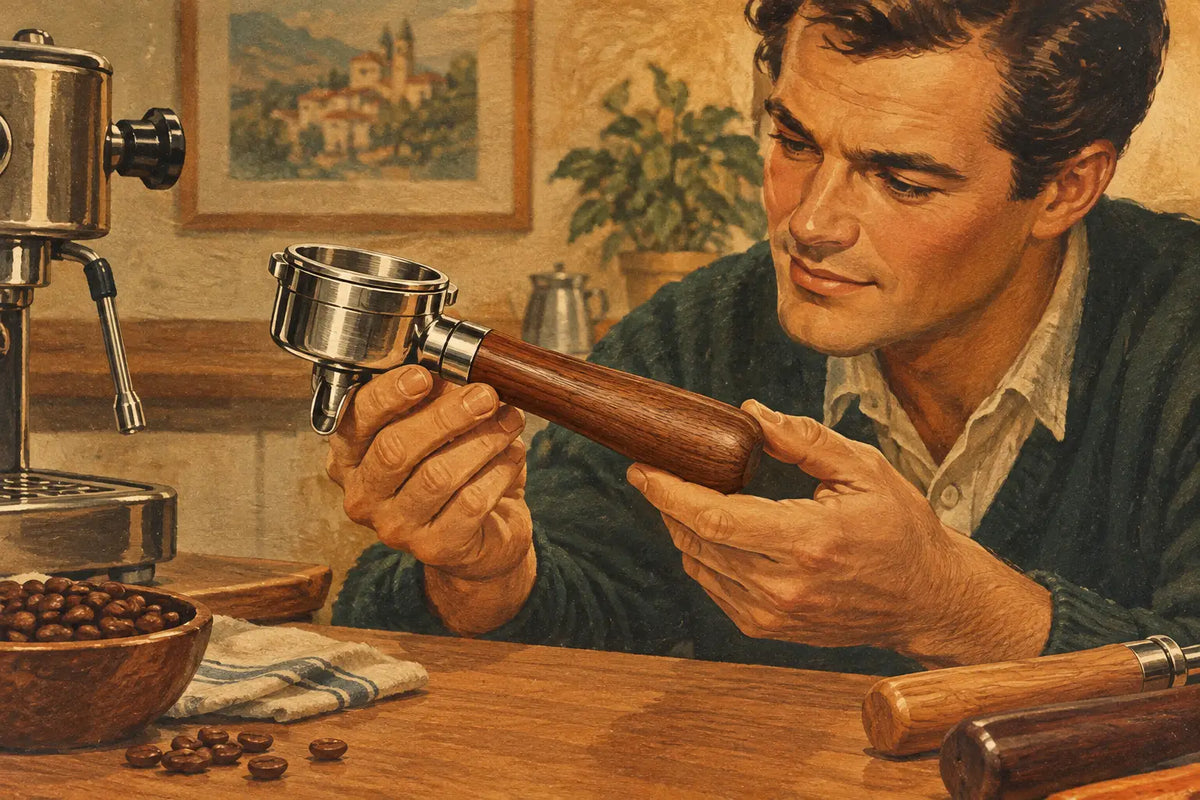
The stock handle on many machines is perfectly usable, but it is usually made for broad manufacturing efficiency. Plastic, painted metal, and generic shapes do the job, yet they can feel cold, slick, or visually disconnected from the rest of a carefully built coffee station. A wood handle adds warmth and texture without asking you to change the brewing hardware you already trust.
The practical advantage is grip. Wood has a naturally secure feel, especially compared with smooth plastic or polished metal. During tamping, that tactile contact can make the portafilter feel more planted in your palm. The difference is not dramatic in the way a precision basket or grinder adjustment can be, but it is noticeable over hundreds of shots.
Balance matters, too. A well-shaped custom handle can make a heavy commercial-style portafilter feel easier to maneuver when locking in or knocking out a puck. This is especially relevant for owners of E61 machines, La Marzocco home models, and other setups with substantial brass portafilters. The handle should support the weight without making the assembly feel rear-heavy or awkward.
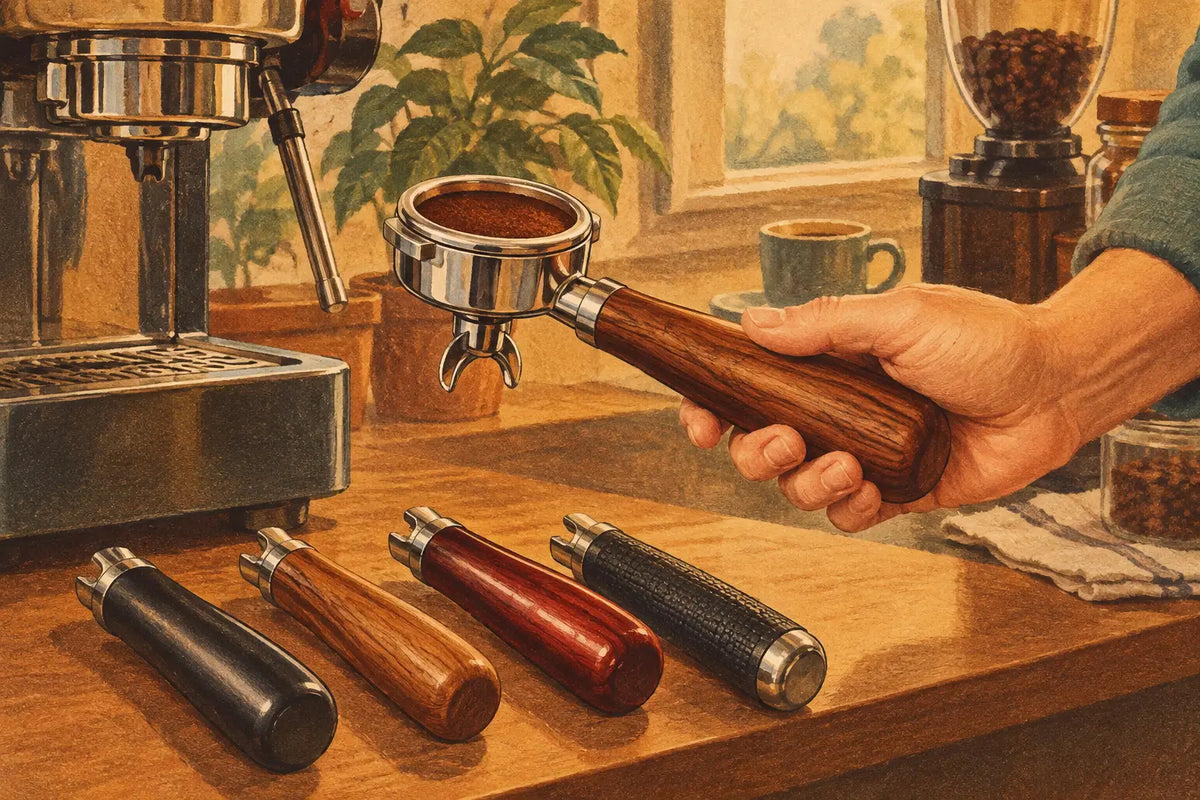
Aesthetic value is real, provided it is not the only reason to buy. A walnut, olive wood, oak, or other hardwood handle can tie together matching steam knobs, hopper lids, dosing accessories, and tamping stations. The result feels personal rather than factory-standard, which is exactly the point of customizing a prosumer machine.
Custom Portafilter Handle Review: Fitment Comes First
The most important part of any custom portafilter handle review is not the wood species. It is compatibility. Portafilters that look similar can use different thread sizes, mounting depths, adapters, or attachment styles. A handle made for one model may not fit another, even when both machines share the same basket diameter.
Before ordering, identify the actual portafilter rather than relying only on the machine brand. Check whether it is original equipment or an aftermarket bottomless portafilter. Confirm the model, the handle connection style, and whether the handle is removable. If you are replacing a worn handle, measuring the original threaded section can be useful, but clear photos and machine details often provide a better starting point for a maker.
Breville and Sage-style machines, for example, can have fitment needs that differ from traditional E61 portafilters. Gaggia, Lelit, ECM, Rocket, Profitec, Bezzera, and La Marzocco owners should also avoid assuming that one brand-wide option fits every generation and portafilter style. A custom part is only an upgrade when it installs cleanly, sits straight, and remains stable under normal use.
This is where direct communication is worth more than a generic compatibility chart. NepoCoffee focuses on model-aware handmade accessories, so sending your machine model and photos before placing a bespoke order can prevent the most common disappointment: receiving a beautiful handle that is not matched to the portafilter in your kitchen.
Feel, Shape, and Weight in Daily Use
Handle shape is personal. Some baristas prefer a slim, straight profile because it feels precise and keeps the portafilter compact. Others want a thicker, gently contoured grip that fills the hand and feels more confident during tamping. Neither is universally better. Hand size, tamping technique, and the weight of the portafilter all influence the right choice.
A larger handle often feels more comfortable for someone who pulls several milk drinks back-to-back or uses a firm tamping routine. It can also suit a heavy bottomless portafilter. A narrower profile may appeal to baristas who value a lighter, more minimal look, particularly on smaller machines where oversized accessories can overpower the design.
Length deserves attention as well. A longer handle can offer leverage and a more traditional commercial-machine silhouette. But if it extends too far, it may interfere with a tight workflow, catch on nearby tools, or make drawer storage inconvenient. The best length is usually one that looks proportionate to the group head while leaving enough room for a natural wrist angle.
Weight is a trade-off. Wood is generally lighter than metal, which can make the portafilter more pleasant to carry and reduce the cold sensation of a metal handle. At the same time, a much lighter rear section can shift the balance forward on an already heavy brass portafilter. A maker who understands espresso hardware can account for this through dimensions and material selection rather than treating the handle as simple decor.
Wood Selection Is About Use, Not Just Color
Hardwood choices vary in grain, tone, density, and how they age. Dark walnut gives a classic, understated look that pairs well with black, stainless, and chrome machines. Lighter woods can brighten a coffee bar and show more visual movement in the grain. Highly figured wood can be striking, but each piece will naturally vary, which is part of owning a handcrafted part.
The practical question is finishing. A handle lives near steam, splashes, damp towels, and occasional coffee oils. It needs a finish appropriate for regular kitchen use and reasonable care from the owner. No wood handle should be treated like a dishwasher-safe plastic replacement. Standing water, aggressive cleaners, and prolonged soaking are the fastest ways to dull its finish or stress the wood.
For normal maintenance, wipe the handle with a soft damp cloth and dry it afterward. Do not leave it resting in a puddle on the counter or soak it in a sink while cleaning baskets. If the finish begins to look dry after extended use, follow the maker's care recommendation rather than applying a random oil from the pantry. The right maintenance is simple, but it should be deliberate.
Where a Custom Handle Is Worth the Spend
A handcrafted handle makes the most sense when the existing one is damaged, uncomfortable, or visually out of place with the rest of your setup. It is also a strong upgrade for baristas who have already invested in the workflow basics and want their machine to feel more considered every time they use it.
It may not be the first purchase for someone still struggling with inconsistent shots. If your grinder produces uneven particles, your dose varies wildly, or your machine needs service, put the budget toward those issues first. A custom handle improves the experience of brewing, not the underlying mechanics of espresso.
It is also worth considering the total setup instead of treating one part in isolation. Matching a portafilter handle with a steam knob, flow-control knob, grinder tray, or dosing funnel can create a cohesive station. On the other hand, mixing woods can look excellent when done intentionally. A dark handle against a lighter wood countertop can offer more contrast than a perfectly matched set.
Questions to Ask Before You Order
A custom order works best when you give the maker enough information to build for your machine instead of guessing from a product photo. Confirm the exact machine model, whether the portafilter is original or aftermarket, and the style of handle you prefer. Mention if you use a bottomless portafilter, if a matching accessory is planned, or if you have limited clearance around your machine.
Ask about the expected wood variation, finish care, and production timing. Handcrafted work should not be judged by the standards of mass-produced inventory. Small differences in grain and color are normal, and they make the finished part yours. What should be consistent is the fit, the quality of the shaping, and the attention given to the connection point.
The right custom portafilter handle is not merely a prettier replacement. It is the part that makes your portafilter feel like it belongs to your hand, your machine, and the coffee routine you have built around both.