Choosing an Espresso Tamping Station Wood
A messy tamping setup usually shows up in the cup before it shows up on the counter. If your portafilter rocks, your tamper lands crooked, or your station slides every morning, an espresso tamping station wood upgrade is more than a cosmetic choice. It changes how stable your prep feels, how clean your workflow stays, and how well the rest of your setup comes together.
For home baristas who already care about puck prep, grinder retention, basket fit, and machine details, this is one of those accessories that quietly earns its place. The right tamping station supports repeatable pressure, protects your countertop and portafilter spouts, and gives your coffee bar a finished look that plastic and silicone rarely match.
Why an espresso tamping station wood setup matters
Tamping is simple on paper, but small inconsistencies add up fast. A portafilter that tilts even slightly can encourage uneven pressure. A base that shifts can make your tamp feel awkward. If you are dosing, WDTing, leveling, and tamping with care, it makes little sense to finish the process on an unstable edge of the counter.
Wood brings a particular advantage here because it does two jobs at once. It creates a solid platform, and it adds warmth to a setup that is usually dominated by stainless steel, black polymer, and powder-coated parts. For many espresso enthusiasts, that balance matters. A coffee station should feel precise, but it should also feel like a place you want to use every day.
That said, wood is not automatically the best choice in every case. It depends on how the station is built, what finish is used, and whether the design actually fits your portafilter and tamping style. Good material alone does not fix a poor layout.
What makes a good wood tamping station
The first thing to look at is stability. A tamping station should hold the portafilter securely without forcing you into an awkward wrist angle. If the cutout is too shallow, the portafilter can wobble. If it is too tight or shaped for the wrong lug position, daily use becomes annoying fast.
Weight matters too. A lightweight station may look good in product photos, but it can shift during actual use, especially on smooth stone countertops. Denser hardwoods tend to feel better under load and hold up better over time than soft woods or cheap laminated builds.
Then there is the finish. Espresso bars are wet environments. Stray drops, damp cloths, and coffee oils are part of the routine. A wood tamping station needs a finish that can handle that without getting sticky, swelling, or showing wear too quickly. A natural handcrafted look is great, but it still has to survive real use.
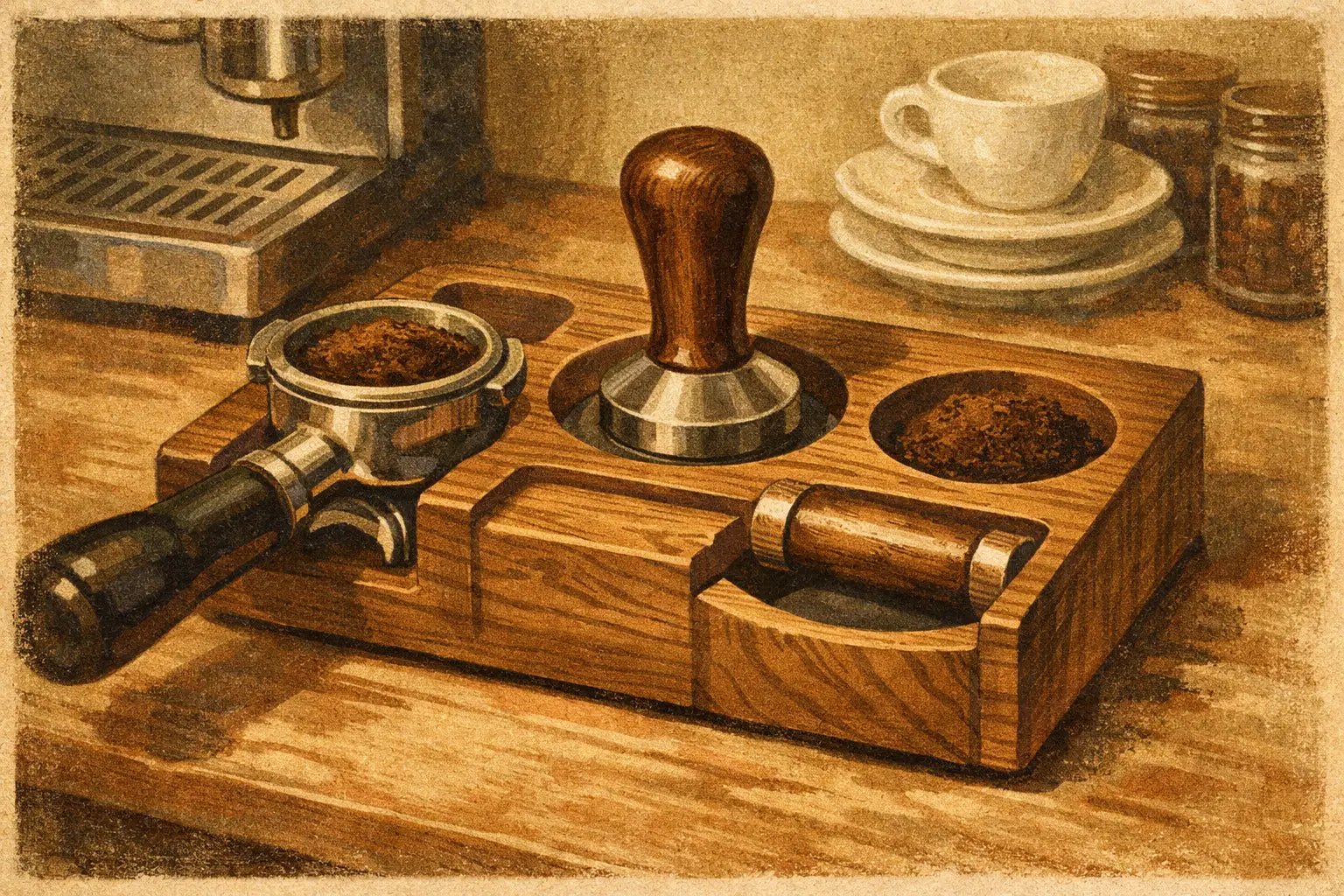
Design details make the difference between decorative and useful. A recessed tamper holder, a knock-in area for the portafilter, rubber feet, clean edge work, and enough clearance for different baskets all matter. If you use bottomless and spouted portafilters interchangeably, check whether the station can comfortably support both.
Fit is where many tamping stations fall short
This is where experienced machine owners usually get frustrated. Not every portafilter sits the same, and not every home bar setup is built around the same dimensions. A generic station may technically hold a portafilter, but that does not mean it holds your portafilter well.
Handle angle, ear placement, spout clearance, basket depth, and overall portafilter shape can all affect how natural a tamping station feels. Owners of machines from Breville, ECM, Lelit, Rocket, La Marzocco, Gaggia, Bezzera, and Profitec already know that small compatibility differences matter in daily use. The same logic applies here.
If you want a tamping station that feels like part of your setup rather than an afterthought, model awareness matters. That is one reason custom and small-batch makers stand out. They tend to understand the actual geometry of espresso accessories instead of designing around a vague universal standard.
Espresso tamping station wood and workflow
A good espresso tamping station wood piece should make the whole prep routine smoother, not just give the tamper somewhere to sit. Think about the order of movement at your bar. You grind, distribute, tamp, maybe wipe the basket rim, then lock in. If the station interrupts that rhythm, it is not helping enough.
Some users want a compact station that simply supports the portafilter for a clean, level tamp. Others want a larger base with dedicated spots for the tamper, WDT tool, or dosing funnel. Neither approach is wrong. It depends on your counter space and whether you prefer minimalism or an organized accessory zone.
There is also a trade-off between compactness and comfort. A small station can tuck neatly beside the grinder, but it may not feel as planted. A larger block gives more support and visual presence, though it asks for permanent counter space. If your espresso corner is already crowded with a scale, knock box, and milk pitchers, footprint becomes a serious factor.
Choosing the right wood species and finish
Not all wood behaves the same. Hardwoods generally make more sense for tamping stations because they resist dents better and maintain cleaner edges over time. Walnut, oak, maple, and similar dense species are common choices because they balance strength with a premium look.
Walnut is popular for good reason. It has a rich tone that pairs well with black grinders, stainless machines, and darker bar tools. Maple feels brighter and cleaner, which can work well in lighter kitchens or setups with white and polished metal. Oak brings a more textured, classic appearance, though grain filling and finishing quality matter if you want a smoother, refined surface.
Finish is just as important as species. Oil-finished wood can look fantastic and feel natural in the hand, but some oils need more upkeep. A tougher sealed finish can offer better moisture resistance, though if it is applied poorly it may feel plasticky. The sweet spot is a finish that protects the wood while still letting the craftsmanship show through.
This is where handcrafted work has a real edge. Attention to sanding, edge shaping, grain orientation, and finish application gives the piece a more intentional feel. It is one thing to buy a wood accessory. It is another to buy one that was clearly made by someone who understands both wood movement and espresso workflow.
Looks matter, but they should not lead the decision
A wood tamping station can absolutely pull a coffee bar together. If you already have a wooden portafilter handle, steam knob, bean hopper lid, or grinder accent, matching tones can make the station feel like part of a complete setup rather than a random add-on.
Still, aesthetics should come after function. A beautiful station that lets the portafilter tilt is not a premium accessory. It is decor. The best setups get both right - strong support, clean lines, and a finish that complements the rest of your equipment without demanding extra fuss.
If you like a coordinated bar, think in terms of visual consistency instead of exact duplication. Matching every wood piece perfectly can be harder than it sounds because species, stain, and grain vary. Similar warmth and finish style often look better than trying to force an exact match across parts from different makers.
When custom work makes sense
Custom is not necessary for everyone, but sometimes it is the smartest route. If you use a less common portafilter style, want a specific footprint, need room for a larger tamper base, or are trying to match existing wood accessories, custom work solves problems off-the-shelf products ignore.
This is especially true for enthusiasts with carefully built stations. Once you have already invested in machine-specific upgrades and personalized details, a generic tamping block can feel out of place. A maker who works directly with customers can often adjust dimensions, wood choice, and design details in a way big-box sellers simply do not.
That responsiveness matters. If you have ever tried to source model-specific espresso parts, you know that clear communication saves time and prevents disappointment. NepoCoffee’s approach fits that mindset well - practical, handcrafted, and aware that espresso people tend to notice the small details.
A few buying mistakes to avoid
The most common mistake is buying based on appearance alone. Product photos can hide shallow cutouts, poor finish work, or proportions that do not support the portafilter properly. The second mistake is assuming universal fit means ideal fit. It rarely does.
Another one is underestimating maintenance. Even well-finished wood benefits from basic care. Wipe it dry, avoid leaving standing water on it, and treat it like a workshop-made accessory, not a disposable mat. If you want something that can take abuse without a second thought, wood may not be your best material. If you want warmth, durability, and a more premium tactile feel, it is hard to beat.
A well-made wood tamping station sits in that sweet spot between utility and craftsmanship. It supports better prep, protects your gear, and makes the counter feel more intentional every time you pull a shot. Choose the one that fits your portafilter, your workflow, and your eye, and it will feel less like an accessory and more like part of the machine.