Artikel: Flat Versus Conical Burrs for Your Espresso
Flat Versus Conical Burrs for Your Espresso
A beautiful espresso machine can only show what the grinder gives it. If your shots taste muddled, sharply bright, thin, or unusually difficult to dial in, the conversation often lands on flat versus conical burrs. The choice matters, but not because one burr shape is automatically premium and the other is a compromise. Burr geometry influences the coffee’s particle distribution, the way a grinder handles different roast styles, and the kind of cup you are most likely to enjoy.
For a home bar built around intentional espresso, the right answer starts with your taste, your workflow, and the grinder itself - not a rule that says flat is better than conical, or the reverse.
What flat and conical burrs actually do
Every burr grinder breaks coffee into smaller particles by shearing and crushing beans between precisely machined cutting surfaces. The goal is a controlled, repeatable grind size. That consistency lets water move through an espresso puck predictably, helping you adjust dose, yield, and shot time with confidence.
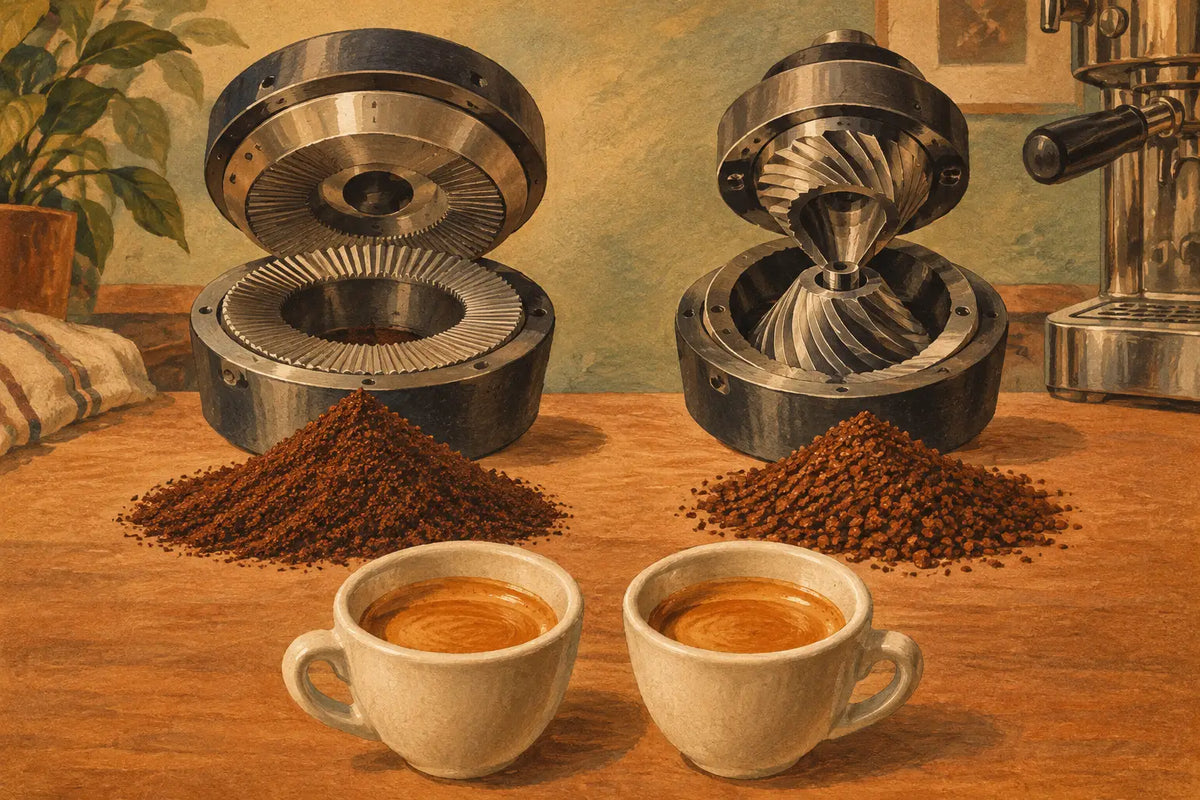
Flat burrs use two parallel, ring-shaped discs. Coffee enters near the center and moves outward through the cutting teeth until it reaches the selected grind setting. In a conical burr set, an inner cone sits inside an outer ring burr. Beans fall into the space between them and travel downward as they are ground.
That sounds like a small mechanical difference, but burr shape is only one part of the result. Burr diameter, tooth design, material, alignment, grind chamber, motor speed, and the coffee itself all matter. A well-aligned grinder with thoughtfully designed conical burrs can produce exceptional espresso. A flat-burr grinder with poor alignment or unsuitable burr geometry will not suddenly create a better cup because its burrs are flat.
It is also worth moving past the simple claim that flat burrs always create one narrow group of particles while conicals always create two distinct groups. Real particle distributions are more complicated. Modern burr designs can be built for high clarity, heavy body, fast flow, or a balanced middle ground in either format.
Flat versus conical burrs in the cup
Most coffee drinkers notice the difference as a matter of presentation. Flat burrs are often associated with a more separated, articulate flavor profile. In espresso, that can mean citrus is easier to identify, floral notes stay more defined, and different components of a complex coffee feel less blended together. With a lightly roasted washed Ethiopian or a carefully developed single-origin coffee, this can be exciting.
The trade-off is that a clarity-focused flat-burr setup can make flaws more obvious. A coffee with harsh roast notes, uneven development, or an aggressive acidic edge may taste more exposed. These grinders also often reward careful puck preparation and small, deliberate changes during dialing in.
Conical burrs are commonly prized for texture and a more integrated cup. Espresso can feel rounder, thicker, and more syrupy, with chocolate, caramel, and nut flavors presented in a cohesive way. For traditional medium or medium-dark espresso, milk drinks, and comfort-forward blends, that profile is often exactly the point.
Conicals are not incapable of clarity, and flats are not incapable of body. Those shortcuts can lead buyers in the wrong direction. Think of the broad tendency this way: many flat burr sets emphasize separation, while many conical burr sets emphasize texture and blend. The specific burr set decides how strongly that tendency appears.
Roast level changes the recommendation
A light roast generally benefits from a grinder that can reveal sweetness and structure without turning the cup sour or hollow. Many home baristas enjoy larger flat burrs for this reason, especially when they drink modern single-origin espresso straight.
Medium-roast blends can work beautifully with either design. Here, personal preference is the deciding factor. Choose a flatter, more detailed presentation if you want to compare components in the blend. Choose a fuller, rounder presentation if you want a forgiving shot with a satisfying crema and enough presence to carry milk.
For darker roasts, conical burrs are frequently an easy fit. Their tendency toward body and cohesion can support cocoa-heavy, lower-acid profiles. But a flat grinder with burrs designed for traditional espresso can still produce rich, classic results.
Choosing burrs for espresso at home
The best grinder for espresso is not necessarily the one that produces the most dramatic tasting notes. It is the one that makes it practical to prepare coffee you want to drink every morning.
If you pull mostly straight shots, enjoy lighter roasts, and like comparing coffees side by side, a flat-burr grinder may be the more satisfying long-term choice. You may notice more distinction between a peach-like natural coffee and a lemony washed coffee. You should also expect dialing in to be part of the ritual. Small changes in grind, dose, and temperature can matter.
If you make cappuccinos, lattes, or classic espresso most days, conical burrs can be especially appealing. The extra weight and blended sweetness many people associate with conicals holds up well with milk. A good conical grinder can also be wonderfully consistent and easy to live with, particularly when you settle on one espresso blend for several weeks.
Do not choose based on crema alone. Crema changes with coffee freshness, roast level, pressure, and recipe. It is not a reliable scorecard for burr quality. A shot with less dramatic crema may still have greater sweetness, balance, and flavor definition.
Dialing in still comes first
Switching burr types will not fix stale beans, a dirty grinder, poor distribution, or an inconsistent dose. Before blaming the burrs, start with fresh coffee, a scale, a stable recipe, and a clean grind path. Then make one adjustment at a time.
For espresso, try a fixed dose and yield first. If the shot runs too fast and tastes sour or weak, grind finer. If it runs too slowly and tastes dry, harsh, or bitter, grind coarser. Once the shot is close, evaluate whether you want more clarity, more body, or a different roast profile. That is the moment when a burr style becomes a meaningful purchase decision rather than a guess.
Workflow, retention, and grinder design
Burr preference should fit the rest of your coffee station. A large flat-burr grinder may offer impressive flavor separation but take up considerable counter space, cost more, and require a workflow that suits single dosing or low-retention use. Some models are built for hopper-fed convenience instead, which is ideal for households that make several drinks from the same coffee every day.
Conical burr grinders come in everything from compact entry-level models to serious prosumer machines. Their lower-speed, high-torque approach is common, though not universal, and many are comfortable grinding fine enough for espresso without sounding like a shop vacuum. That makes them a practical match for smaller kitchens and early-morning routines.
Retention matters with either burr type. Old grounds left in the chute can affect the next dose, especially when you switch coffees. If you single dose, look for a grinder with a manageable grind path and a workflow you will actually maintain. A bellows, dosing cup, WDT tool, and a properly sized dosing funnel can reduce mess and improve repeatability, but they cannot compensate for poor burr alignment or unsuitable grinder settings.
Heat is another area where coffee advice gets exaggerated. Grinding generates heat, but the short grinding cycle at home is rarely the defining factor by itself. High-volume cafe use, motor design, burr size, RPM, and the amount of coffee ground continuously matter far more than a simple flat-versus-conical label.
Buy for the coffee you make, not the internet favorite
Before choosing a grinder, be honest about your usual menu. A home barista who drinks a 1:2 medium-roast espresso with oat milk has different priorities from someone preparing 1:2.5 light-roast shots to taste without milk. Both are serious coffee drinkers. They simply need different strengths from their equipment.
Also consider whether you want one grinder for espresso and filter coffee. Some grinders change settings easily and return to a previous espresso point with reasonable repeatability. Others are happiest dedicated to one brew method. If espresso is your priority, a dedicated espresso grinder is often less frustrating than a general-purpose grinder that is always one adjustment away from losing your dial-in.
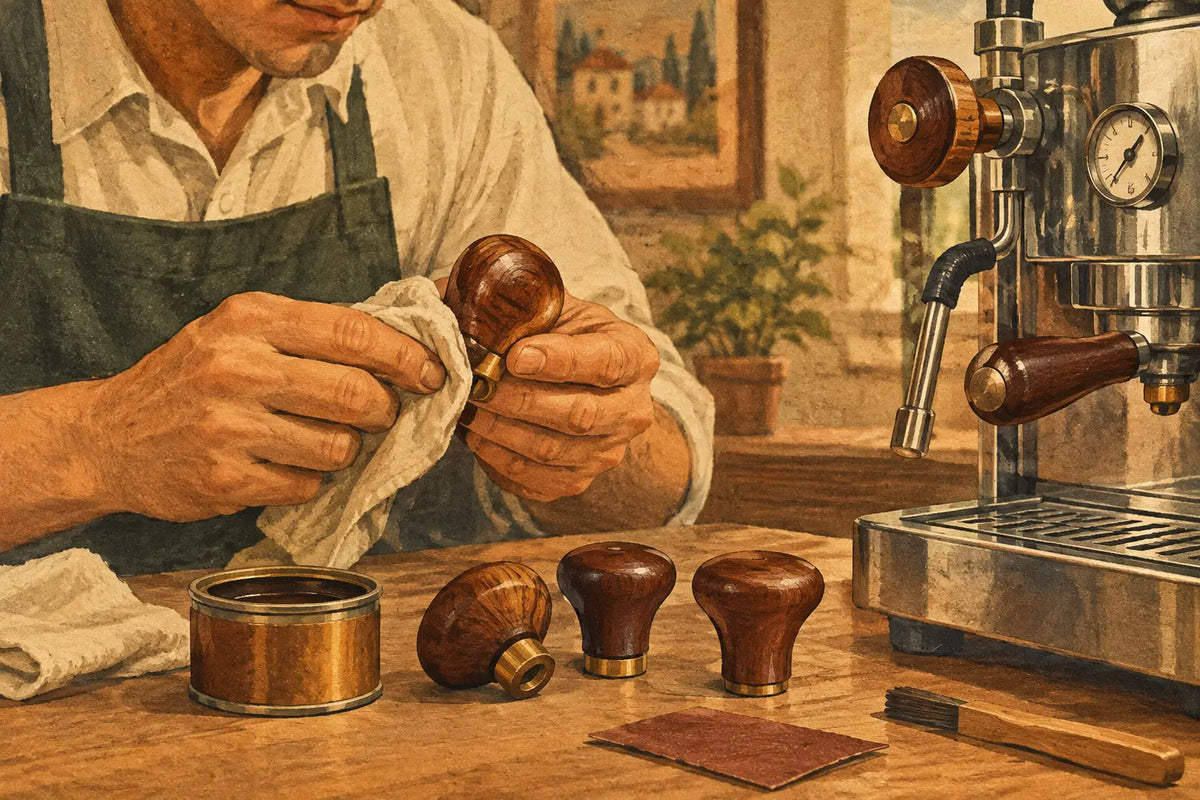
Your station deserves the same attention to fit and function as your burr choice. A grinder tray that catches grounds, a dosing funnel matched to your portafilter, or a handcrafted wood accent that ties the grinder to your machine can make the daily routine feel more organized and personal. At NepoCoffee, that practical, model-aware approach is behind every custom accessory we make.
The useful question is not whether flat or conical burrs win. It is which grinder helps you make a sweeter, more repeatable cup with the coffee you are excited to buy next week. Start there, keep your recipe consistent, and let your own palate make the final call.