Espresso Tampers for Better, Consistent Shots
A tamper is one of the few espresso tools you feel in your hand for every shot. The right espresso tampers do more than finish a beautiful coffee station: they help you create an even coffee bed, reduce avoidable channeling, and make your daily workflow feel more deliberate. The wrong one can leave a messy ring of untamped coffee around the basket wall or make a good puck prep routine harder to repeat.
For a home espresso setup built around a premium machine, the best choice is rarely just the heaviest or most expensive tamper. Fit comes first. Then consider the base shape, the way it feels in your hand, and whether its materials belong with the rest of your machine.
Why Espresso Tampers Affect Shot Consistency
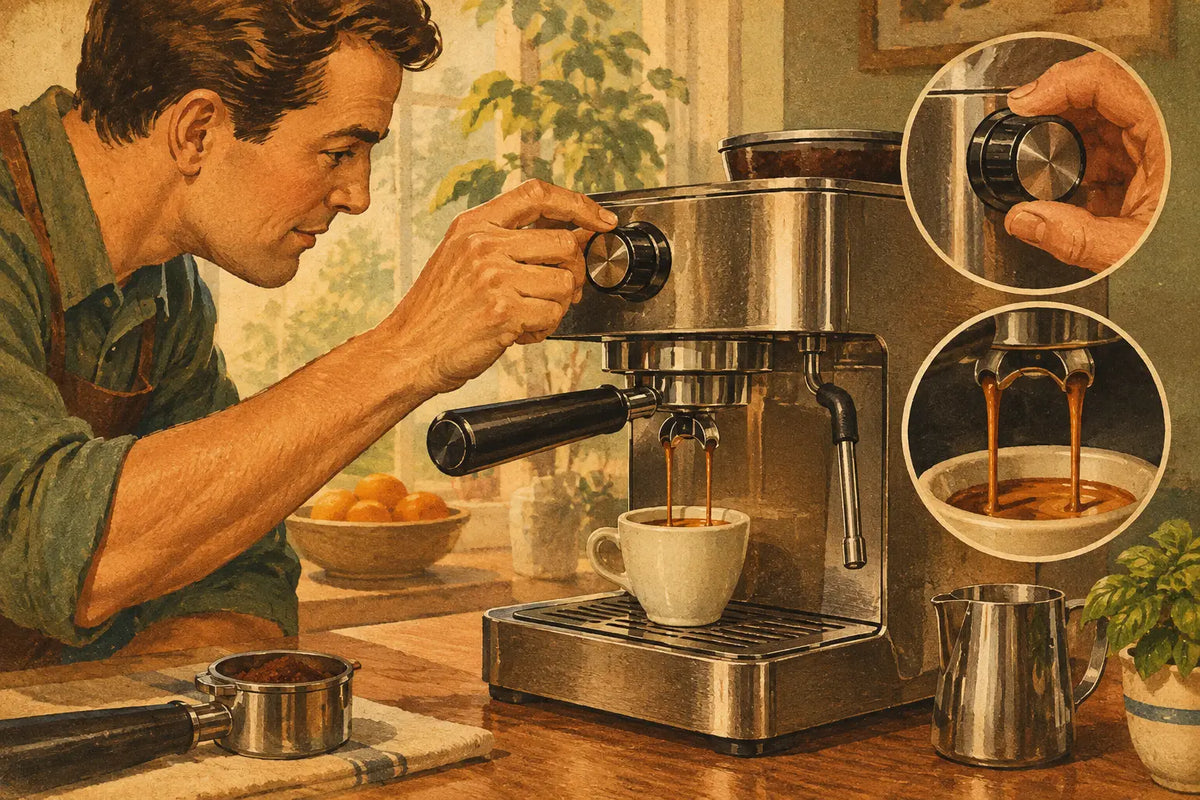
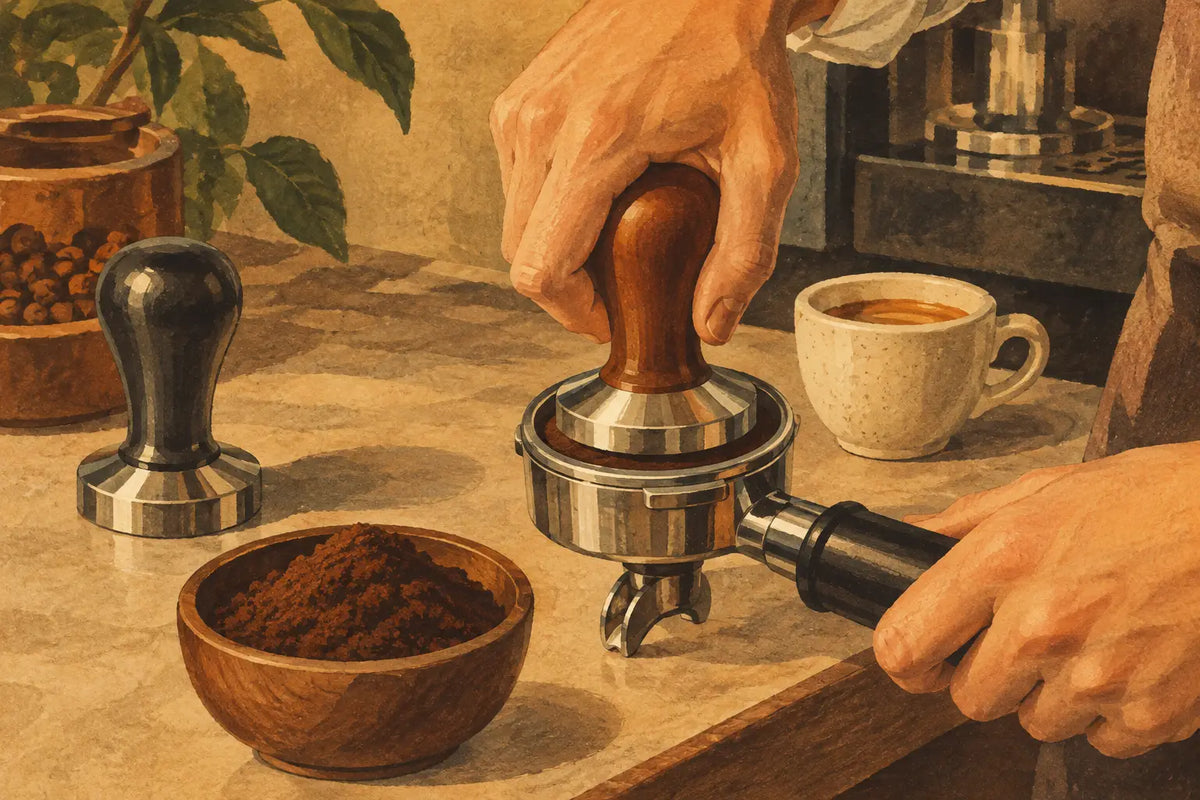
After grinding, distributing, and dosing coffee into the basket, tamping compresses the grounds into a level, stable puck. Water under pressure will always look for the easiest route through that puck. Large air pockets, an uneven surface, or loose coffee along the basket edge can encourage water to pass through some areas faster than others.
A tamper cannot correct a poorly distributed dose on its own. If your grinds are clumped or your dose is dramatically uneven, use a WDT tool and settle the grounds before tamping. But a well-fitted tamper provides the last consistent compression step before the portafilter locks into the group head.
The goal is not to chase a magic pressure number. Once the coffee bed is sufficiently compressed, adding extra force usually does not improve extraction. What matters more is using a level motion and repeating it the same way each time. A tamper that fits your hand and basket makes that easier.
Start With Tamper Size and Basket Fit
The most common mistake when shopping for espresso tampers is buying by machine brand alone. Machines often ship with baskets in a familiar size, but basket dimensions can vary by model, manufacturer, and aftermarket basket choice. Your basket is the part that determines the fit.
Many commercial-style machines use a 58 mm portafilter, including models from ECM, Rocket, Profitec, La Marzocco, Lelit, and Bezzera. Yet a basket described as 58 mm may work best with a 58.4 mm or 58.5 mm tamper. That small increase reduces the untamped coffee ring at the basket wall without creating a bind.
Breville and Sage-style home machines commonly use a 53 mm or 54 mm platform, depending on the model. A tamper labeled for one of those sizes should still be checked against the actual basket. The same rule applies when upgrading to a precision basket: nominal size is a starting point, not a final measurement.
How to Check Your Fit Before Ordering
Remove the basket from the portafilter and check its stated size if it is printed on the side or original packaging. If it is not, measure the basket's inside diameter near the area where the tamper will contact the coffee. A caliper gives the clearest result.
A correctly sized tamper should descend smoothly with very little side-to-side play. It should not scrape, jam, or require twisting to reach the coffee bed. If you see a broad ring of loose grounds after tamping, the base may be undersized. If the tamper catches against the basket wall, it is too large or the basket geometry is not compatible.
For a custom setup, it is worth confirming both your machine model and basket brand. Those two details prevent most compatibility headaches.
Flat, Convex, and Rippled Tamper Bases
A flat base is the practical default for most home baristas. It creates a flat coffee bed, is easy to learn with, and works well across a wide range of baskets and roast styles. When you are dialing in espresso, it also gives you one less variable to question.
Convex bases have a gentle curve that compresses the center differently than the outer edge. Some baristas enjoy them, especially with certain traditional baskets, but the difference is subtle and highly dependent on puck prep. They are not a shortcut to sweeter or more forgiving shots.
Rippled or patterned bases are designed to alter the surface of the puck. They can be interesting for enthusiasts who like to test every variable, but they are a preference, not a necessity. For a reliable daily station, a precision flat base paired with careful distribution remains the straightforward choice.
Weight, Handle Shape, and the Feel of the Tool
A heavy tamper can feel planted and substantial. Its mass may help you settle into a steady motion, especially when you are learning to tamp level. But weight alone does not produce a better shot. A very heavy tamper can become tiring during several back-to-back drinks, while a lighter model may offer better control for some hands.
Handle shape matters more than many buyers expect. A comfortable handle lets your wrist stay neutral while your palm applies even downward pressure. If the handle is too narrow, too short, or overly slick, you may compensate with an awkward grip. Over time, that makes consistency harder and takes some enjoyment out of the process.
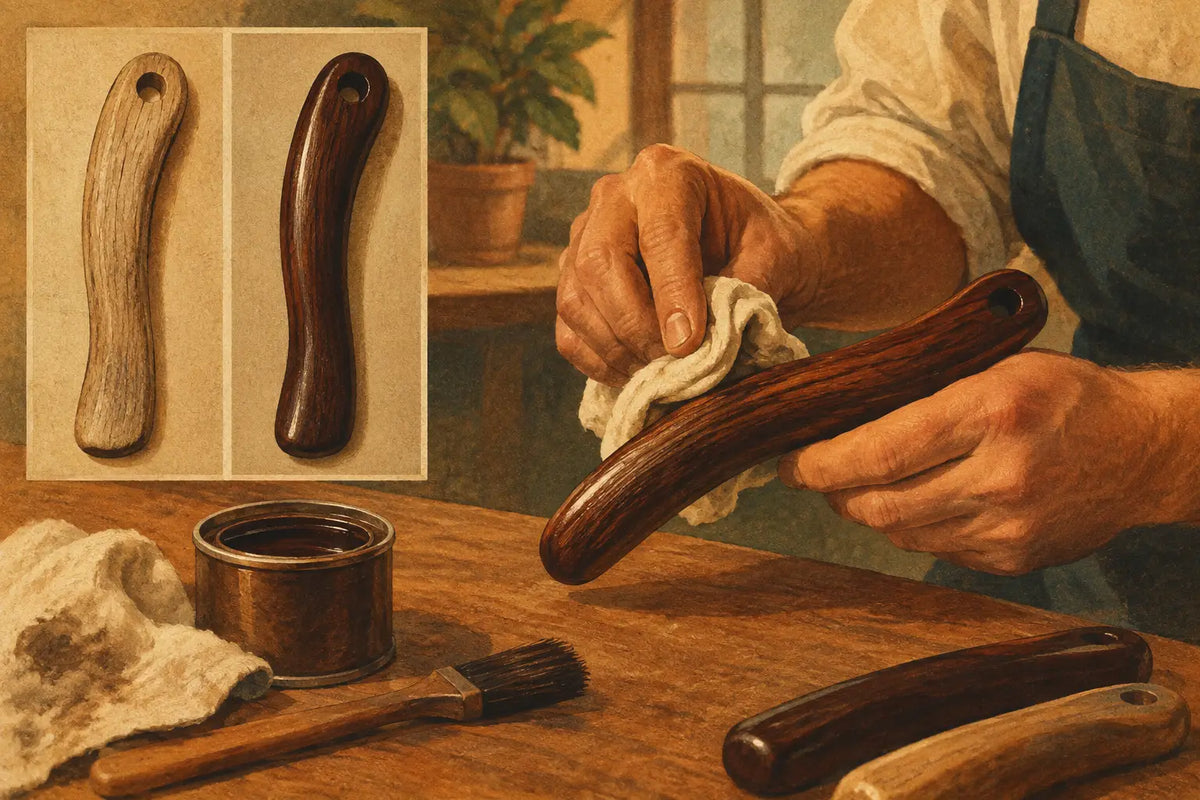
This is where material choices become part of the experience. Stainless steel offers durability and a clean, modern look. A handcrafted wood handle adds warmth, grip, and visual continuity when your setup already includes a wooden portafilter handle, steam knob, or grinder accent. Every piece does not need to match perfectly, but a coordinated set can make a well-used espresso station feel intentional rather than assembled at random.
Wood deserves normal, sensible care. Wipe it clean with a soft dry or lightly damp cloth, and avoid soaking it or leaving it against a wet drip tray. With that attention, a quality wood handle develops character while staying comfortable in use.
Calibrated Tampers: Helpful, Not Required
Calibrated or spring-loaded tampers are designed to click or stop at a repeatable force. They can be useful for someone who wants a consistent tactile cue, shares a station with other coffee drinkers, or is rebuilding a routine after changing grinders and baskets.
Their limitation is that force consistency does not guarantee puck consistency. You still need an even dose, thoughtful distribution, and a level tamp. A calibrated model can reduce one variable, but it cannot replace technique.
A traditional tamper gives you simpler mechanics and often more freedom in handle materials and styling. If you already prep carefully and can keep the tamper level, it remains an excellent choice. It depends on whether you value a mechanical reference point or the direct feel of a classic tool.
Build a Tamping Routine You Can Repeat
Good tamping starts before the tamper touches the basket. Dose consistently, break up clumps if needed, and distribute grounds so the surface is close to level. Place the portafilter on a stable tamping mat or station, keeping the basket supported rather than pressing against a countertop edge.
Set the tamper on the coffee gently before applying pressure. This pause helps you notice if the tamper is tilted. Press straight down with a calm, controlled motion, then release without polishing or aggressively spinning the base. A light leveling twist is fine if it is part of your routine, but it is not required.
Afterward, look at the puck. The surface should appear level and evenly compressed, with minimal loose coffee around the perimeter. Then let the shot tell you the rest. If extraction runs fast, slow, or uneven, evaluate grind size, dose, yield, and distribution before blaming the tamper.
Choose a Tamper That Belongs in Your Setup
The right tamper is a working tool, but it is also one of the most visible pieces on your coffee bar. It should fit the basket precisely, feel natural through dozens of shots, and suit the materials and details you have chosen for your machine. For enthusiasts building a personalized station, NepoCoffee's maker-led approach to handcrafted espresso accessories makes it possible to bring functional fit and woodcraft into the same upgrade.
Measure your basket, choose the base style that supports your workflow, and select a handle you will want to pick up every morning. That is a small decision with a satisfying payoff: a better-prepared puck, a more consistent routine, and a coffee station that feels distinctly yours.