Why Espresso Machines Leak and What to Check
A puddle under a polished prosumer machine is never just a cosmetic problem. Understanding why espresso machines leak starts with one useful distinction: water escaping during normal operation is not always a fault, but water appearing where it should not be needs attention before it reaches electronics, cabinetry, or internal components.
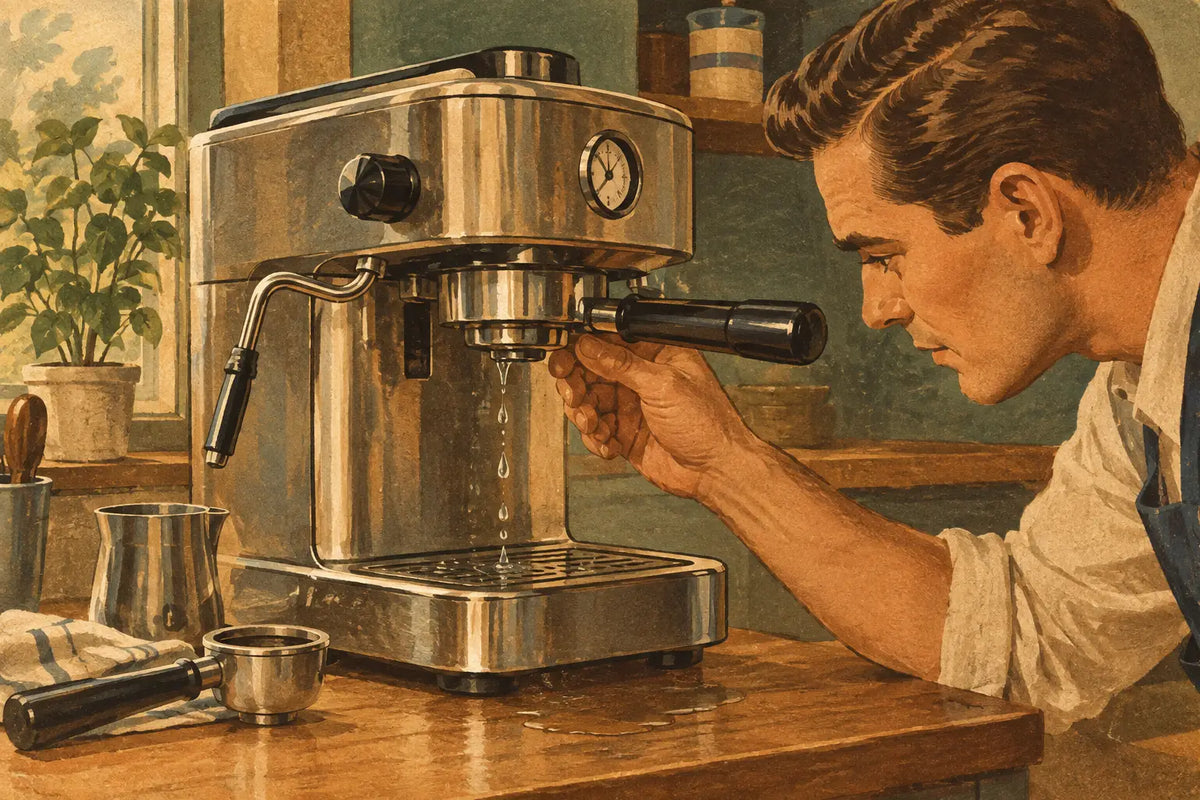
The fastest diagnosis comes from identifying when the leak happens. Does it appear while pulling a shot, steaming milk, heating from cold, or sitting idle? Those clues point to very different parts of the machine. Dry the exterior and drip tray first, then watch closely with the machine warmed up. A flashlight, a clean towel, and a little patience usually reveal more than immediately removing panels.
Why espresso machines leak during a shot
A leak around the portafilter while brewing is one of the most common complaints. In most cases, the group head gasket is worn, hardened, dirty, or not matched correctly to the machine. This gasket creates the seal between the portafilter and group head. When it loses its flexibility, water finds the easiest path out - usually around the ears of the portafilter.
Coffee residue can cause the same symptom. A clean basket and portafilter may still leak if the gasket groove is packed with old grounds and oils. Remove the shower screen if your machine’s design allows it, clean the area carefully, and inspect the gasket for cracks, flattening, or a shiny, compressed surface.
Portafilter position matters too. If it suddenly locks much farther to the right than it used to, the gasket may be nearing the end of its life. If it barely locks in, check that the basket is fully seated and that no grounds are caught on the rim. Do not solve a leak by forcing the handle tighter. Excess force can wear the portafilter ears and group head over time.
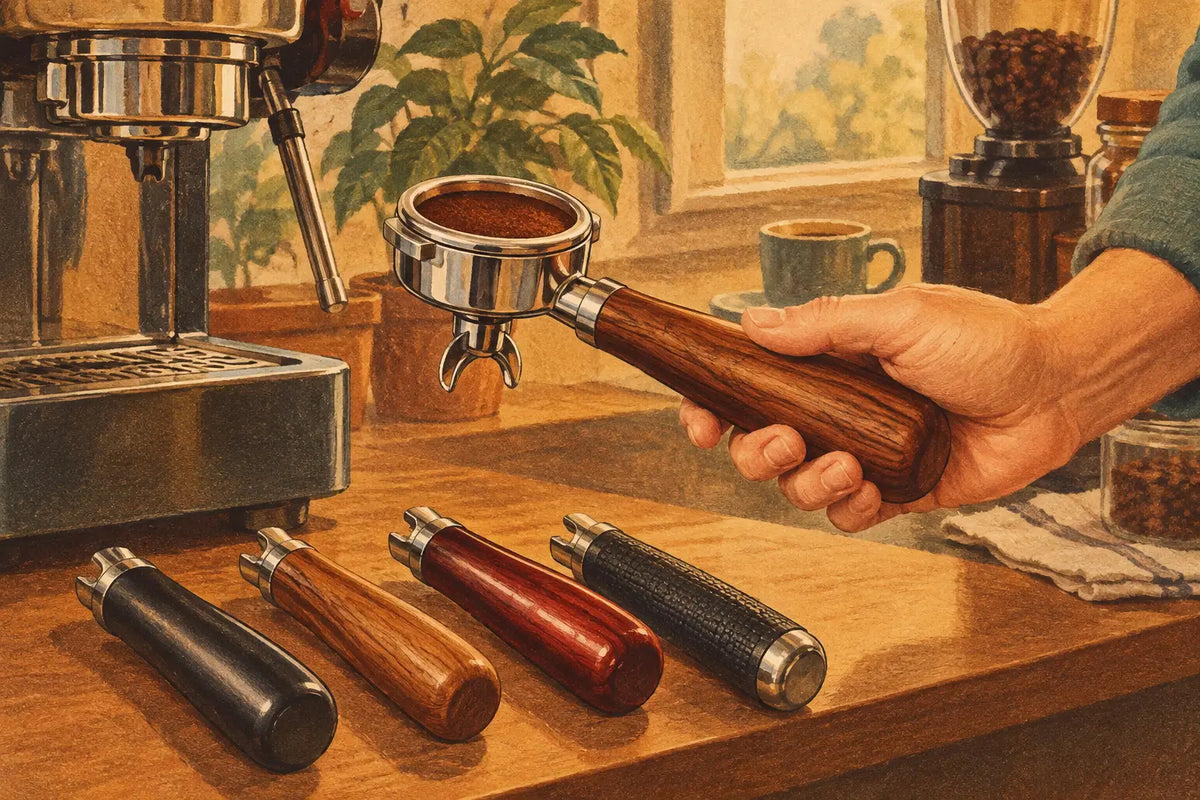
A damaged basket, a bent portafilter, or an incorrect basket depth can also prevent a proper seal. This is especially worth checking after switching to a precision basket, bottomless portafilter, or custom handle assembly. Accessories should improve your workflow, but compatibility at the group head is non-negotiable.
Not every bottomless portafilter spray is a leak
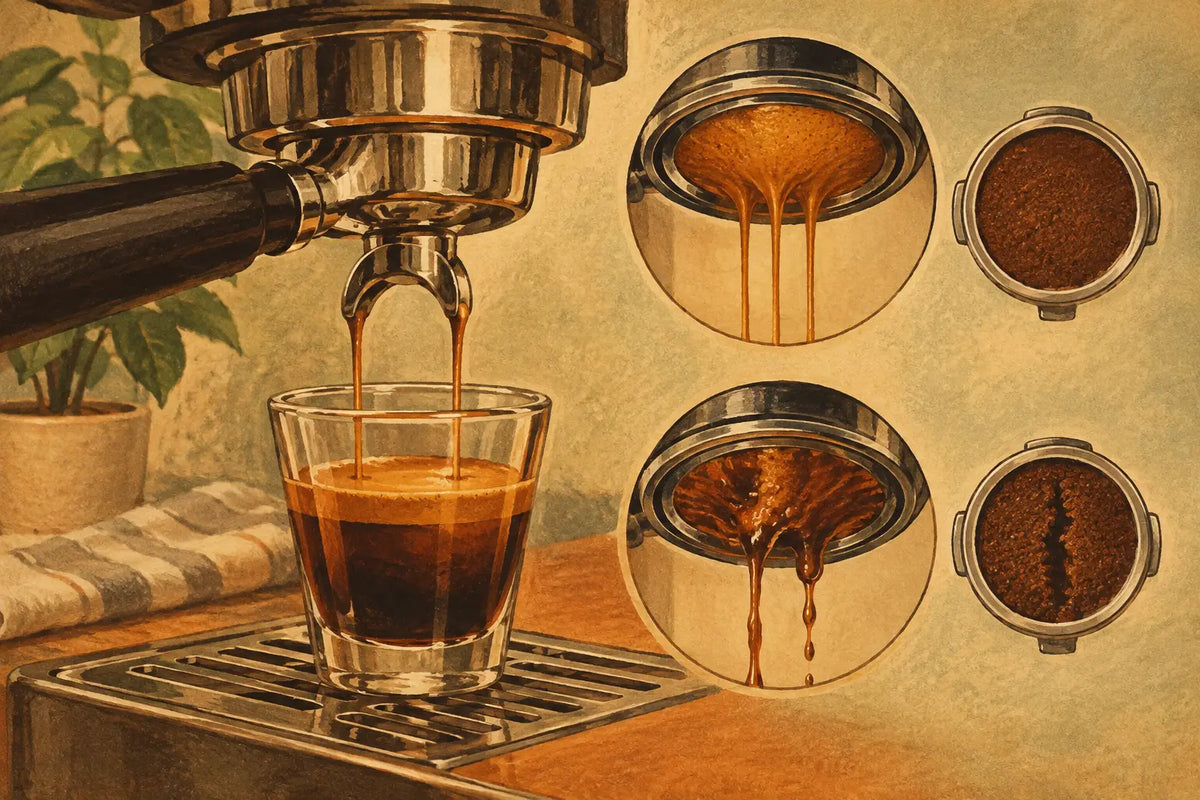
If water sprays downward from the basket during extraction, the issue is usually channeling, not a machine leak. Uneven distribution, an off-level tamp, stale coffee, or an overly aggressive grind can create jets from the puck. A WDT tool, a dosing funnel that fits your basket, and a more consistent puck prep routine can solve that problem without replacing any machine parts.
Leaks from the steam wand, hot-water wand, or valves
A steam wand that drips after steaming can be normal for a few seconds as residual water clears. Continuous dripping after the valve is fully closed is different. The usual causes are a worn valve seal, a valve seat with mineral buildup, or a knob that is no longer fully engaging the valve mechanism.
On machines with rotary or compression-style steam valves, small internal seals eventually wear. Hard water accelerates that wear by leaving scale on sealing surfaces. If the valve feels rough, stiff, unusually loose, or requires more turning than before, stop treating it as a minor annoyance. A slow drip can become a larger valve failure, and steam components should be serviced only after the machine is cool and depressurized.
The hot-water wand follows the same logic. If it leaks at the tip only when the valve is closed, suspect the internal valve seal. If water appears at the joint where the wand pivots, inspect the external O-rings or fitting. On some machines, a tiny amount of movement at the wand is normal; moisture collecting around the joint is not.
Be cautious with cosmetic upgrades in this area. A handcrafted steam knob can make daily use more enjoyable, but it must be made for the correct machine and valve interface. The wrong fit can limit valve travel or place uneven stress on the stem. Model-specific fitment matters as much as wood species or finish.
Water under the machine: tank, drain, or internal fitting?
Water beneath the machine is the leak that deserves the most methodical investigation. Start outside the case. Remove and refill the reservoir, then inspect it for a hairline crack, especially near the bottom seam, outlet valve, and handle area. Make sure it is seated squarely. A reservoir that looks fine on the counter may leak only when its outlet valve is pressed into the machine.
Next, check the drip tray. A full tray can slosh unnoticed when the machine is moved, and some machines discharge substantial water during backflushing, warming up, or pressure relief. If the water is clean and appears near the front, the tray is a likely source. If it is coffee-colored and appears after shots, inspect the tray, drain grate, and any drain hose connection.
Plumbed-in machines add another possible source: the supply line, water filter connection, or drain line. Even a slow fitting leak can travel along tubing and appear far from its actual origin. Never tighten fittings blindly while a machine is hot or pressurized. Turn off water supply where applicable, unplug the machine, allow it to cool, and relieve pressure according to the manufacturer’s instructions.
Internal leaks may come from boiler fittings, pump connections, expansion valves, solenoids, or hoses. You may notice a hiss, mineral staining, a hot-water smell, inconsistent boiler pressure, or water only when the pump runs. This is the point to call a qualified espresso machine technician unless you are experienced with the specific model. Opening a machine exposes you to high voltage, hot water, and pressurized steam.
The pressure relief valve and discharge tube
Many espresso machines intentionally send water into the drip tray after a shot. When the brew lever is lowered, a three-way solenoid or pressure relief system releases pressure from the group. That familiar rush of water is normal and helps dry the puck.
What is not normal is a steady stream into the drip tray while the machine is idle, or excessive discharge throughout extraction. Depending on the machine, this can indicate a scale-obstructed solenoid, a worn valve seat, an overpressure valve issue, or a pump-pressure setting that needs professional verification.
Do not confuse normal discharge with a leak simply because you see water in the tray. Look for timing. A brief release right after brewing is expected. Constant or unexplained water is a service clue.
Leaks caused by scale and neglected maintenance
Scale is not glamorous, but it is a frequent reason seals stop sealing and valves stop closing cleanly. Mineral deposits can build around valve seats, restrict passages, and create pressure behavior that stresses fittings. The right maintenance schedule depends on your water, filtration, boiler type, and machine manufacturer’s guidance.
Descaling is not universally the answer. Some dual-boiler and heat-exchanger machines require specific procedures, and aggressive descaling can dislodge mineral scale that then blocks a valve. If you do not know the machine’s service history, test your water, consult the manufacturer guidance, and consider professional service rather than pouring in a generic descaler.
Regular backflushing with the correct detergent, wiping the group gasket area, emptying the drip tray, and inspecting visible seals will prevent many small leaks from becoming repair jobs. For machines with replaceable gaskets, screens, knobs, and external O-rings, keeping the correct model-specific parts on hand is practical insurance.
A sensible leak-check routine
When you spot water, avoid guessing. Dry the machine, then observe one function at a time: heating, filling, brewing, steam, hot water, and idle time. Note the exact location, whether the water is clear or coffee-stained, and whether the pump or a valve was active. That short record makes troubleshooting faster and gives a technician useful information if the issue is internal.
Replace worn external seals before they damage surrounding components, but do not turn a pressure-system repair into a countertop project without the right tools and experience. For owners refreshing the look and feel of a machine during maintenance, NepoCoffee can help with handcrafted, model-aware accessories and replacement pieces that respect the details of your setup.
A well-kept espresso machine should leave its water in the cup, the steam wand, and the drip tray - not under the case. Catching the first drip while it is still a small clue is one of the easiest ways to protect the machine you have invested so much time in dialing in.